Santiago de Compostela: The Cathedral, the Camino and a Galician Long Lunch
Two days at the end of the great pilgrim route — the cathedral that holds the bones of Saint James, the Old Town wrapped around it, and the slower Atlantic Spain.
📍 Santiago de Compostela, Spain
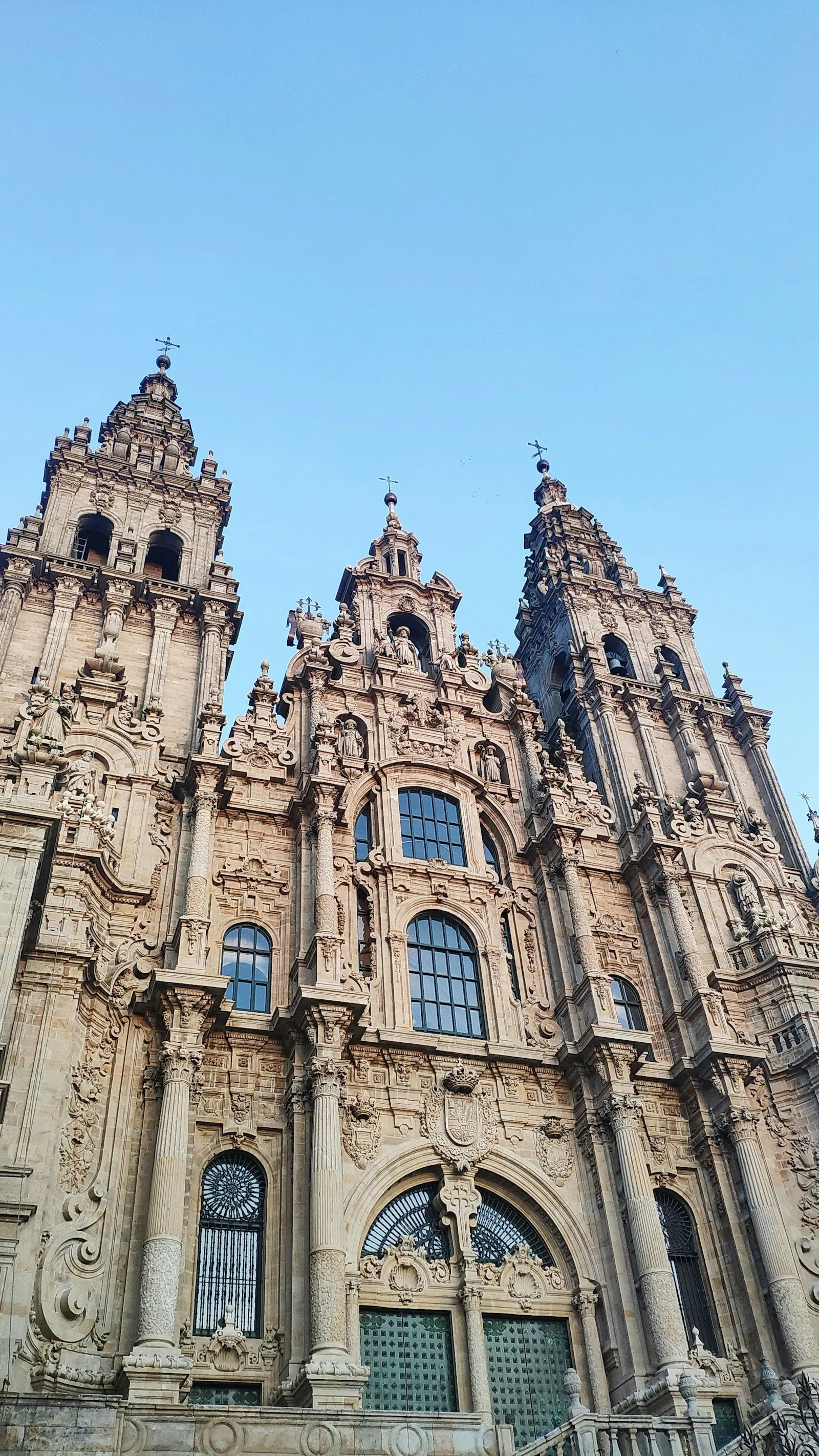
Santiago de Compostela is the small Galician city in the far north-west of Spain — the end of the Camino de Santiago, the great medieval Christian pilgrim route that has been bringing walkers from across Europe to one specific cathedral for over a thousand years. The cathedral itself, the Catedral de Santiago, was built between the 11th and 13th centuries on a site where, according to tradition, the relics of the apostle James the Greater were discovered in the 9th century, and it has been the third holiest city of medieval Christendom (after Jerusalem and Rome) ever since. Today, around 350,000 pilgrims a year still walk the Camino — most arriving in the city through the same gate the medieval pilgrims used, with backpacks and dust on their boots, and many of them in tears as they walk into the Plaza del Obradoiro and see the cathedral facade for the first time. The city around the cathedral is small (population about 95,000), beautifully preserved (UNESCO-listed), and built on top of a green Atlantic-facing region that is, in food, weather, and feel, completely different from the rest of Spain.
Two days is enough to see Santiago de Compostela properly. Add days if you’re walking the Camino.
The setup
Fly into Santiago de Compostela airport (15 minutes from the centre). Or train from Madrid (3 hours). Stay in the historic centre (the Casco Vello), ideally close to the Plaza del Obradoiro. Mid-range hotels run €80–160 a night; the Parador de Santiago de Compostela (the famous one, built into a 16th-century pilgrim hospital on the Plaza del Obradoiro itself, one of the world’s oldest continuously operating hotels) is a destination in its own right and worth a splurge.
The historic centre is small and walkable. No car needed.
Day one: the Cathedral and the Plaza del Obradoiro
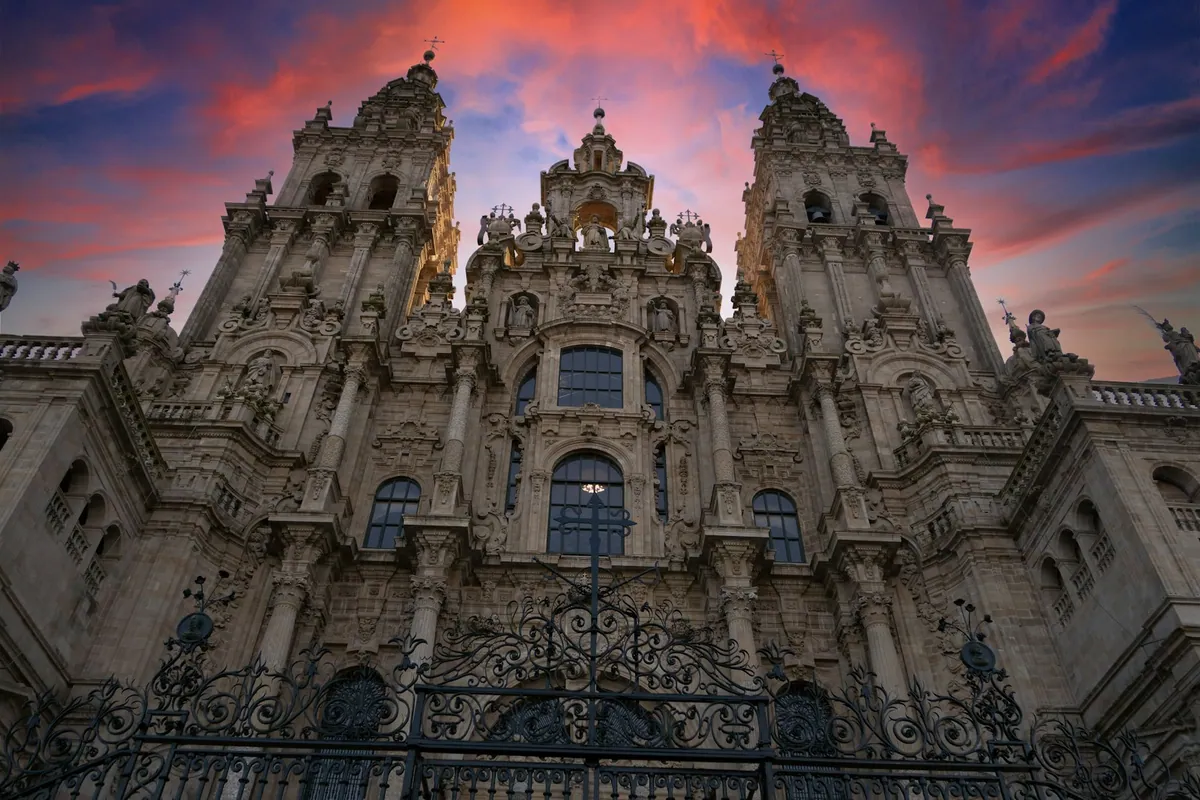
Walk to the Plaza del Obradoiro first. The plaza is a large open square at the western front of the cathedral, surrounded by four monumental buildings: the cathedral itself (the great Romanesque-Baroque facade), the Hostal dos Reis Católicos (the original 16th-century pilgrim hospital, now the Parador hotel), the Pazo de Raxoi (the city hall), and the Colegio de San Xerome (a 16th-century college). The space is enormous and theatrical and is the spiritual centre of the city.
Walk into the cathedral. The Pórtico da Gloria — the great 12th-century Romanesque carved portal at the western end, by the Maestro Mateo, restored in 2018 and now one of the most extraordinary pieces of medieval sculpture in Europe — is the entrance. Inside, the cathedral is a vast Romanesque space with a soaring barrel-vaulted nave, a Baroque altar, and the silver shrine of Saint James above it. Pilgrims at the end of the Camino traditionally hug the statue of the saint behind the altar (you can do this — climb the small staircase behind the altar, hug the statue, descend on the other side) and visit the crypt below containing the silver casket said to hold his relics.
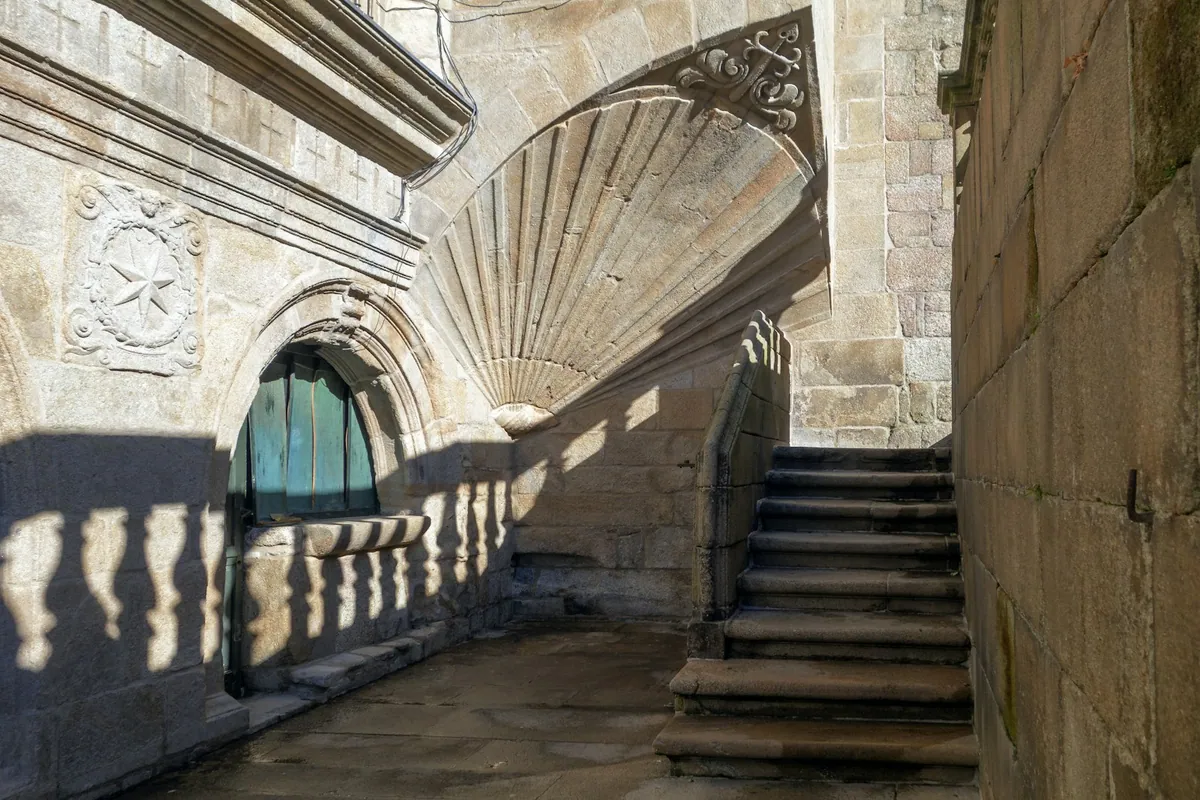
Allow two and a half hours for the cathedral. If you can, attend a Mass at noon — the Pilgrim’s Mass at midday is the spiritual highlight, and on certain feast days the cathedral lights the giant Botafumeiro (a 53-kilogram silver censer, the largest in the world, swung from the ceiling by a team of red-cloaked tiraboleiros — the censer arcs across the entire transept of the cathedral on a long rope, releasing clouds of incense; it’s one of the most theatrical religious moments in Europe).
After the cathedral, walk the small streets of the Old Town. The streets are wet (it rains often in Galicia, and the granite paving stays slick), narrow, lined with stone porticoes that have shielded medieval pilgrims from the rain for centuries. The Praza da Quintana behind the cathedral, the Praza das Praterías on the south side, and the Rúa do Vilar leading away from the cathedral are all atmospheric.
For lunch, eat at one of the small Galician restaurants. The Galician food tradition is one of the great regional cuisines of Spain — fresh Atlantic seafood, octopus (pulpo), shellfish, the local Albariño wine, the percebes (the bizarre-looking gooseneck barnacles, harvested by free-divers in dangerous conditions on the Galician cliffs, fiercely expensive and astonishingly delicious). Reliable spots: O Filandón, Casa Marcelo (one Michelin star, the destination restaurant), Mariscomanía (the seafood bar in the Mercado de Abastos), or any of the smaller bistros along Rúa do Franco.
Day one afternoon: the Mercado de Abastos and the Cidade da Cultura
The Mercado de Abastos — the city’s great covered market — is a beautiful stone building in the old town and the heart of Santiago’s daily food life. Galician seafood, cheeses (Tetilla, San Simón da Costa), Empanadas (the Galician savoury pies), and the local fresh produce. Walk through. Eat lunch at one of the food stalls if you missed lunch elsewhere.
In the afternoon, take a taxi or bus up to the Cidade da Cultura — the contemporary cultural complex on a hill east of the city, designed by the American architect Peter Eisenman, built in stages between 2004 and 2018. The complex is large, controversial (it ran enormously over budget and is partly unfinished), and architecturally striking — a series of five buildings with curved white roofs that form a rolling artificial landscape echoing the surrounding green hills. The visit centre and contemporary library are worth ninety minutes if you’re into architecture.
End the day in the Old Town. Eat dinner at one of the small bistros. Drink the Galician Albariño. Walk slowly back to your hotel through the wet stone streets.
Day two: a walk on the Camino, then a slow lunch
Day two, walk a small section of the Camino. You don’t have to be a pilgrim to walk the path — the route arrives in Santiago through the eastern outskirts of the city (the Camino Francés, the most popular route, comes in via Monte do Gozo about 5 km east), and you can walk a few kilometres outwards in either direction along the marked yellow-arrow trail through fields, eucalyptus forests, and small Galician villages.
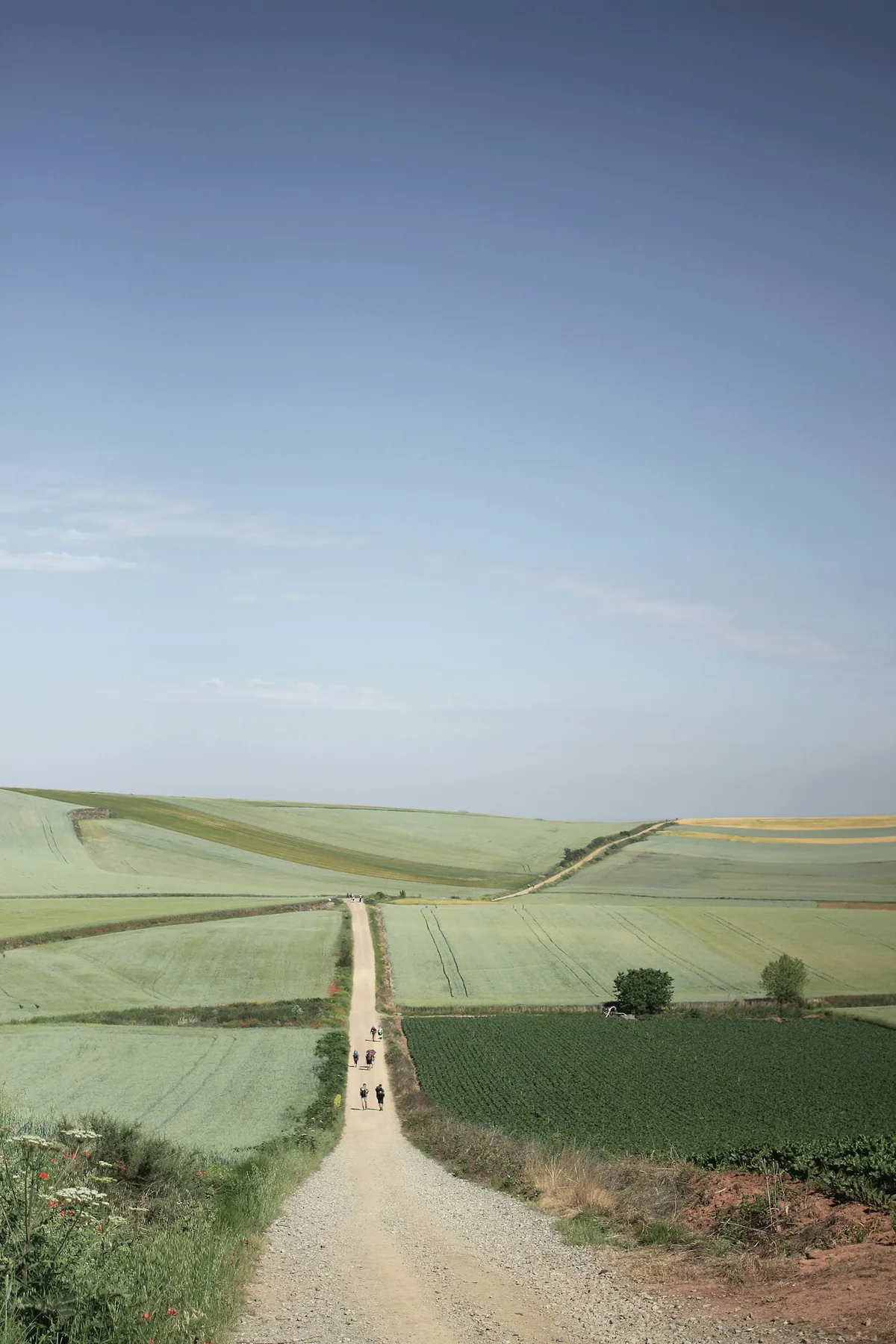
The 5-kilometre walk to Monte do Gozo (“The Mountain of Joy”) and back is the pilgrim classic — Monte do Gozo is the small hill from which medieval pilgrims first saw the towers of the cathedral in the distance, and a small monumento and cross mark the spot. The walk takes about an hour each way. Bring water. The Galician weather is changeable; bring a rain jacket.
In the afternoon, eat a long Galician lunch. Pulpo a la gallega (octopus boiled and sliced, dressed with paprika, olive oil, salt, on a wooden plate) and a glass of crisp Albariño is the canonical Galician meal. Empanada gallega (the savoury Galician pie, usually filled with tuna or pork). Mariscada (the seafood platter, with langoustines, prawns, percebes, and clams). It will take three hours and it will be one of the best meals of your trip.
End the trip with a final walk through the Old Town in the early evening, and a last view of the cathedral on the Plaza del Obradoiro at sunset. The granite of the facade catches the western light and turns gold.
How nice are Galicians?
Atlantic-warm and slightly slower than the rest of Spain. Galicia has its own language (Galician, a Romance language closely related to Portuguese), its own strong cultural identity, and a slightly more reserved Atlantic-Celtic temperament than the bright Mediterranean south. The friendliness is real, generous, and patient. My two days included: a small market vendor walk me three stalls over to point me to the better octopus seller; a hotel concierge spend twenty minutes drawing me a hand-sketched map of the small back streets I should walk; and a Camino pilgrim — total stranger — stop in the Plaza del Obradoiro to give me a small carved wooden scallop shell from her pack “for good luck on whatever your camino is.” Santiago is a city built on hospitality. The hospitality is the experience.
If you go
• Visit between April and October. Galicia is rainy year-round but the winter is properly wet. • Time your cathedral visit for the noon Pilgrim’s Mass for the spiritual atmosphere. • Eat the local seafood and drink the Albariño. The combination is the great Galician food experience. • Walk a section of the Camino, even if you’re not a pilgrim. The atmosphere of the route is worth experiencing. • Pack a rain jacket. Always.
Santiago de Compostela is the bit of Spain that quietly closes a circle. Two days here will give you the cathedral, the Old Town, the seafood, and a glimpse of the Camino. You leave understanding why people walk a thousand kilometres to get here. The city earns it.