Chamonix and the French Alps: Mont Blanc, Cable Cars and a Glacier
Five days in the alpine valley under Western Europe’s highest peak — the Aiguille du Midi cable car, the Mer de Glace, and walking trails for every level.
📍 Chamonix, France
Chamonix-Mont-Blanc is the alpine valley directly under Mont Blanc, Western Europe’s highest peak (4,807 metres), in the south-east of France right against the Italian and Swiss borders. It is the spiritual home of mountaineering — the modern sport was effectively invented here in 1786 with the first ascent of Mont Blanc, and the town has been the central jumping-off point for serious alpine climbing ever since. It is also, less famously, one of the most accessible high-mountain experiences in Europe for non-climbers: a series of cable cars that lift you to over 3,800 metres in twenty minutes, a cog railway that takes you up to a glacier you can walk into, and a network of valley walking trails for every level. You don’t have to climb anything. The mountain delivers itself to you.
Five days is the right length for a non-climbing visit. Add days if you’re actually climbing or skiing.
The setup
Fly into Geneva (1 hour shuttle to Chamonix) or take the TGV/TER from Paris (around 6 hours via Saint-Gervais). Stay in Chamonix town itself or in one of the smaller satellite villages (Argentière, Les Houches, Le Tour). Hotels and chalets run a wide range — €100 a night for a small valley pension up to €1,000 a night for the destination chalets at La Folie Douce or the Hameau Albert 1er. Book early; the valley fills in summer and ski season alike.
You don’t need a car for the in-valley experience — the local Mulet and Chamonix Bus services and a free pass with your accommodation cover most of the cable car bases.
Day one: arrive, walk into Chamonix town, acclimatise
Settle in. Walk into Chamonix town. The town is small (population about 9,000), mostly pedestrianised in the centre, with the Place Balmat at its heart where the famous statues of Saussure and Balmat (the first ascensionists of Mont Blanc, 1786) point up at the peak. Walk along the Arve river, browse the climbing shops (Chamonix has, per square metre, the most serious climbing-shop concentration in the world), and have an early dinner at one of the bistros on Rue du Docteur Paccard.
Drink water. Sleep early. Tomorrow you’re going to 3,842 metres.
Day two: the Aiguille du Midi
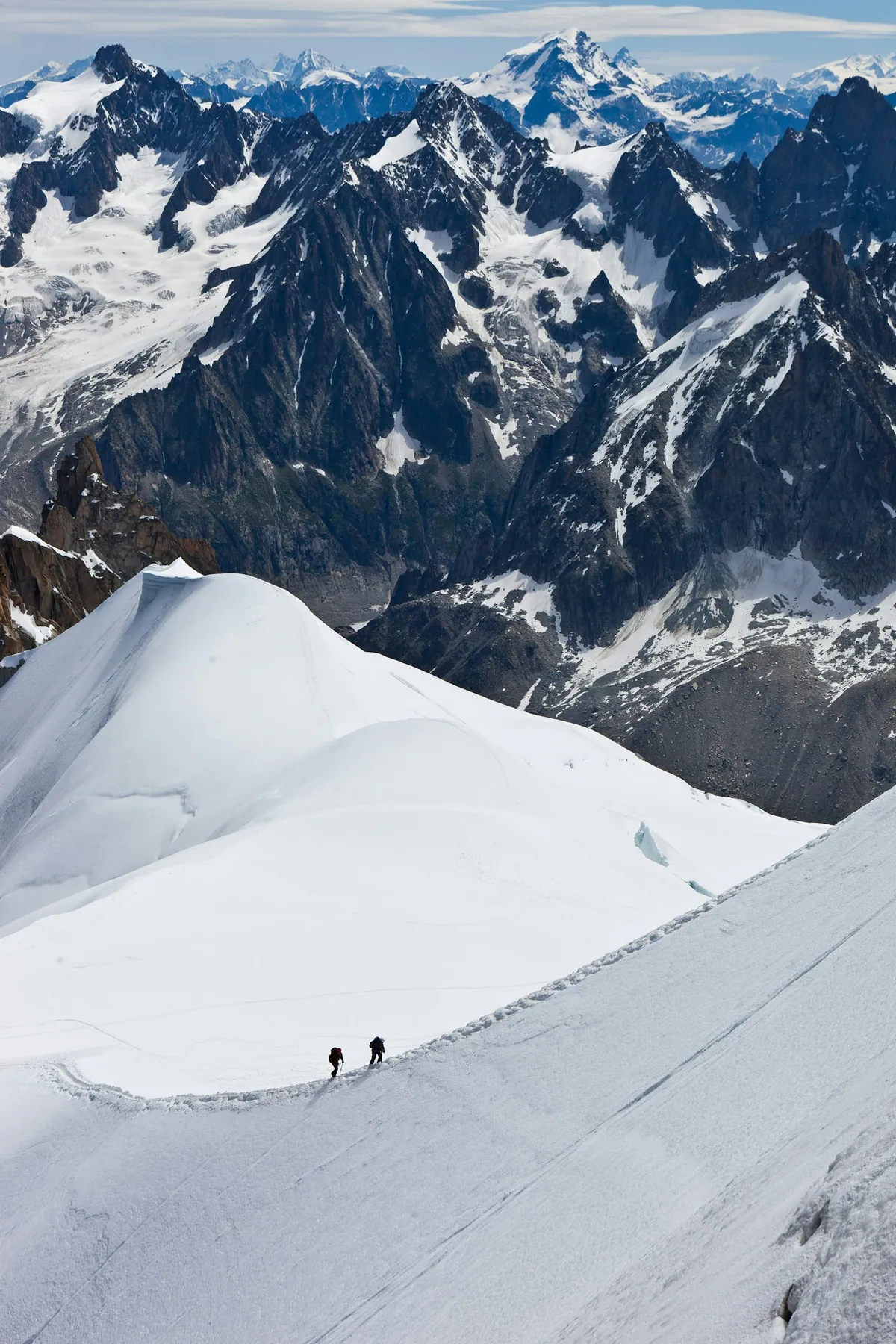
The Aiguille du Midi is the headline experience of Chamonix. A cable car (Téléphérique de l’Aiguille du Midi) lifts you in two stages from the centre of Chamonix at 1,035m to the upper station at 3,777m, with a small lift inside the rock taking you up the final 65 metres to the summit terrace at 3,842m. The journey takes about twenty minutes total. The vertical gain is the largest of any cable car in the world.
Book your ticket online a day or two ahead and pick the earliest morning slot — the views are clearest in the morning before the afternoon clouds build. Cost: about €70 round trip.
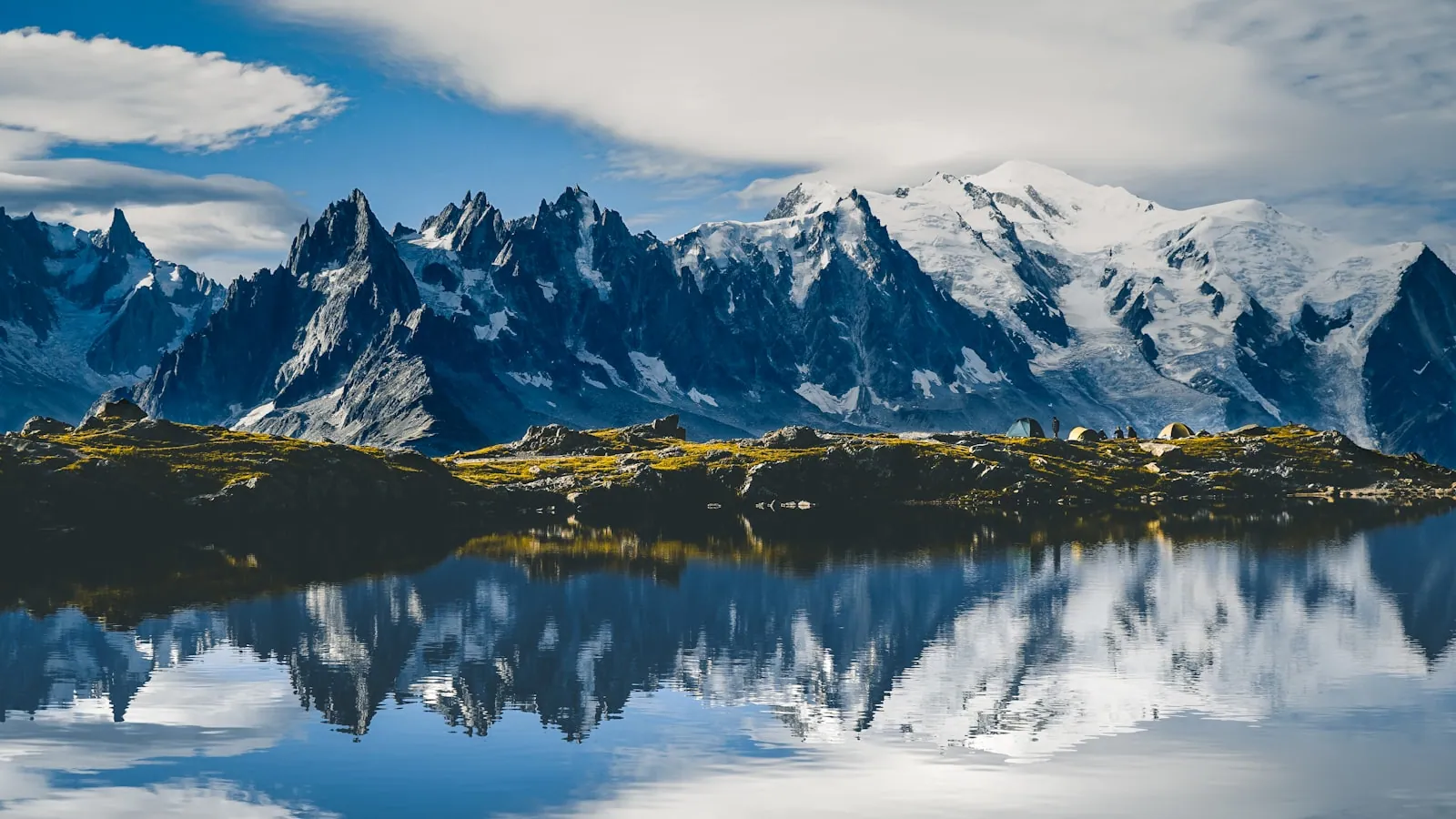
At the top: the Mont Blanc massif fills your entire forward view. Goggles of glaciers. The summit of Mont Blanc itself at 4,807m, white and impossibly close. The famous Step into the Void (Pas dans le Vide) — a glass cube projecting from the side of the rock, where you put on slippers and walk out into a transparent box with thousands of feet of vertical drop directly beneath you — is the headline novelty. The 3,842m terrace is the actual experience: cold (5–10°C cooler than the valley), thin air (you’ll feel the altitude), and the most spectacular alpine view that anyone with a car or a bus ticket can reach in Europe.
Spend ninety minutes at the top. Don’t try to do anything strenuous — the altitude is real and even short walks at 3,800m will leave you breathing hard. Take the cable car back down. Eat lunch at one of the cafes in Chamonix town.
In the afternoon, ride one of the gentler cable cars on the opposite side of the valley — La Flégère or Le Brévent — for views back across the Mont Blanc massif. The Brévent peak (2,525m) is a quick 8-minute cable car ride and the panorama from the top is the famous postcard view of Mont Blanc with Chamonix in the foreground.
Day three: the Mer de Glace
The Mer de Glace is France’s longest glacier — seven kilometres long, 200 metres deep at its head, and accessible by a small cog railway (Train du Montenvers) that runs from Chamonix town up to the Montenvers station at 1,913m. The train ride takes 20 minutes. From Montenvers, you descend 580 wooden-and-metal steps down to a small ice cave (Grotte de Glace) carved into the side of the glacier each year. The cave has been carved every year since 1946 and is re-cut as the glacier recedes — and the descending steps to it are, sadly, longer every year as the glacier itself loses volume.
The Montenvers viewpoint at the top of the steps is the photograph: a vast tongue of grey-blue ice flowing down the valley between two granite walls, surrounded by glacier-cut peaks. A small museum at Montenvers (the Glaciorium) walks you through the science of glaciers and the changes in the Mer de Glace over the last two centuries.
Allow half a day. Combine with a long lunch back in Chamonix.
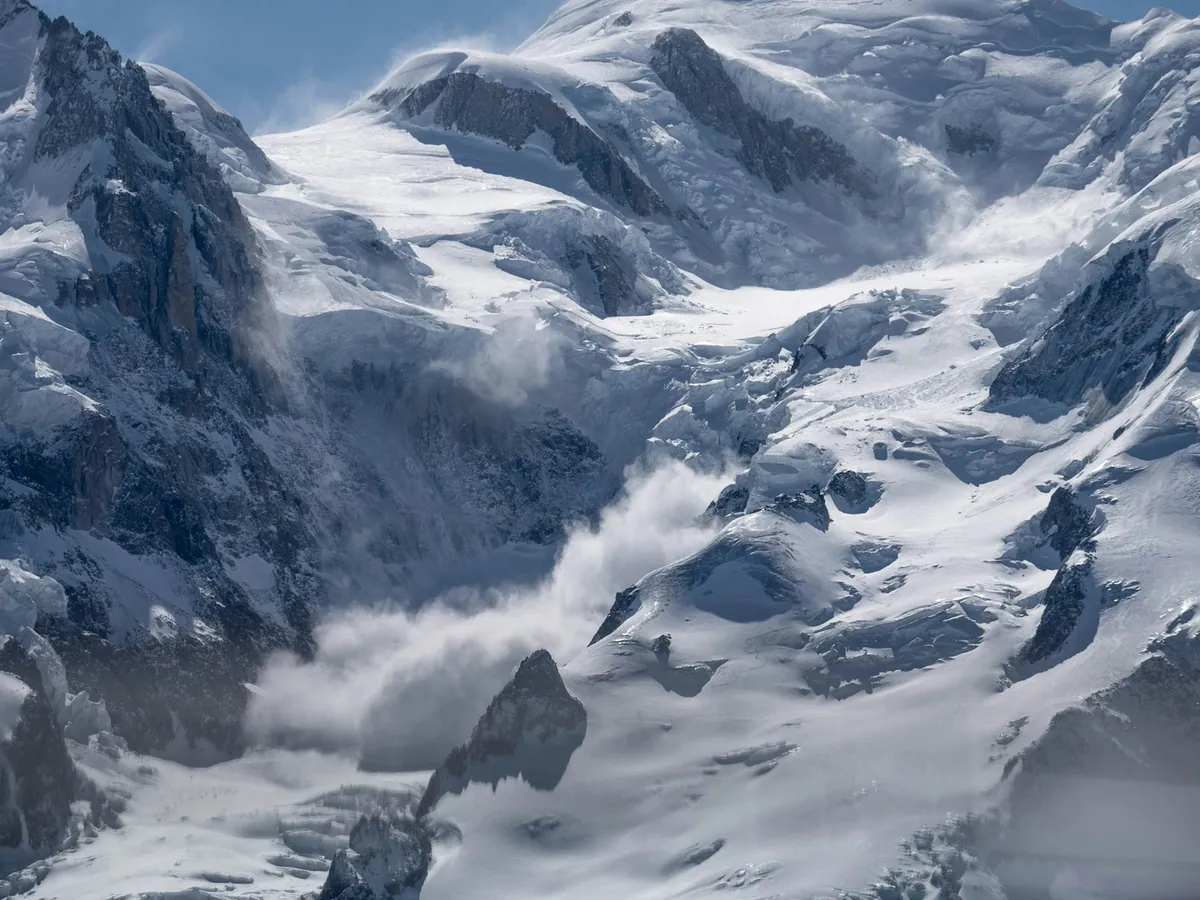
In the afternoon, walk one of the valley trails. The Petit Balcon Sud is a gentle, mostly-flat trail that contours along the southern side of the valley with constant views of the Mont Blanc massif. The Lac Blanc walk (from the Flégère cable car upper station) is harder but ends at one of the most photographed alpine lakes in France.
Day four: a cross-valley walk or rafting
Day four, choose your adventure. If you’re a walker, the Grand Balcon Sud is a beautiful 4-hour traverse along the southern side of the valley between the Flégère and Brévent cable car upper stations — broadly flat, with constant views of Mont Blanc, ending with a cable car ride back down. Slightly harder, the Lac Blanc loop is one of the great half-day hikes in the western Alps.
If you’d rather not walk, the Arve river runs whitewater rafting trips through the valley below Chamonix. Several operators run half-day Class III–IV trips for around €60. Bring a swimsuit and a sense of humour.
End the day with dinner at one of the destination chalets if budget allows. La Maison Carrier at the Hameau Albert 1er is the high-end Savoyard experience — fondue, raclette, local cheeses and cured meats served in a beautiful timber-and-stone room. A bottle of Apremont (the local white) and a long evening.
Day five: a slow morning, a final cable car, home
On a final morning, sleep in. Have breakfast at one of the patisseries in town. If you have time, take one last cable car (La Flégère or Le Brévent again — both have lovely upper-station cafes for a mountain-view coffee) for one final look at the massif.
Drive or train back to Geneva or Paris.
How nice are Chamonix locals?
Mountain-friendly. The Chamoniards are the mountain-village version of French — outdoorsy, weatherbeaten, slightly drier than the southern French, and warm once they’ve worked out you’re here for the mountain rather than the apres-ski. My five days included: a cable car operator wait an extra two minutes for me to catch my breath after the Aiguille summit climb; a chalet host bring me a small bowl of homemade tartiflette as a “welcome dinner” when I arrived late; and a guide at the Mer de Glace ice cave explain the glacier’s recession year-by-year with a quiet patience that you only get from people who actually live in the place they’re explaining.
If you go
• Book the Aiguille du Midi cable car a day or two ahead, especially in summer. • Check the weather every morning. Mountain weather changes fast and the cable cars don’t run in heavy wind. • Drink water. The altitude dehydrates you faster than you’d expect. • Pack layers. The valley can be 25°C in summer; the Aiguille du Midi terrace is around 0°C even on a warm day. • Eat the local food. Tartiflette, fondue, raclette, croziflette. Heavy, perfect, exactly what mountain food is supposed to be.
Chamonix is one of the great mountain destinations in Europe. Five days here will give you the highest cable car in the world, a glacier you can walk into, and a valley full of trails for every level. You leave with sore calves and the firm intention to come back in winter for the skiing. Both are right.