The Loire Valley: A Châteaux Road Trip Through France’s Garden
Four days driving through the Loire — Chambord, Chenonceau, Amboise, and the bicycle paths along the river.
📍 Loire Valley, France
The Loire Valley is the central, rural slice of France that runs roughly east-to-west between Orléans and Angers, threaded by the Loire — the longest river in France and the only one of its great rivers that is still essentially undammed and untamed. The valley has been the playground of the French aristocracy since the Renaissance, and the hillsides above the river are dotted with hundreds of châteaux: small ones, medium ones, the great theatrical fortresses-turned-palaces of François I and his heirs, and the tiny family estates that you stumble on by accident. The Loire is the place where the French aristocracy went on holiday for four hundred years. Today it is also where you can cycle for two days between châteaux on a riverside bike path. It is, by general agreement among the French, one of the most pleasant slow holidays in the country.
Four days is enough for the highlights. Six is better if you want to cycle.
The setup
Fly into Paris (CDG or Orly), then either pick up a car at the airport and drive two hours south-west, or take a one-hour TGV to Tours and rent there. The valley is best done by car if you’re seeing several châteaux, or by bicycle if you’re focusing on the central section between Tours and Blois.
Base in Amboise, Chenonceaux, or Tours for two nights, then optionally move to Blois for two more if you want to cover the whole valley. Small B&Bs and family-run hotels run €100–180 a night. The chambres d’hôtes at the smaller châteaux are particularly lovely if your budget stretches to them.
Day one: arrive, Amboise, the small one
Arrive in the early afternoon. Check in. Walk into Amboise — a small town on the south bank of the Loire, dominated by the Château Royal d’Amboise on the high ground above the river. The château was the boyhood home of Charles VIII and François I, and it’s where Leonardo da Vinci spent the last three years of his life under François I’s patronage. (Leonardo is buried in the small chapel of Saint-Hubert in the château grounds.)
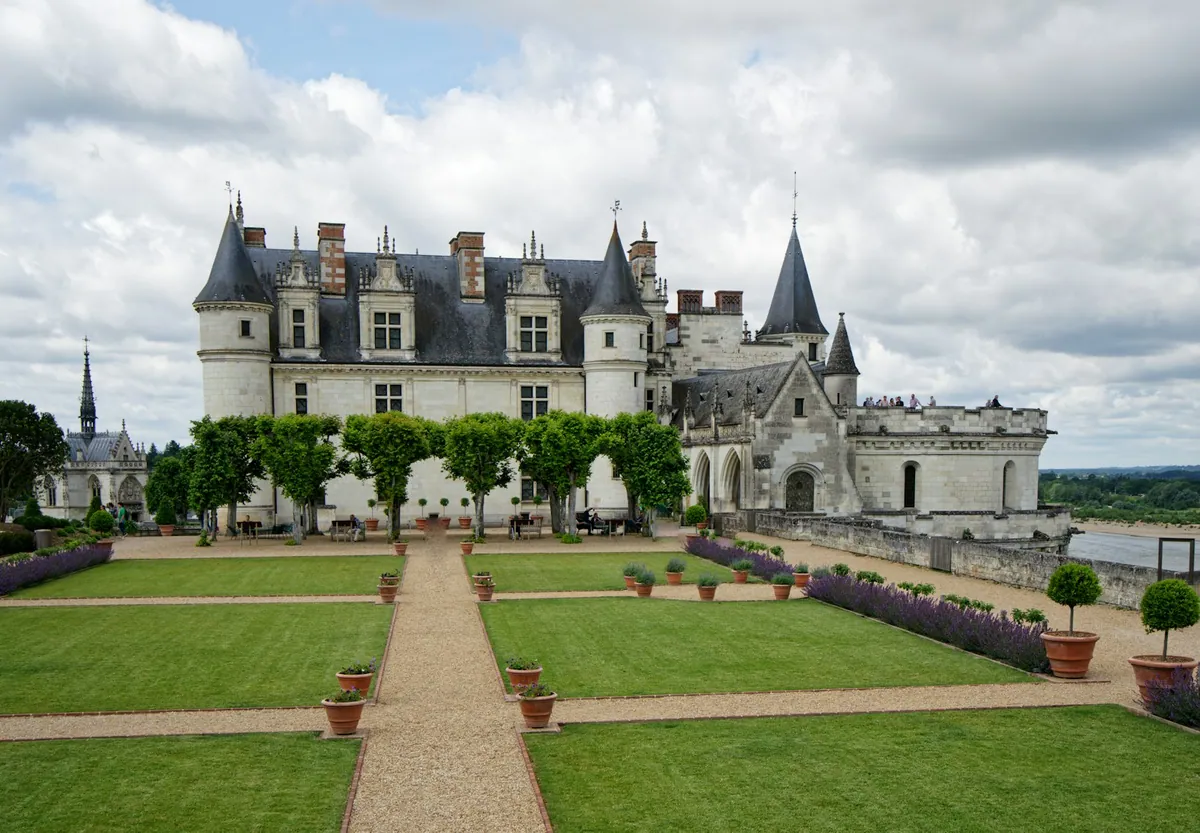
The château itself is small by Loire standards but packed with historical atmosphere. Allow two hours. Then walk five minutes through the town to the Clos Lucé — the manor house where Leonardo lived. The house is now a museum dedicated to him, with full-scale wooden models of his inventions in the gardens. Half-day visit.
For dinner, eat at one of the bistros on Place du Château. The local Touraine wine — pale, dry, fresh — is excellent and underpriced.
Day two: Chenonceau, the most beautiful one
If you only see one Loire château, see Chenonceau. The château is built across the river Cher (a tributary of the Loire), with two storeys of arched gallery spanning the water — built in the 1500s by Diane de Poitiers and finished by Catherine de’ Medici. It is the most photographed château in France for a reason. The interior is as lovely as the exterior; the gardens (one each for Diane and Catherine, on either side of the entrance courtyard) are perfect formal Renaissance.
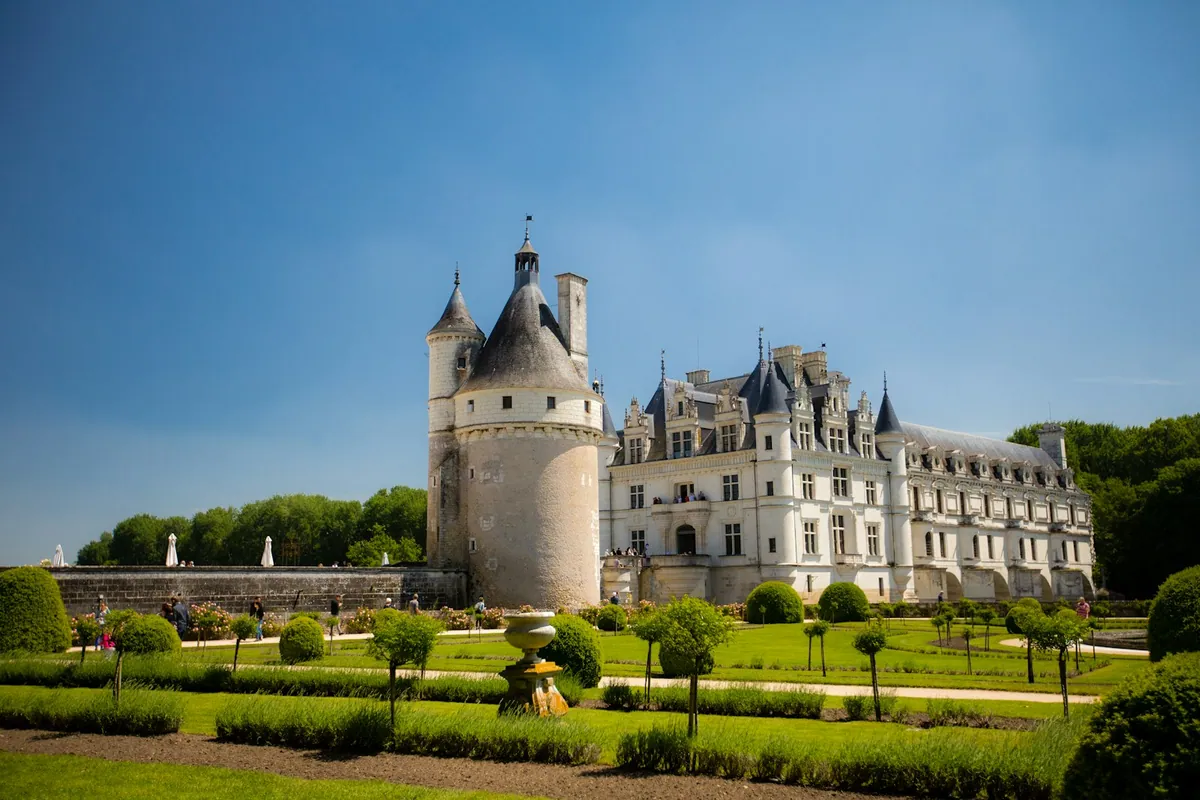
Get to Chenonceau early — by 9 a.m. — to beat the bus tours. The visit takes around two hours including the gardens. Have lunch in the small village of Chenonceaux (note the “x” — the village name has the extra letter, the château doesn’t).
In the afternoon, drive to Cheverny — a smaller, classical-style château about 30 minutes east, set in a pretty park, and the inspiration for Marlinspike Hall in the Tintin comics. The kennels of hunting dogs at Cheverny are a small but charming sub-attraction; the dogs are fed at 11:30 a.m. daily in front of an audience.
Day three: Chambord, the impossible one
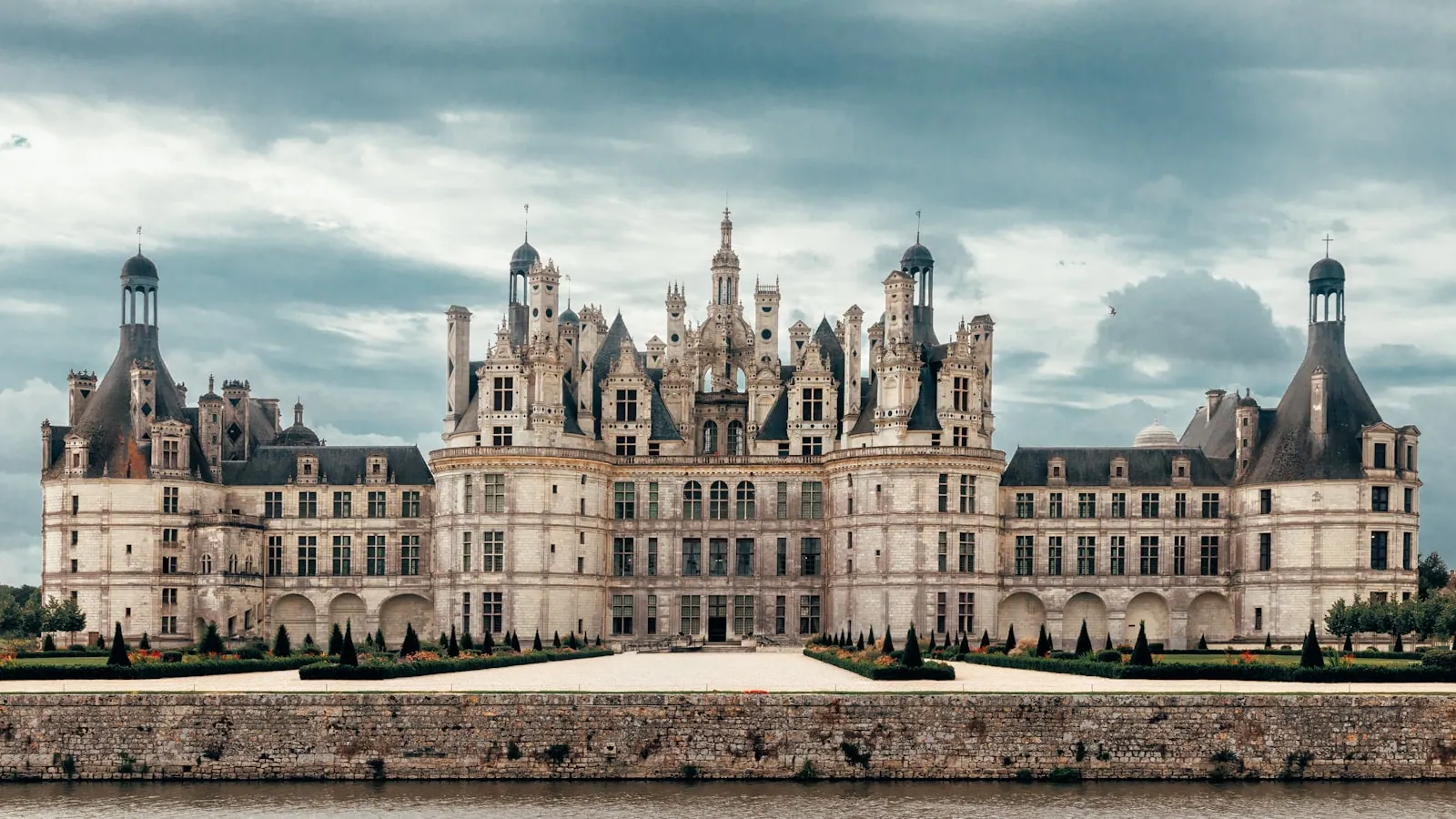
Chambord is the great theatrical château of the Loire. Built by François I starting in 1519 as a hunting lodge — “lodge” being a strange word for what ended up as 426 rooms, 84 staircases, and 282 fireplaces, on a footprint the size of a small village — it is enormous, ornate, and slightly absurd. The famous double-helix staircase in the centre, possibly designed by Leonardo, allows two people to ascend and descend without meeting. The roof is a forest of Renaissance chimneys, towers, and pinnacles. The grounds are a 5,000-hectare hunting forest, the largest enclosed park in Europe, and home to deer and wild boar. You can walk the formal gardens or take a guided buggy through the forest to see the animals.
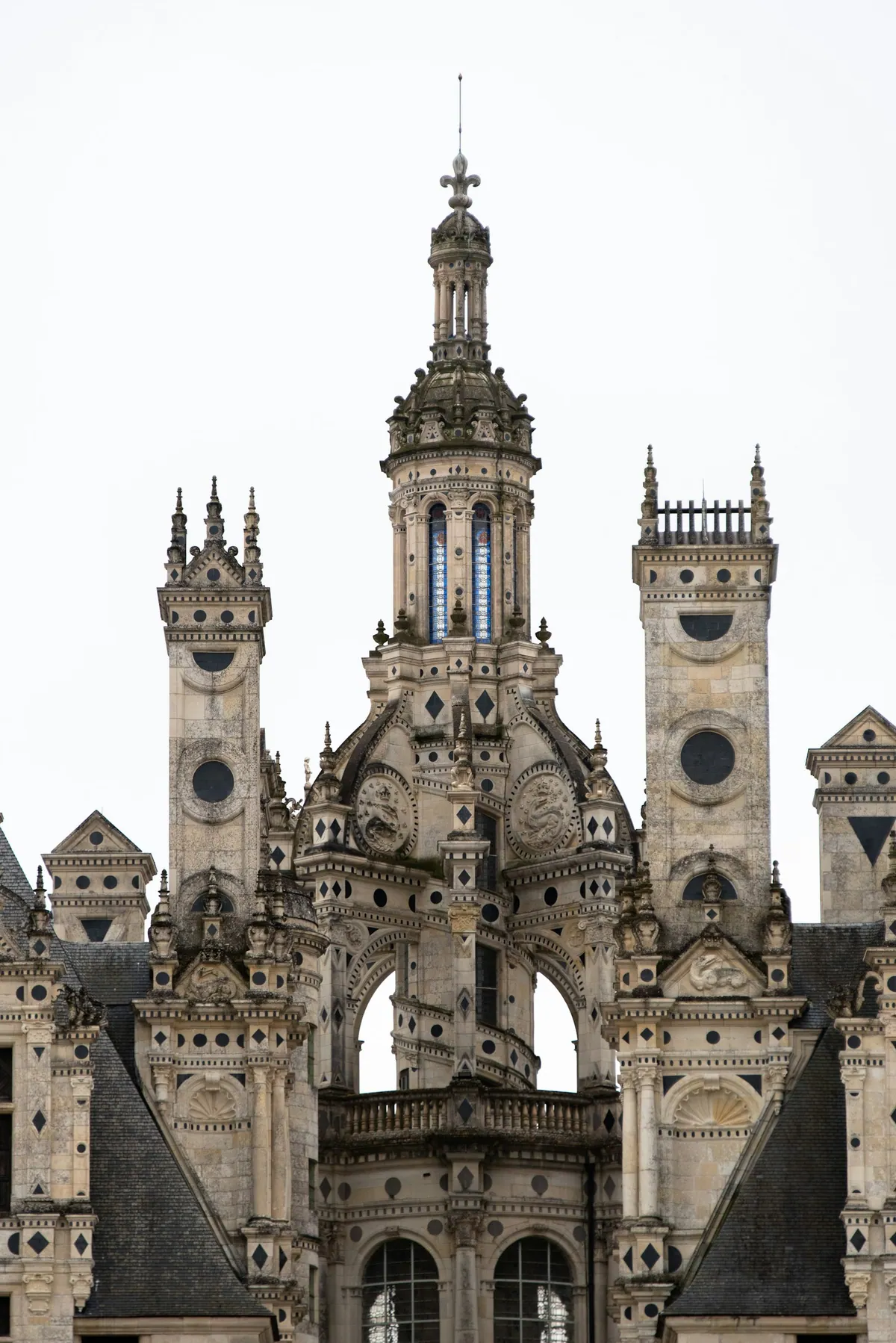
Allow three hours for the château and gardens, longer if you want the forest tour. Eat lunch at one of the small restaurants outside the gates.
In the afternoon, drive 25 minutes north-west to Blois — the small city on the Loire that hosts the Royal Château of Blois, four wings in four different architectural styles representing four different French kings. It’s a more architectural, less spectacular visit than Chambord. Pair it with a wander through Blois’ lovely Old Town and a wine tasting at one of the city’s wine bars.
Day four: cycle the river path
The Loire à Vélo is a 900-kilometre signposted cycle path that runs along the river from the Atlantic coast at Saint-Brévin-les-Pins all the way east to Cuffy near Nevers. It’s mostly flat, partly on dedicated paths, partly on small country roads, and it’s one of the great gentle cycling routes in Europe. You can hire bikes (regular or electric) at most Loire Valley towns, and the route is well-signed.
A perfect day cycle: Amboise to Tours is about 30 kilometres each way along the path, gently downstream, mostly under shade. You pass through small wine villages, vineyards, and several smaller châteaux you can stop and visit. Have lunch in Tours (the old town is beautiful, the cheese-and-charcuterie boards at the cafes are world-class). Cycle back in the afternoon. The river is on your right going one way, your left coming back. The light on the water at 6 p.m. is one of the great Loire moments.
If you have a fifth day, push further west. The Royal Abbey of Fontevraud (where Eleanor of Aquitaine and Richard the Lionheart are buried) and the troglodyte cliff villages along the Loir tributary are worth a half-day each.
How nice are people in the Loire?
Country-French nice. The Loire is rural, slow, and the locals are warm in the way villagers are warm everywhere — patient, opinionated about food and wine, generous with directions. Within four days I had: a wine cellar owner give me a private tour of the cellars after his last booking left, with two glasses he wouldn’t let me pay for; a woman at the Blois cathedral show me the small staircase to a viewpoint I’d never have found on my own; and a baker in Amboise pack an extra brioche into my morning bag “for after, when you’re cycling.” The friendliness is the same as the rest of rural France — slow, but real once it arrives.
If you go
• Hire a car for flexibility, or commit to bicycles for the central section. • Book Chambord and Chenonceau timed-entry tickets in advance for July/August. • Eat the local cheese (Sainte-Maure de Touraine, a soft goat cheese in a stick shape with a piece of straw through it) and drink the local wines (Vouvray, Chinon, Bourgueil, Sancerre). • Don’t rush. Two châteaux a day is the maximum; one is the right pace. • Carry water, especially if cycling. The river paths have shade but the open sections in summer are hot.
The Loire Valley is France at its most leisurely and most photogenic. Four days is enough for the headline châteaux. Six is enough for the cycling. Either way, you leave wishing you’d had longer, and that’s exactly the right way to leave.