Normandy: Mont Saint-Michel, the D-Day Beaches and the Cliffs of Étretat
Five days in Normandy — the abbey on the rock, the war cemeteries that quiet you, and the chalk arches of the Alabaster Coast.
📍 Normandy, France
Normandy is the bit of France that quietly does everything well. It has, in five days, three completely different and individually extraordinary sights: Mont Saint-Michel, the medieval abbey-on-a-rock that sits in a tidal bay between Normandy and Brittany; the D-Day beaches of June 1944, where the Allied invasion of occupied Europe began; and the chalk cliffs of Étretat on the Alabaster Coast, with their famous arches and needles that have been painted by Monet, Boudin, Courbet and a hundred lesser painters. It also has, in between these three, some of the best food in France — the cream, the cheese (Camembert, Pont-l’Évêque, Livarot), the cider, the calvados — and a quiet, weather-worn warmth in its small towns that makes the long drives between sights a pleasure rather than a chore.
Five days is the right amount. You can do four if you’re crisp; you’d wish for six.
The setup
Fly into Paris and either drive (3 hours from CDG to Bayeux, or 2.5 to Caen) or take a TGV to Caen, the capital of lower Normandy. Hire a car at the station — Normandy is a region of small roads and dispersed sights, and it doesn’t do public transport between attractions in any meaningful way.
Stay in Bayeux for three nights (perfect base for Mont Saint-Michel and the D-Day beaches), then move to Honfleur or Étretat for two nights at the eastern end.
Day one: Mont Saint-Michel
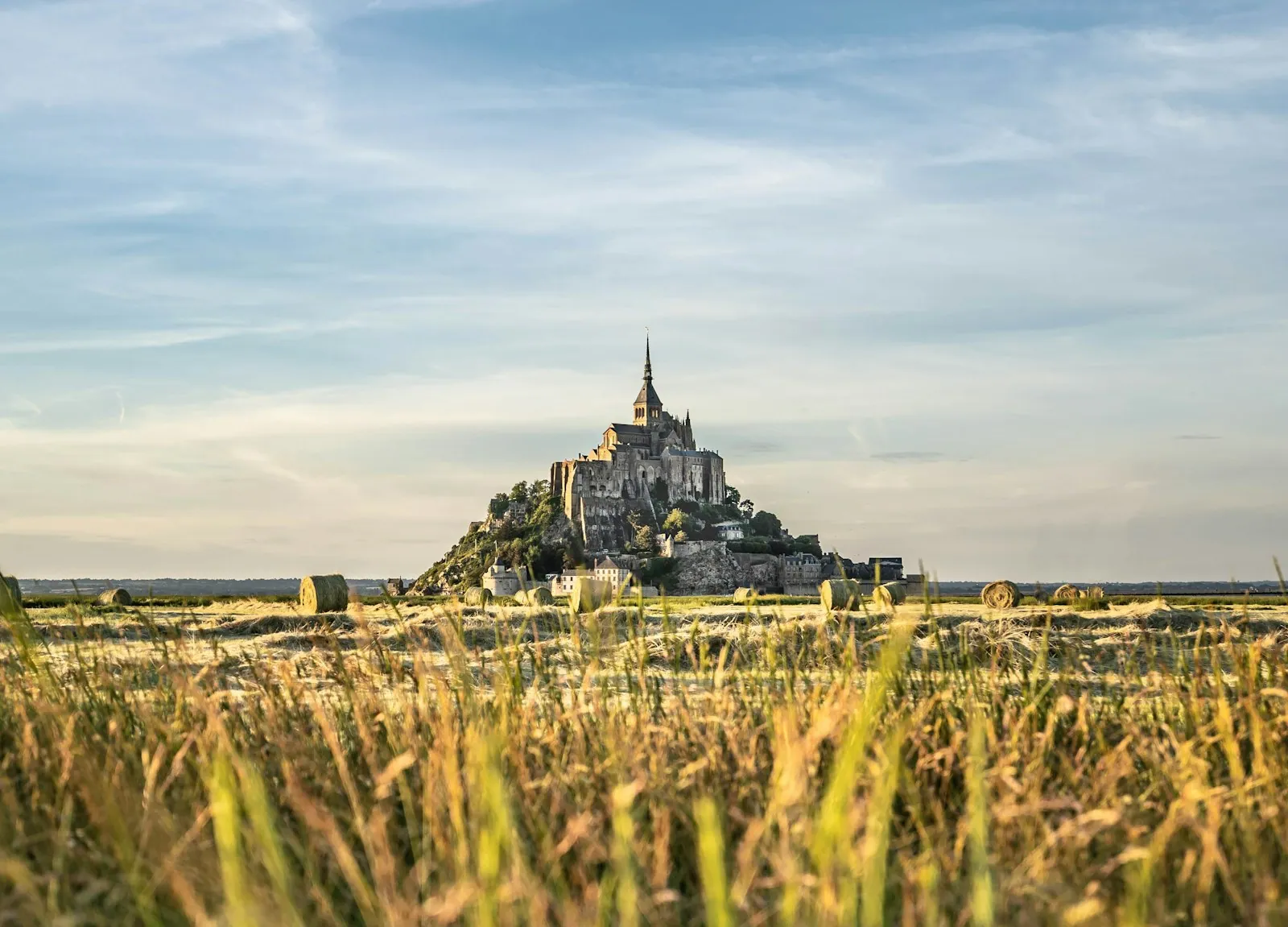
The single most photographed building in France after the Eiffel Tower. Mont Saint-Michel is a tiny island a kilometre off the Normandy coast, with a Benedictine abbey on the summit (founded in the 8th century, current structure built across the 11th to 13th centuries), a tiny medieval village beneath it, and around it a vast tidal bay where the sea retreats and returns daily across about ten kilometres of sand.
Drive to the visitor centre, take the free shuttle bus (or walk the 50-minute causeway path) across to the island. Climb up through the village to the abbey — about a 25-minute walk through the single main street, lined with tiny restaurants and souvenir shops. Buy your abbey ticket online in advance to skip the queue at the top.
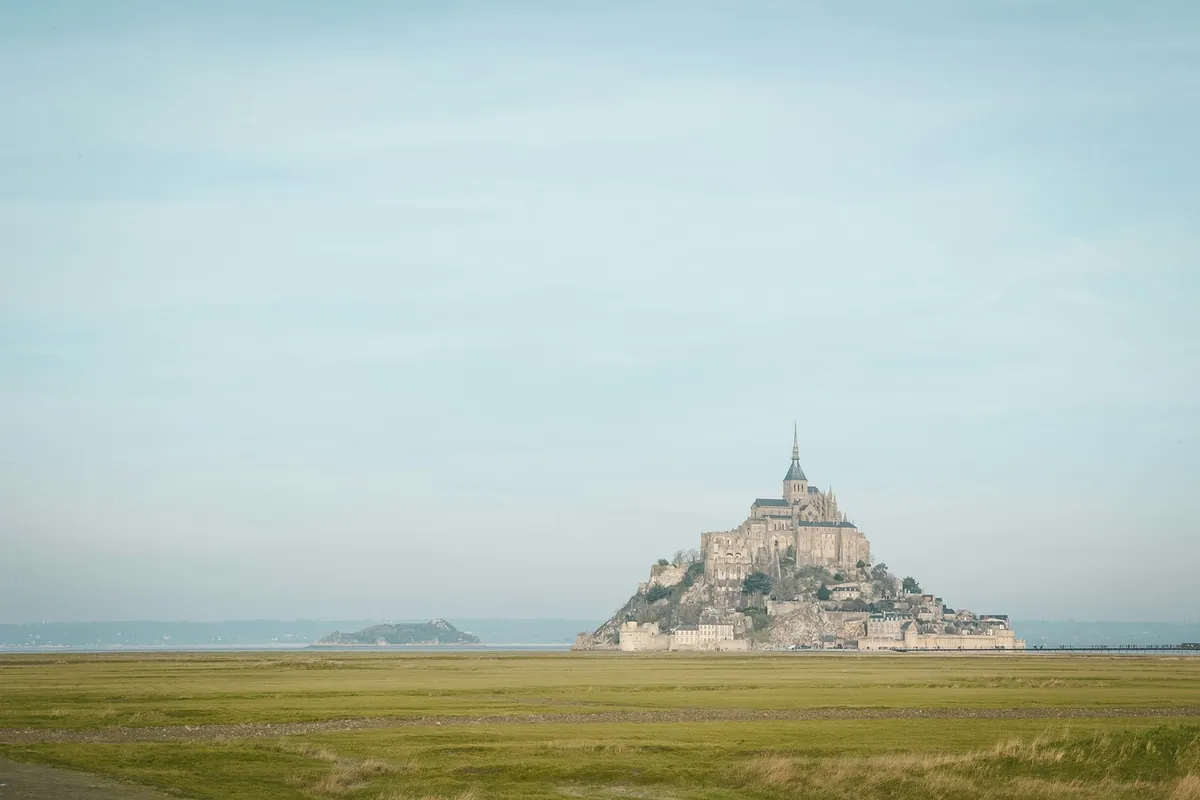
The abbey itself is one of the great medieval buildings in Europe. The tour takes you through the cloister, the refectory, the knights’ hall, and finally the abbey church at the very top of the rock. The architecture is extraordinary — three storeys of monastic and royal rooms stacked into a vertical pile, fitted into the natural cone of the rock. Allow ninety minutes for the full visit.
The trick to Mont Saint-Michel is to spend the night nearby and visit at sunrise OR after the day-trip crowds have left in the late afternoon. The mid-day visit is busy in summer. Sunset from the bay path back on the mainland, looking at the silhouette of the Mont with the tide racing in (yes, racing — the bay tides are among the largest in Europe and famously fast), is the photograph.
Day two: Bayeux
Drive an hour back along the coast to Bayeux — a small, beautiful, mostly-intact medieval town that escaped destruction in WWII because the German garrison surrendered without a fight in June 1944. The Bayeux Tapestry, the famous embroidered narrative of William the Conqueror’s 1066 invasion of England, is housed in the Bayeux Tapestry Museum on the edge of the town centre. The tapestry itself is 70 metres long, almost a thousand years old, and remarkably well preserved. The audio guide walks you through it scene-by-scene. Allow ninety minutes.
The Cathedral of Notre-Dame de Bayeux, around the corner, is a beautiful Romanesque-Gothic mix with a magnificent Norman nave. Free to enter. The Old Town around it is small enough to walk in twenty minutes and has several lovely lunch spots.
Day three: the D-Day beaches
This is the day Normandy is hardest to write about and most important to visit. The D-Day beaches stretch about 80 kilometres along the coast west of Caen, and the standard visit covers four sites: Omaha Beach and the American Cemetery; Pointe du Hoc; Utah Beach; and the British/Canadian sectors at Gold and Juno.
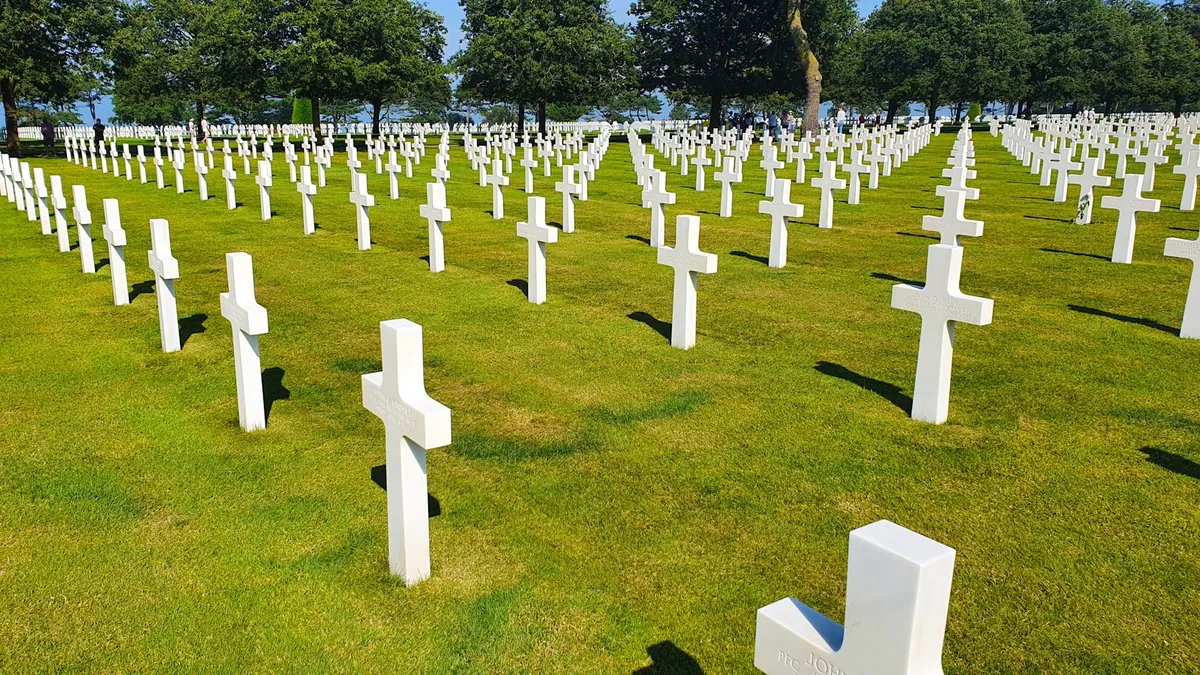
The American Cemetery at Colleville-sur-Mer, on the bluffs above Omaha, is the centrepiece. 9,388 white crosses and Stars of David in immaculate rows. A reflecting pool. A memorial wall with the names of the 1,557 missing. The beach itself, six kilometres long, looks ordinary now — sand and surf, a few shells. Then you read the visitor centre exhibits, look back at the beach from the cemetery bluffs, and the ordinary becomes very specific. The cemetery requires nothing of you. The cemetery just is. Walk slowly. Read the names.
Pointe du Hoc, ten minutes drive west, is the cliff that the US Army Rangers scaled under fire on D-Day to take out a German artillery battery. The land has been left as it was — pockmarked with shell craters from the pre-invasion bombing, the German bunkers still in place, the path winding between concrete and the cliff edge. It is a strange, quiet place that does not soften what happened there.
Utah Beach has a small museum. The Caen Memorial Museum (in Caen itself) is the most comprehensive WWII museum in France and is worth a half-day in its own right.
End the day quietly. Drive back to Bayeux. Eat dinner without much talk.
Day four: Honfleur and the cider road
Drive east to Honfleur — a small port town at the mouth of the Seine, with a beautiful old harbour ringed by tall, pastel, slightly leaning timber-framed houses. Honfleur was the home of Eugène Boudin and the painter who taught Claude Monet the importance of light on water; the small Boudin Museum on Place Erik Satie has a lovely collection.
Stop along the way at one of the cider farms in the Pays d’Auge — the central rolling-hill country between Caen and Lisieux, famous for its cider, its Calvados (apple brandy), and its cheeses. Several farms run informal tastings. The Cidre Cul Béni near Beuvron-en-Auge and the Calvados Pays d’Auge route are well-marked.
Spend the night in Honfleur. Eat a long dinner of moules-frites and a glass of local cider on the harbour.
Day five: Étretat
The famous chalk cliffs and arches of Étretat are 90 minutes east of Honfleur. Park in the village, walk down to the pebble beach, and look up — the cliff at the western end of the beach (Falaise d’Aval) has the famous arch and the needle (l’Aiguille) standing in the sea just offshore. The cliff at the eastern end (Falaise d’Amont) has a chapel on top and a smaller, more dramatic arch. You can climb both for the views back across the bay.
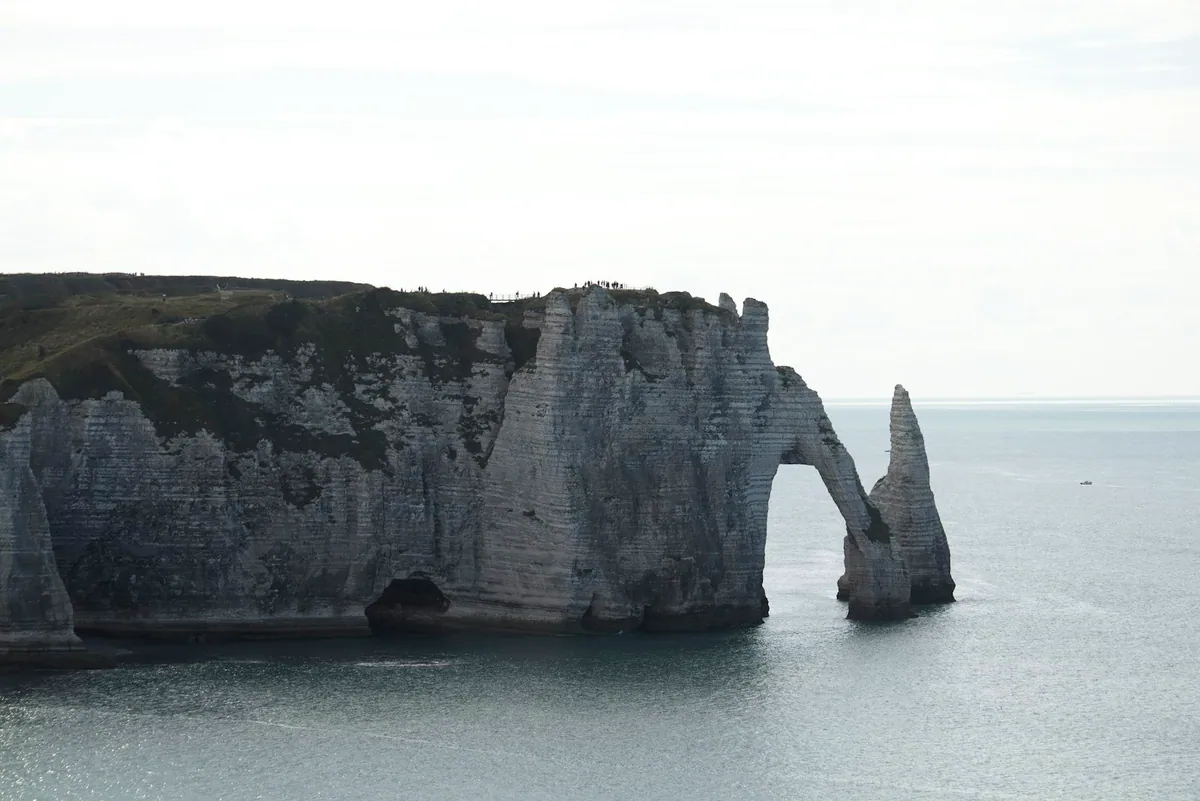
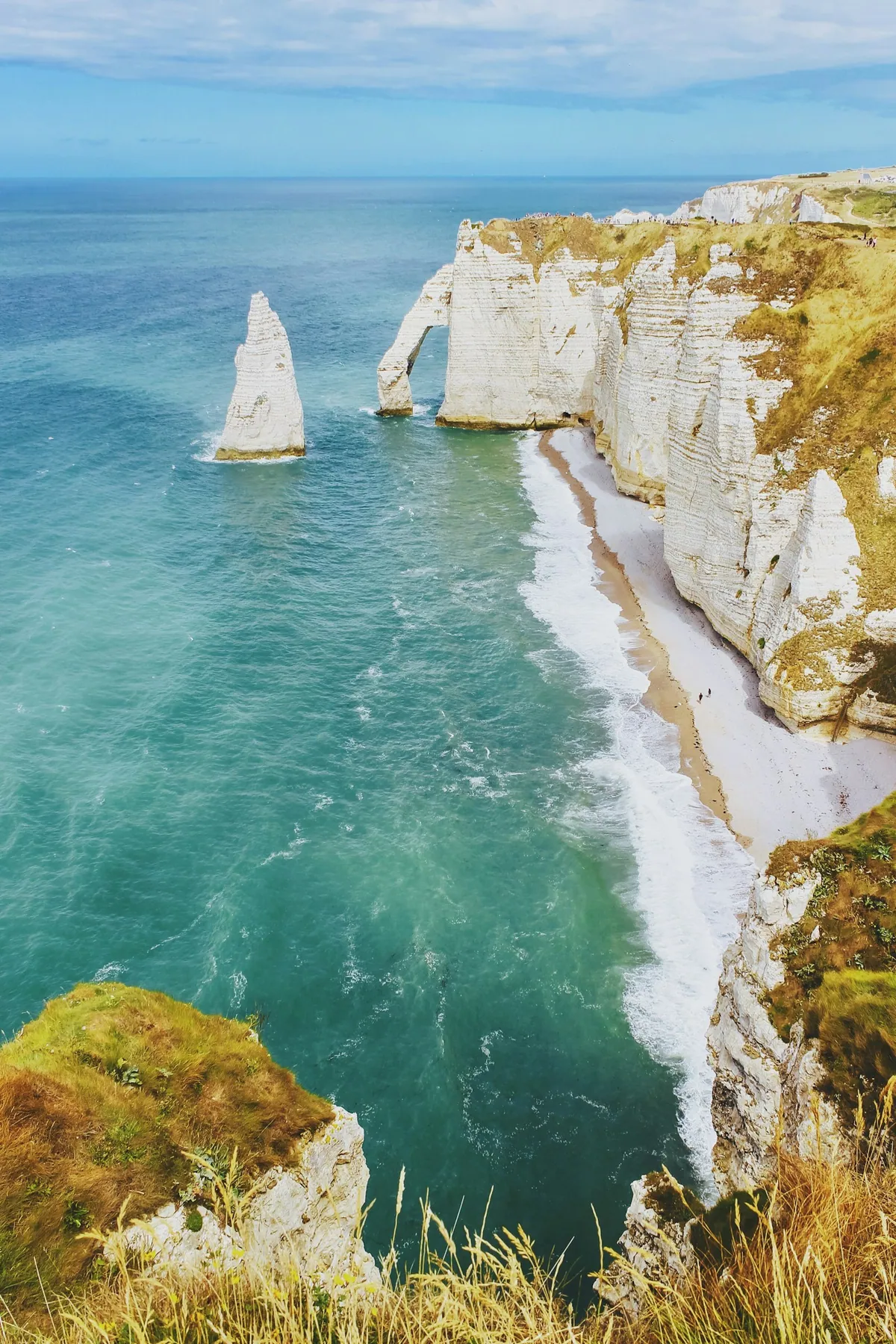
The cliff walk south from Étretat to Yport is about 10 kilometres along the clifftop. The whole stretch of coast is the Alabaster Coast, named for the white chalk that gives it its colour. Even a one-kilometre section of the walk gives you the views you came for.
Eat lunch in Étretat at one of the seafront brasseries. Drive back to Paris in the late afternoon.
How nice are Normans?
Quietly nice. Normandy is a region with deep historical layers — the Vikings, William the Conqueror, the WWII liberation — and the locals carry that with a slight reserve that warms quickly once you’ve been there a day. My five days included: a B&B owner in Bayeux drive me to the train station when I missed my taxi; an old man at the American Cemetery quietly point out the cross of his uncle’s best friend, and then walk away before I could say anything; and a baker in Honfleur tuck a Calvados-filled chocolate into my bag because “you’ve come a long way, this is for the road.” The Norman friendliness is real. It’s just patient.
If you go
• Hire a car. Public transport will not get you between the sights. • Spend at least one night at Mont Saint-Michel for the sunrise / sunset experience without crowds. • Allow a full day for the D-Day beaches. Don’t try to combine with another big sight. • Eat the cheese, drink the cider, taste the Calvados. Normandy is a serious food region. • Bring a windproof jacket. The coast is breezy even in summer.
Normandy is a region that asks you to slow down and pay attention. Five days here will give you Mont Saint-Michel’s sunrise, the long quiet of Omaha Beach, the chalk arches at Étretat, and a week’s worth of Camembert and cider. You leave changed, slightly. The cemeteries do that to you. So do the cliffs.