Cinque Terre in Three Days: Vernazza, Manarola and a Walk Along the Cliffs
Three days walking the five villages on the Italian Riviera — the cliff paths, the painted houses, the focaccia, and the trains that connect them all.
📍 Cinque Terre, Italy
The Cinque Terre — the “five lands” — is a stretch of the Ligurian coast in north-west Italy, between Genoa and La Spezia, where five small fishing villages cling to the cliffs above the sea: Monterosso, Vernazza, Corniglia, Manarola, and Riomaggiore. The villages are tiny (most have populations under 1,000), the houses are painted in bright pinks, ochres, yellows, and oranges (so that fishermen could identify their own from the boats), the cliffs above and below the villages are terraced with vineyards and olive groves built up over a thousand years, and the entire stretch — coast, villages, terraces, the surrounding sea — is now a UNESCO World Heritage site and a national park. They are, by general agreement, the most photogenic five-village stretch on any coastline in Europe.
Three days lets you walk all five and swim in two. You can do them in two days at a push.
The setup
Train into the area is the way. La Spezia (at the southern end) and Levanto (at the northern end) are the gateway towns, each with direct trains to the five Cinque Terre villages on the small local Genoa–La Spezia line that stops at every village. Buy a Cinque Terre Card at the station — about €18 a day or €33 for two days — which covers unlimited train rides between the villages and access to the official cliff-path trails.
Stay in one of the five villages for a few nights. Vernazza, Manarola, and Monterosso are the three with the most accommodation. Mid-range hotels run €120–250 a night. Book early — the villages have very limited rooms and they fill in season.
You don’t need a car. The villages are car-free in the centre (you can drive to large car parks above each village but you walk in). The train, the cliff paths, and the small ferry between the villages are how you move.
Day one: arrive, settle, walk to Vernazza
If you’re basing in Monterosso (the largest of the five and the one with the only proper sand beaches), drop your bags and walk south to Vernazza on the famous Sentiero Azzurro — the Blue Trail, the high cliff path that connects the five villages. The Monterosso–Vernazza section (about 90 minutes, moderately steep) is one of the loveliest stretches of coastal walking in Europe. You climb up out of Monterosso through olive terraces, walk along a high ridge with the Mediterranean below on your left, drop down through the Vernazza vineyards, and arrive at the Vernazza piazza on the harbour.
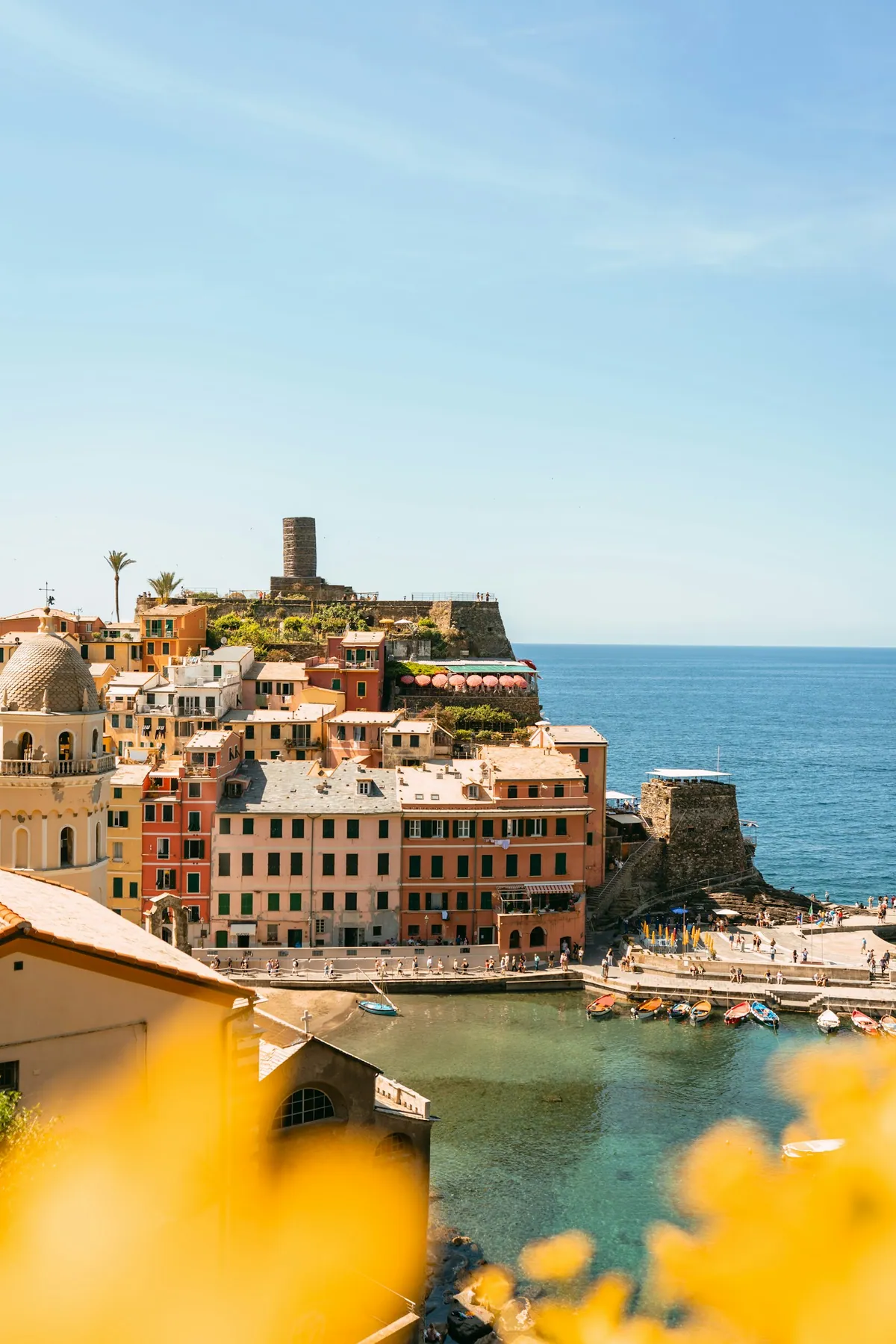
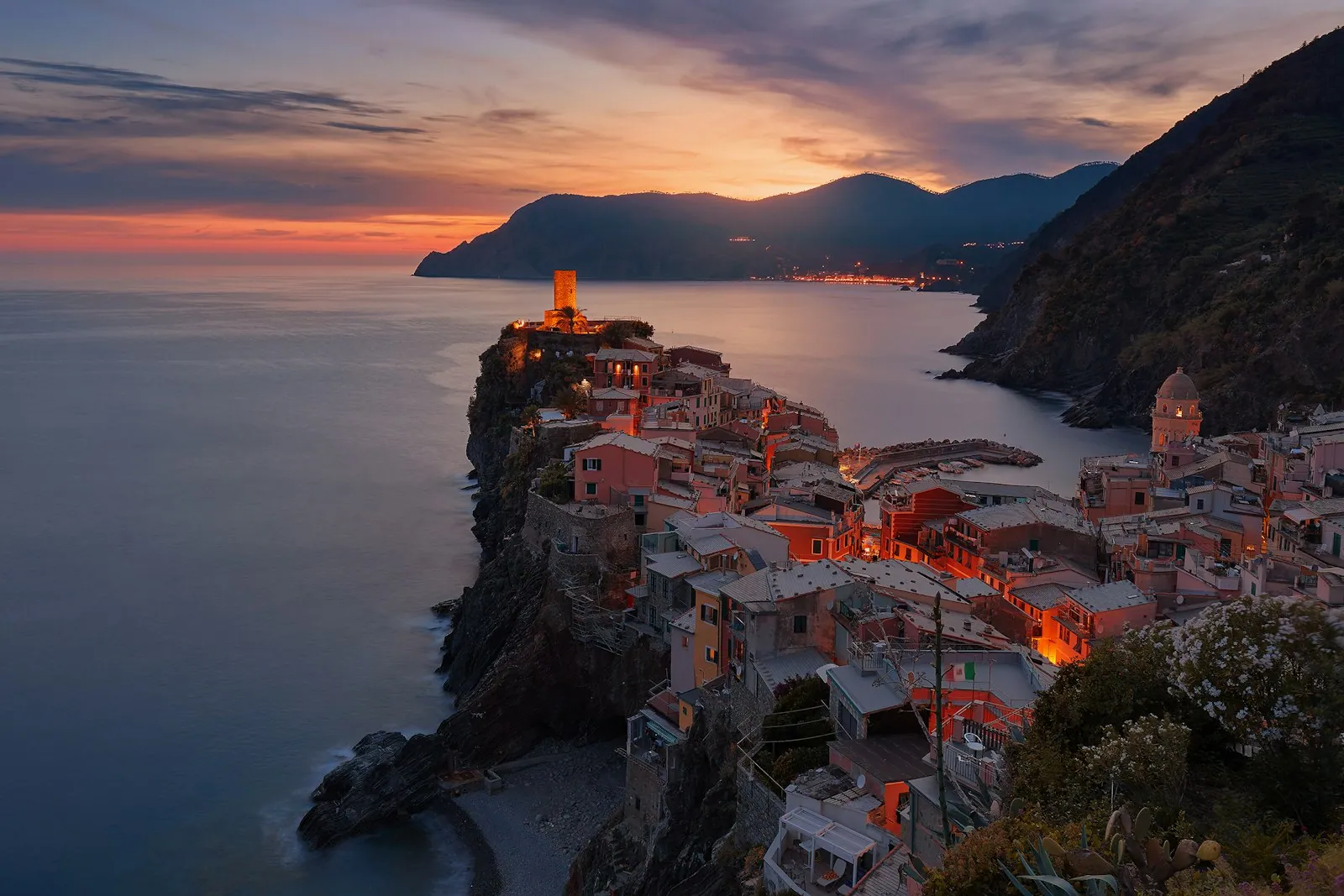
Vernazza is, for many people, the prettiest of the five villages. The harbour is a tiny natural cove with the village houses pressed against it on three sides, the small main square (Piazza Marconi) opening directly onto the water, the church of Santa Margherita d’Antiochia at the corner, and the small Doria castle on the headland above. Eat lunch at one of the small trattorias on the piazza — Gianni Franzi (the famous one, on the harbour, since 1955) or one of the smaller bistros up the side streets.
In the afternoon, swim. The small beach at Vernazza is rocky but the water is clear and the small harbour wall makes it sheltered. Or walk down to one of the larger sand beaches at Monterosso (the Spiaggia di Fegina at the western end of Monterosso is the main town beach).
For dinner, eat one of the local Ligurian specialities — pesto pasta (the genuine Genoese pesto, made with basil, pine nuts, garlic, parmesan, and Ligurian olive oil); trofie pasta with pesto; focaccia (the Ligurian flatbread); fresh anchovies (acciughe); and the local Cinque Terre white wine (Vermentino) or the famous sweet Sciacchetrà (a passito wine made from semi-dried Bosco grapes grown on the cliff terraces).
Day two: the southern villages — Corniglia, Manarola, Riomaggiore
Catch the early train south. The 5-minute train hop takes you to Corniglia — the only one of the five villages not on the water (it sits on top of a 100-metre cliff above the sea, with no direct beach access). You have two ways up: the 382-step Lardarina staircase from the train station, or the small free shuttle bus from the station up to the village square. Walk the small village (it’s tiny — you can do it in 30 minutes), have a coffee on the central square, walk the small Belvedere viewpoint at the western edge for views down the coast.
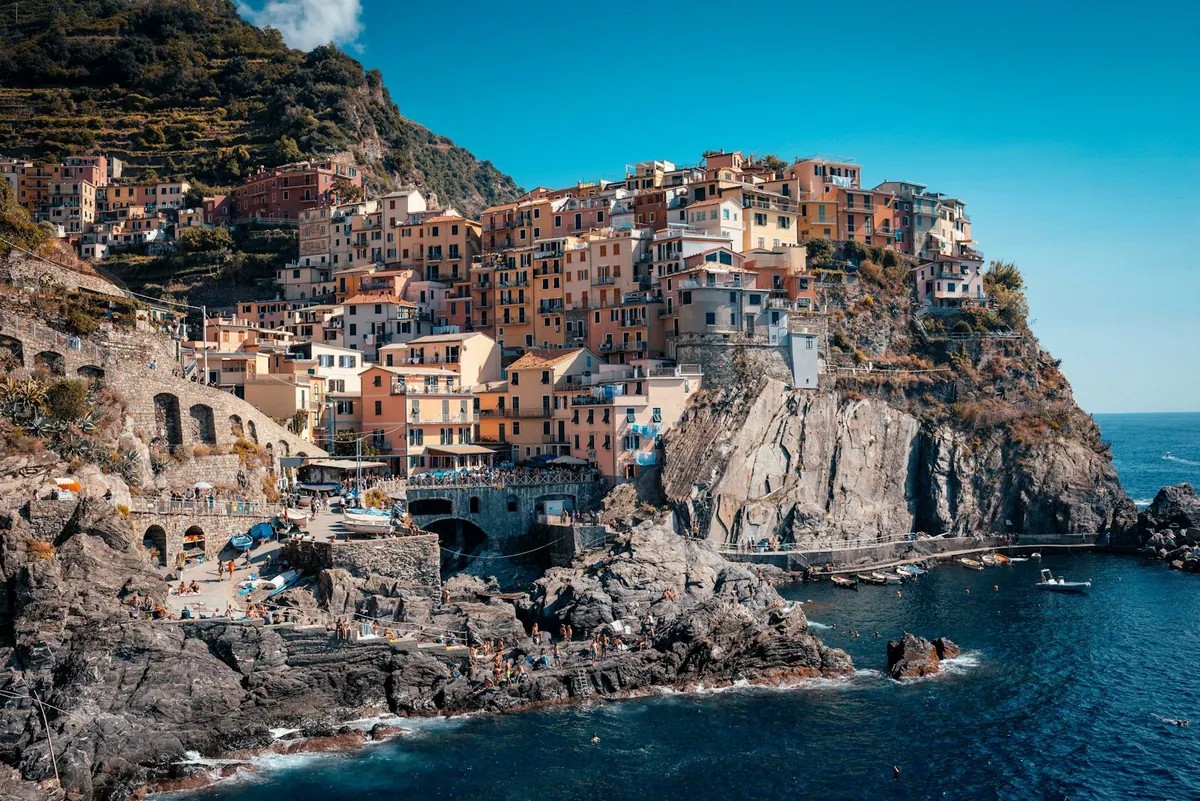
Train to Manarola. Manarola is, depending on the photograph, the most-photographed of the five villages — the iconic image is a sunset shot from the small clifftop trail (the Punta Bonfiglio path) just south of the harbour, with the village of pastel houses cascading down the cliff and reflecting in the small natural harbour pool below. You can swim in the small natural pool. The cliff walks behind the village (now closed as official trails after several rockfalls in the 2010s — check current status before walking) used to give you the famous Sentiero dell’Amore — the Lovers’ Path — to Riomaggiore; the walk is now mostly closed. Train hop instead.
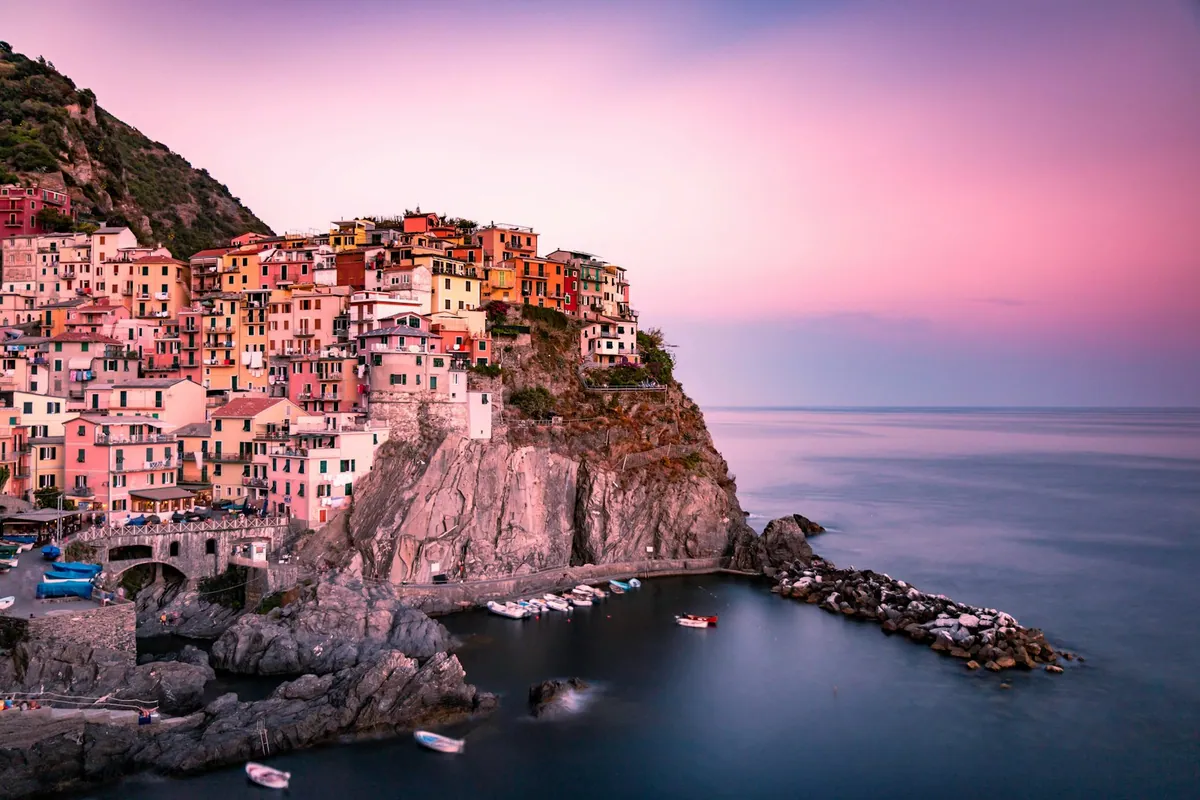
Riomaggiore is the southernmost of the five — slightly larger than Manarola, with a steep main street (Via Colombo) climbing up from the harbour through tall pastel houses. Walk down to the small harbour and the rocky beach. Stop at one of the small bars for a glass of wine and a plate of fritto misto. Sunset on Manarola or Riomaggiore is the day’s last act — the sun drops into the western Mediterranean, the village lights come on, and the colours on the houses go through every shade of orange.
Train back to your base village in the late evening.
Day three: the cliff walks (or the boat)
Day three, walk. The Sentiero Azzurro — the Blue Trail — is the high cliff path that runs the entire length of the Cinque Terre, with sections between each village. Some sections have been closed at various times after landslides; check the National Park website for current status. The Monterosso–Vernazza and Vernazza–Corniglia sections are, when open, the most spectacular, with constant Mediterranean views, terraced vineyards, and the small dry-stone walls (the maximums) that have shaped the landscape for centuries.
If the cliff trails are closed (they often are after winter rains), the Sentieri Alti — the High Trails — that run further inland through the mountains above the villages give you a different and arguably even more spectacular walk. The route from Volastra (a small inland village above Manarola) along the ridge offers some of the best panoramic views of the whole coast.
If you don’t want to walk, take the ferry. The small Cinque Terre Ferry runs between the four water-accessible villages (Corniglia is skipped — it’s on a cliff) several times a day in season, with one-day passes around €30. The view of the villages from the water — pastel houses cascading down to the harbours, the cliff terraces above, the surf at the base — is the photograph the postcards always take.
End the trip with one final dinner in your base village. Catch the morning train out.
How nice are Cinque Terre locals?
Coastal-village warm. The five villages have, for the last 30 years, lived almost entirely on tourism, and the local hospitality is professional, polished, and genuinely friendly. My three days included: a Vernazza trattoria owner walk me to the dock to make sure I caught the right ferry; a small focaccia counter in Monterosso slip me an extra slice “because you waited politely”; and a B&B host in Manarola insist on driving me up to the train station with my bag because the morning was hot. The friendliness is real even at peak season.
If you go
• Stay overnight in one of the villages. Day-tripping from La Spezia loses the magic. • Buy a Cinque Terre Card. Covers all the trains plus the official cliff-path trails. • Check trail status before walking. Landslides close sections regularly. • Eat the Ligurian specialities — pesto, focaccia, trofie, fresh anchovies. • Visit in May, June, September, or October. July and August are very crowded; the villages are small and the day-trippers overflow.
Cinque Terre is the bit of the Italian Riviera that, despite the crowds, still feels genuine. Three days here will give you all five villages, two cliff walks, and a sunset over Manarola you’ll keep on your phone for years.