The Dolomites in Five Days: Tre Cime, Lago di Braies and the Alta Badia
Five days in northern Italy’s great limestone mountains — the famous three-peaked rock formation, the alpine lake everyone has photographed, and the high pastures of the Alta Badia.
📍 Dolomites, Italy
The Dolomites are the great limestone mountains of north-east Italy — the cluster of dramatic, pale, vertical-walled peaks that rise out of the Alpine foothills in the regions of Trentino-Alto Adige and Veneto, between the Brenner Pass and the Friuli plain. They are different from the rest of the Alps. The rock is dolomite (a calcium-magnesium carbonate, after which the mountains are named), and it weathers into characteristic vertical walls, jagged spires, and pale grey-white-pink colours that turn extraordinary shades of orange and red at sunrise and sunset (a phenomenon called the enrosadira in the local Ladin language). The whole region was UNESCO-listed in 2009 for its outstanding natural and geological value. The Italian half of the Tyrol region — South Tyrol, formerly part of Austria, ceded to Italy after WWI, still strongly bilingual (German, Italian) and trilingual (Ladin) in some valleys — gives the Dolomites a particular cultural feel: alpine villages with onion-domed churches, German-Italian food, and the kind of immaculate tidiness that makes you suspect the Italian state somehow ends at the regional border.
Five days will give you the Dolomite headlines. Add days for serious hiking or via ferrata.
The setup
Fly into Venice (3 hours by car to Cortina d’Ampezzo) or Verona (2 hours 30 minutes) or Innsbruck (2 hours 30 minutes from the Austrian side via the Brenner). Hire a car at the airport — the Dolomites have only limited bus service between the small valley villages.
Stay in two bases: two nights near Cortina d’Ampezzo (the most famous resort, in the eastern Dolomites, close to Tre Cime and Lago di Braies) and three nights in the Alta Badia or Val Gardena (the central Dolomites, closer to Sella Ronda and the major cable car networks). Mid-range hotels run €150–400 a night. Book ahead.
The best time to visit is late June to early September for hiking; mid-December to early April for skiing. The shoulder months (May, October) have unpredictable weather and many cable cars and rifugi closed.
Day one and two: Tre Cime di Lavaredo and Lago di Braies
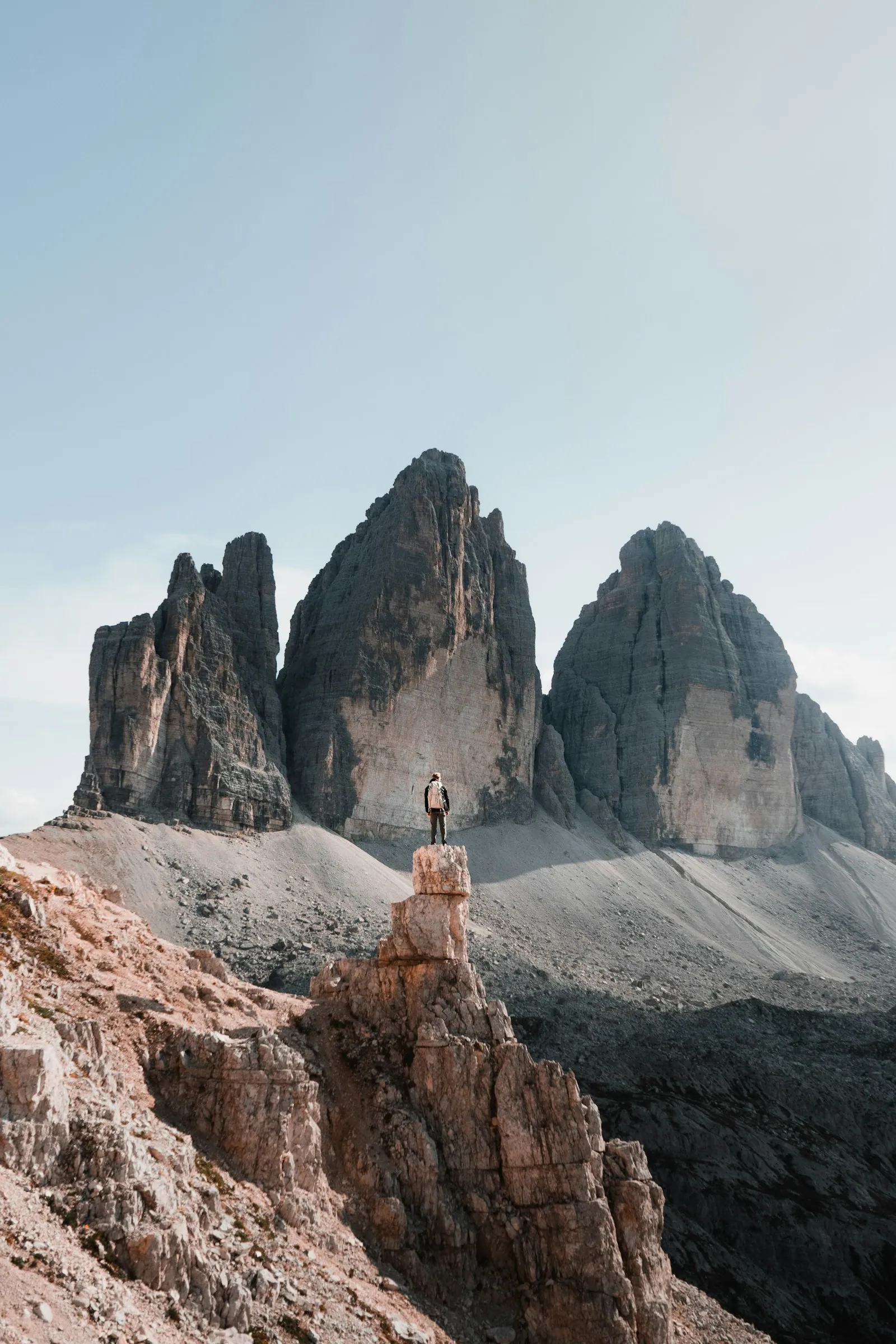
The Tre Cime di Lavaredo — “three peaks of Lavaredo” — are the iconic rock formation of the Dolomites: three vertical limestone towers (Cima Grande at 2,999 metres, Cima Ovest at 2,973 metres, Cima Piccola at 2,857 metres) rising side by side from a high mountain plateau, often considered the most photogenic single rock formation in the Alps. The classic Tre Cime hike — a 10-kilometre loop around the base of the three peaks — is one of the great accessible mountain walks in Europe.
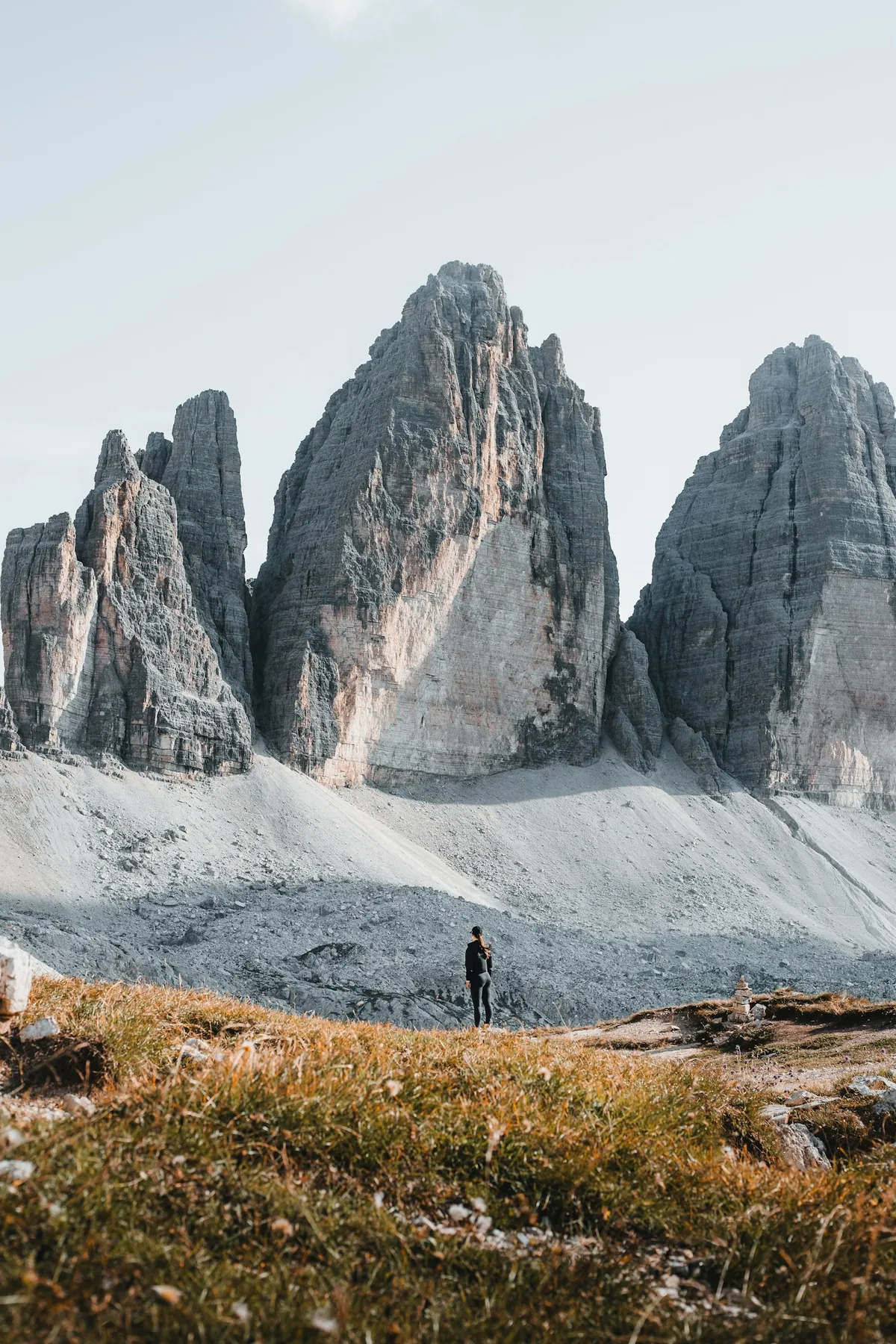
To do the hike: drive from Cortina or Misurina to the Auronzo Hut parking lot at 2,320 metres (the road is a private toll road, about €30 per car, open mid-June to early October — book the timed entry slot online in advance). The loop trail starts from the parking lot, contours around the south face of the three peaks (with the famous frontal view of all three from the south side near the Lavaredo Hut), drops down past the Locatelli Hut on the north side (with an extraordinary view of the three peaks from a different angle), and loops back to the parking lot. The walk takes 3 to 4 hours at a steady pace, with lunch at one of the rifugi (mountain huts that serve hot lunches and cold beers — Rifugio Auronzo, Rifugio Lavaredo, Rifugio Locatelli are all on the route). The full loop is moderate in difficulty — the path is well-marked, mostly graded, but with several steeper sections and stretches of loose scree.
Day two, drive 30 minutes from Cortina to Lago di Braies (Pragser Wildsee in German) — the famous emerald-green alpine lake at the foot of the Croda del Becco mountain, possibly the most photographed lake in Italy. The lake is small (about 1.5 kilometres long), surrounded by pine forest and the dramatic vertical walls of the Croda del Becco rising 2,810 metres directly behind the southern shore. The famous wooden boats moored in front of the historic Hotel Lago di Braies are the iconic photograph.
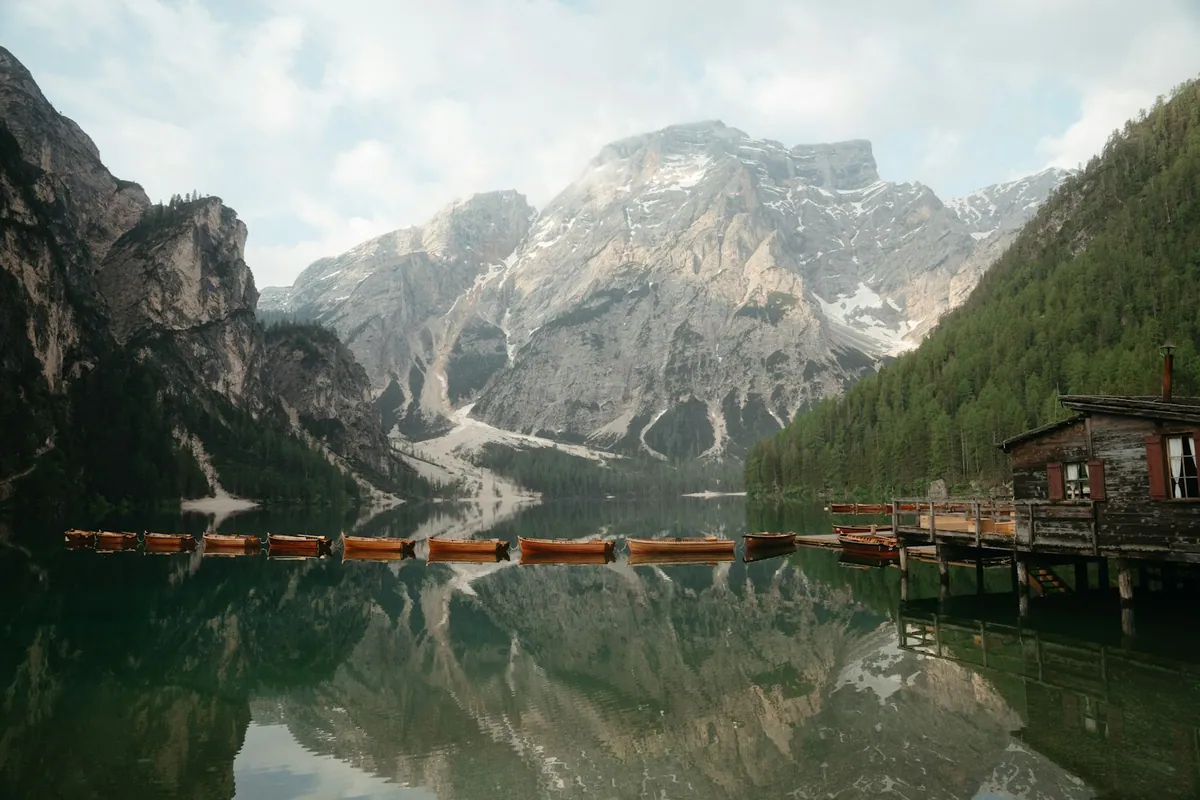
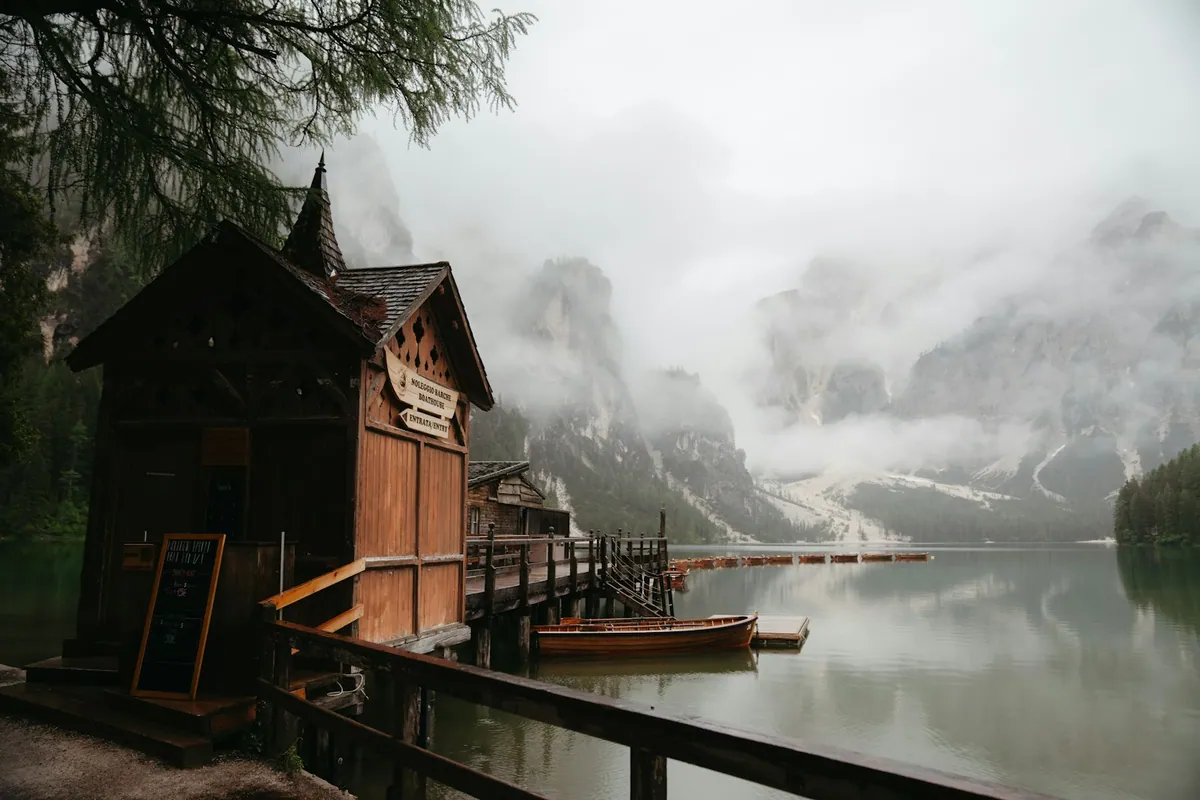
Walk the loop trail around the lake (about 4 kilometres, mostly flat, takes 90 minutes at a leisurely pace). Rent one of the small wooden boats from the dock at the south end (about €25 for half an hour) to row out into the lake for the iconic perspective. Have lunch at the Hotel Lago di Braies restaurant or one of the smaller huts in the valley.
A note: the lake has, since around 2018, become so popular on Instagram that the access road and parking lot fill by 9 a.m. in season. The local authorities have introduced timed-entry permits and shuttle buses from a parking lot 5 kilometres down the valley. Book your visit in advance via the official Pragser Wildsee website.
Day three: drive to the central Dolomites — Alta Badia or Val Gardena
Drive from Cortina to the Alta Badia (about 2 hours via the dramatic Passo Falzarego and Passo Valparola). The Alta Badia is a high mountain valley in the central Dolomites, surrounded by the great peaks of the Sella Group, the Marmolada (the highest peak in the Dolomites at 3,343 metres), and the Sassongher (a striking pyramid-shaped peak above the village of Corvara).
Stay in Corvara, La Villa, or one of the smaller villages. The hotels here are mostly traditional alpine chalets with wooden balconies and excellent restaurants serving the local Ladin cuisine (a particular blend of Italian, Austrian, and Tyrolean traditions — kaiserschmarrn for breakfast, casunziei for lunch, polenta with venison ragù for dinner).
Day three afternoon, take a cable car up to the high country for an introductory walk. The Piz Boè cable car from Corvara takes you to 2,500 metres in a single ride; from there, several short walks (Vallon Hut and the Pordoi Pass area) give you a first sense of the Sella Group and the panoramic high-mountain views.
Day four: the Sella Ronda or a major hike
Day four is for serious mountain time. Two main options:
The Sella Ronda is the famous cable-car-and-walking circuit around the Sella Group massif — a chain of cable cars and short walks that lets you circumnavigate the entire Sella mountain in a single day, with constant high-altitude views. In summer, the “Sellaronda by walking” option is the half-day version; the full circuit takes a day. In winter, the Sella Ronda is the world’s most famous ski circuit, with about 23 lifts and 40 km of pistes connecting four valleys.
Or pick a major hike. The Adolfo Munkel Trail in the Val di Funes (a 4-hour traverse along the base of the Geisler peaks, with extraordinary views; the Geisler are the most photographed peaks in the central Dolomites) is one of the most beautiful day hikes in the entire Italian Alps. The Vajolet Towers loop in the Catinaccio massif is another classic.
Either way, lunch is at a rifugio. The mountain huts of the Dolomites are an extraordinary cultural institution — small alpine restaurants serving full hot meals (canederli dumplings, polenta, schnitzel, strudel), reachable only by foot or cable car, and the food is much better than “mountain hut food” has any right to be. Book ahead in season.
Day five: a slow last day
Day five, slow morning at the chalet. Long breakfast on the terrace. One last cable car for one final view of the peaks. A long drive out, depending on which airport you fly from.
If you have any energy, stop at the Marmolada Cable Car for a trip to the highest peak in the Dolomites at 3,343 metres — the cable car runs to a viewing terrace at 3,265 metres with sweeping panoramic views in every direction, including (on clear days) views all the way to the Adriatic to the south.
End the trip with a final long lunch at one of the Italian-Austrian restaurants in the valley. Drive out.
How nice are South Tyroleans?
Alpine-warm and quietly Austrian. The South Tyrolean temperament is precise, polite, and genuinely warm once you’ve been at the chalet for a day. The hotel staff and rifugio keepers are professional and consistently friendly. My five days included: a chalet host wake up at 5 a.m. to bring me a thermos of coffee and a packed sandwich for an early Tre Cime drive; a cable car operator wait an extra two minutes for me at the bottom because he saw me running with a backpack; and a Rifugio Lavaredo waiter walk me to a small viewpoint just behind the hut “because the sunset will be very good in fifteen minutes, you should not miss it.” The Dolomite hospitality is real, alpine, and quietly excellent.
If you go
• Visit June to early September for hiking, December to early April for skiing. • Hire a car. Essential for moving between valleys. • Book Tre Cime parking and Lago di Braies access in advance. Both are now timed-entry. • Eat the Tyrolean food. Canederli, schlutzkrapfen, kaiserschmarrn, strudel, the local speck (smoked ham), and the Lagrein and Vernatsch wines. • Pack proper hiking shoes and layers. Mountain weather changes fast.
The Dolomites are one of the most spectacular mountain landscapes in Europe. Five days here will give you Tre Cime, Lago di Braies, and a couple of major hikes. You leave with the iconic photographs and a serious case of mountain affection.
Plan your trip to Italy
For more, see our Italy travel guide and country page, places to visit in Italy on BugBitten, tours and experiences in Italy.
Useful external resources: the Italy country profile on Wikipedia and the official Italy tourism board.