Florence in Three Days: The Duomo, the Uffizi and a Sunset at Piazzale Michelangelo
Three days in the cradle of the Renaissance — the cathedral with the famous dome, the world’s greatest small art collection, and the long Tuscan lunches.
📍 Florence, Italy
Florence is the small Tuscan city that, between roughly 1300 and 1600, single-handedly invented modern Western art. Brunelleschi solved the problem of dome construction here. Donatello reinvented sculpture. Botticelli, Leonardo, Michelangelo, and Raphael all worked here at the height of their careers. The Medici family bankrolled most of it for 300 years. The result is a city centre — small enough to walk across in 25 minutes — that holds, in a few square kilometres, more first-rank Renaissance art than anywhere else in the world. The Uffizi alone has Botticelli’s Birth of Venus and Primavera, Leonardo’s Annunciation, Caravaggio’s Bacchus, and Michelangelo’s Doni Tondo, in adjoining rooms. Three days in Florence will not be enough; three days is enough to fall hard for the place and start planning a longer trip.
The setup
Fly into Florence (15 minutes from the centre by tram) or Pisa (1 hour by train). Or take the Frecciarossa from Rome (1 hour 30 minutes). Stay within a 10-minute walk of the Duomo — anywhere in the historic centre or just across the river in Oltrarno. Mid-range hotels run €120–250 a night.
The historic centre is entirely walkable. No car, no metro, just walk.
Day one: the Duomo and the historic centre
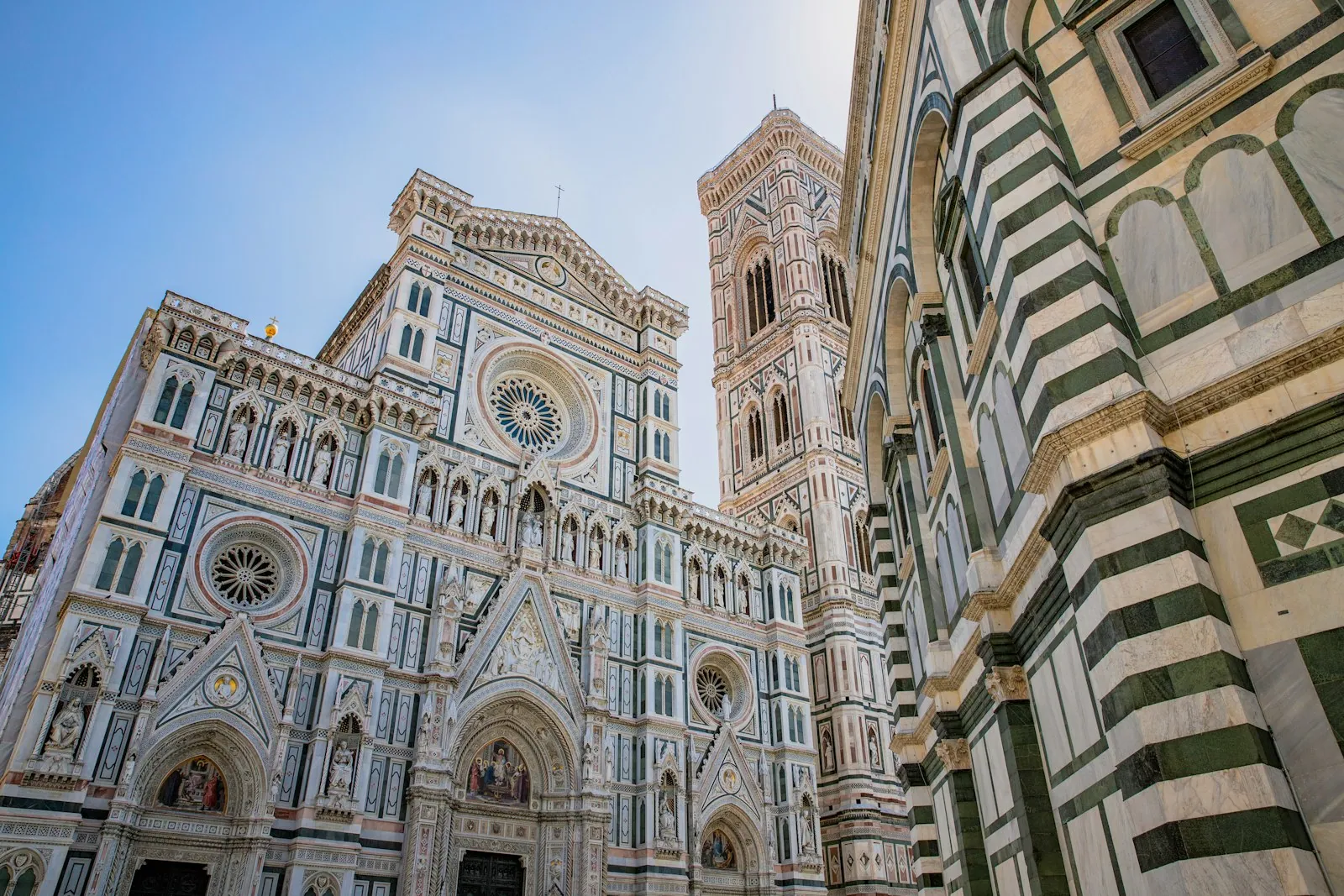
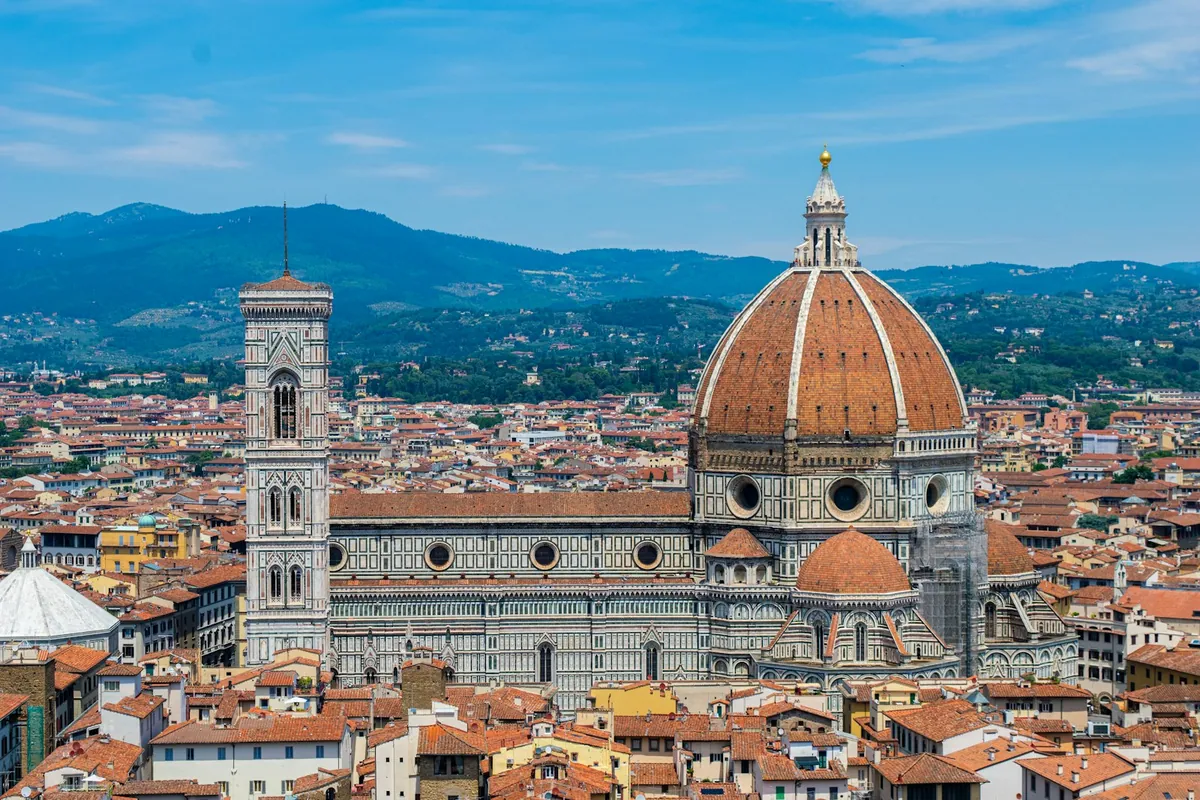
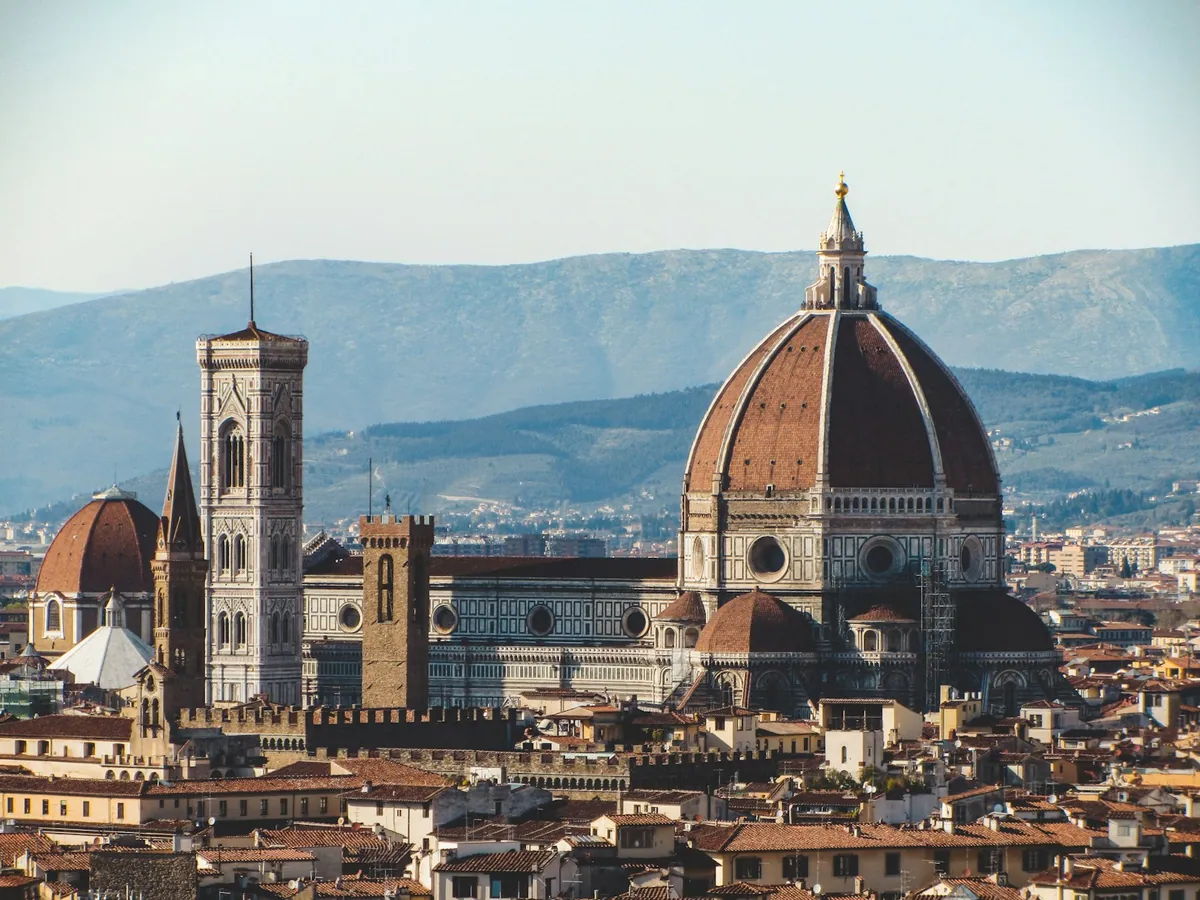
Walk to the Duomo first. The Cattedrale di Santa Maria del Fiore — Florence Cathedral — is the architectural anchor of the city, a vast Gothic-Romanesque cathedral started in 1296 and crowned in 1436 with Filippo Brunelleschi’s extraordinary dome — at the time the largest masonry dome in the world, built without scaffolding using a self-supporting double-shell technique that no one else had figured out. The dome is still the iconic image of Florence, and climbing it is one of the great Florentine experiences.
Buy the Duomo combined ticket online weeks ahead (about €30, includes the cathedral, dome climb, baptistery, bell tower, and museum). The dome climb is 463 steps in a narrow stone spiral — hot, claustrophobic in places, and absolutely worth it. The view from the top — looking down at the city laid out below, with the red-tiled rooftops, the green Arno river, and the Tuscan hills in the distance — is one of the great urban panoramas in Europe.
After the Duomo, walk three minutes south to Piazza della Signoria — the political square of Renaissance Florence, with the Palazzo Vecchio (the medieval town hall, still in use), the Loggia dei Lanzi (an open-air sculpture gallery containing Cellini’s Perseus with the Head of Medusa and Giambologna’s Rape of the Sabine Women among others), and the Uffizi Gallery in the L-shaped building on the south side. A copy of Michelangelo’s David stands in front of the Palazzo Vecchio (the original is in the Galleria dell’Accademia, a 10-minute walk north).
For lunch, eat at one of the trattorias in the streets behind Piazza della Signoria. Reliable: Trattoria Cammillo, Trattoria Mario (a tiny lunch-only spot near the Mercato Centrale, famous for its bistecca alla fiorentina), or any of the smaller bistros around Sant’Ambrogio.
In the afternoon, visit the Galleria dell’Accademia — a small museum housing Michelangelo’s David (the original, 5.17 metres tall, finished in 1504, displayed in a tribune at the end of a long gallery lined with Michelangelo’s unfinished “Prisoners”). The David alone is worth the visit. Allow ninety minutes. Book ahead.
Day two: the Uffizi
The Uffizi Gallery is one of the great single museums of the Western world. Housed in a 16th-century U-shaped building between Piazza della Signoria and the Arno (originally the offices of the Medici grand-ducal administration — uffici, “offices,” hence the name), it holds the Medici family’s collection of Renaissance art. The visit takes you on a roughly chronological route through the Italian Renaissance, room by room, painter by painter — Giotto, Cimabue, the Sienese masters, Botticelli, Leonardo, Michelangelo, Raphael, Titian, Caravaggio.
Buy your timed ticket online weeks ahead (about €25, plus a few euros for the booking fee). Allow four hours minimum. Bring water and a snack — there’s a small rooftop cafe but the queues are long.
The unmissables: Botticelli’s Birth of Venus and Primavera in adjoining rooms (the centrepieces of the museum); Leonardo da Vinci’s Annunciation and the unfinished Adoration of the Magi; Michelangelo’s Doni Tondo (his only surviving panel painting); Raphael’s Madonna of the Goldfinch; Caravaggio’s Medusa shield and Bacchus; Titian’s Venus of Urbino. You will also see a hundred other paintings that, in a smaller museum, would each be the showpiece. Take your time.
For lunch, eat at one of the small bistros near the Uffizi (Cantinetta dei Verrazzano is reliable for a wine-and-cured-meat lunch). In the afternoon, walk over the Ponte Vecchio.
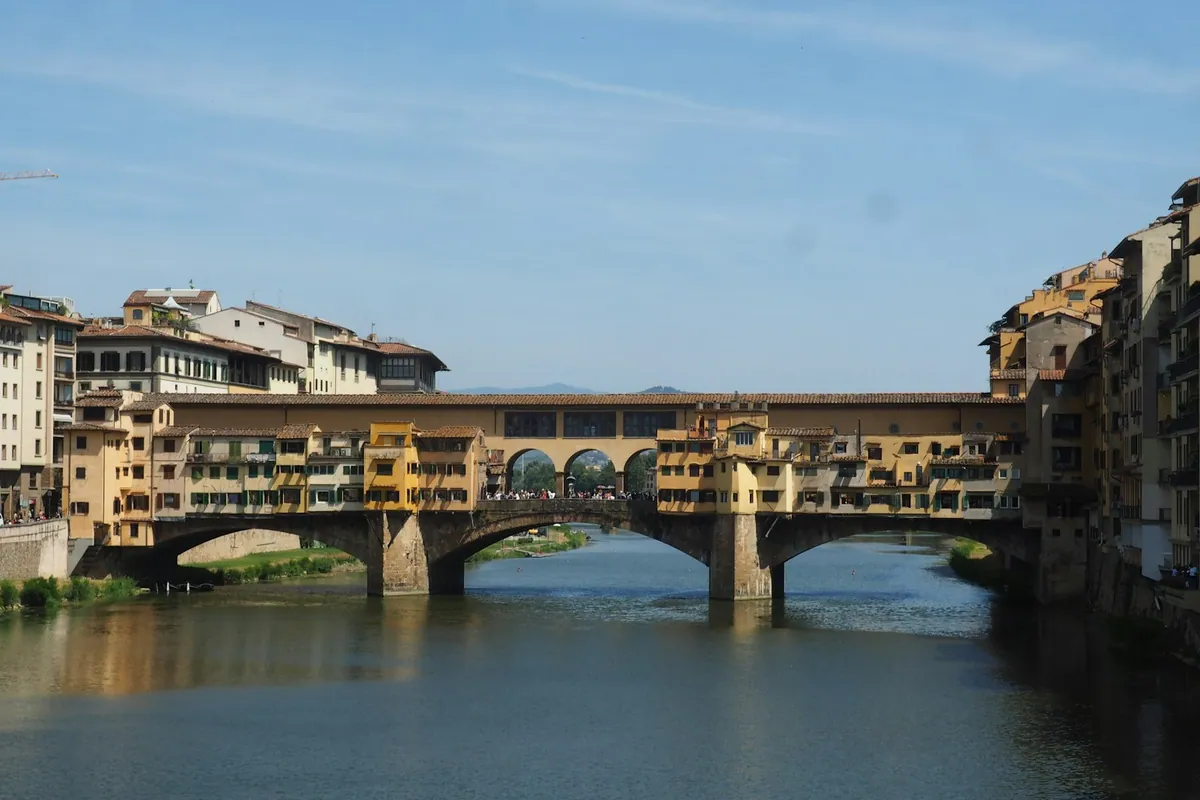
The Ponte Vecchio — the “old bridge” — is the famous medieval bridge over the Arno, lined with shops on both sides. It has been a bridge of jewellers and goldsmiths since the 1500s (Cosimo I de’ Medici evicted the original butchers and tanners and replaced them with goldsmiths because he was tired of the smell on his commute over the bridge). Walk across, browse the shop windows, take the photograph.
On the other side is the Oltrarno — “the other side of the Arno” — a slightly less polished, more bohemian neighbourhood with great artisan workshops, small antique shops, and excellent restaurants. Walk through.
For dinner, eat in the Oltrarno. Reliable: Il Santo Bevitore, Trattoria Ruggero, Olio & Convivium. Or for a destination meal, Buca Mario (the famous historic tourist restaurant) or Cibrèo (the chef’s tasting menu in San Niccolò).
Day three: Pitti Palace, Boboli Gardens, and the sunset at Piazzale Michelangelo
Day three is for the Oltrarno side. The Palazzo Pitti — the great Medici palace on the south bank, opposite the Ponte Vecchio — is now a complex of museums (the Palatine Gallery has a superb collection of Raphaels, Titians, and Caravaggios; the Costume Museum is excellent for a quirkier visit; the Royal Apartments are preserved as the Savoy royal family used them in the 19th century). Allow two hours.
Behind the palace, the Boboli Gardens are one of the great Italian formal Renaissance gardens — 11 hectares of clipped hedges, fountains, statues, and views back across the Arno to the Duomo. A long walk through the gardens is a perfect afternoon.
For dinner and the iconic Florentine sunset, walk south to Piazzale Michelangelo. The piazzale is a broad open square on the hill above the Oltrarno, with the city laid out below — the Duomo, the bell tower, the Palazzo Vecchio, the Ponte Vecchio, the river — all visible in a single panoramic sweep. Climb the small hill behind the piazzale to the church of San Miniato al Monte (a beautiful 11th-century Romanesque church with a striking inlaid marble facade, free to enter, with monks who chant Gregorian compline at 6:30 p.m. every evening — the most atmospheric end-of-day in the city). Then back down for a slow sunset on the piazzale terrace.
End with a final dinner at one of the small bistros in San Niccolò (the small medieval neighbourhood at the foot of the hill below the piazzale — Le Antiche Carrozze, La Beppa Fioraia).
How nice are Florentines?
Tuscan-warm. Florentines are slightly more reserved than Romans — they have a quieter civic pride that takes a day to warm into — but once they’ve worked out you’re seriously interested in the art and the food, they are generous and patient. My three days included: an Uffizi guard quietly walk me to a small Lippi I’d missed; a wine bar owner in the Oltrarno spend twenty minutes explaining the difference between three different Chiantis; and a trattoria owner refuse to let me leave without a small free glass of vin santo with a cantucci biscuit “because you finished the bistecca, you deserve dessert.” The Florentine warmth is the kind that grows on you.
If you go
• Three days minimum. A long weekend is short. • Book the Duomo, Uffizi, and Accademia tickets online weeks ahead. Walk-up is essentially impossible in season. • Eat the bistecca alla fiorentina once. The Tuscan T-bone, grilled rare, served whole. Order it for two; it’s the size of a doormat. • Drink the local Chianti. The cheaper Chianti Classico is fine; the Riserva and the Brunello di Montalcino are exceptional. • Walk the small streets behind the major squares. Florence rewards aimless wandering.
Florence is a small city packed with the most concentrated Renaissance heritage in the world. Three days here will give you the Duomo, the Uffizi, the Ponte Vecchio, and the iconic sunset. You leave with a list of return reasons.