Milan in Three Days: The Duomo, the Galleria and the Navigli at Sunset
Three days in Italy’s most international city — Gothic cathedral, the world’s oldest shopping arcade, the Last Supper, and the canals.
📍 Milan, Italy
Milan is Italy’s most international city — the financial capital, the design capital, the fashion capital, and the city most likely to remind a first-time visitor of Paris or London rather than of Rome or Florence. The historic centre is small and densely packed (the Duomo, the Galleria, La Scala, and the Castello Sforzesco are all within ten minutes’ walk of each other), but the city around it is large, busy, properly modern, and built on a different scale from anywhere else in Italy. The result is a city that does not pretend to be a Tuscan hill town — Milan is brisk, expensive, well-dressed, well-fed, and proud of its place at the centre of European commerce. It is also home to one of the great Gothic cathedrals in Europe, to one of the world’s most famous paintings (Leonardo’s Last Supper), to the world’s oldest active shopping arcade (the Galleria Vittorio Emanuele II), and to a small canal quarter (the Navigli) where the city quietly turns into a Venice-of-the-North on a summer evening.
Three days is enough.
The setup
Fly into Milan Malpensa or Linate (Linate is closer to the centre, 15 minutes by bus). Or take the Frecciarossa from Rome (3 hours) or Florence (1 hour 40 minutes). Stay in or near the centre — within walking distance of the Duomo. Mid-range hotels run €120–250 a night.
The metro is excellent and covers the city extensively. Walk in the centre, metro for the further reaches.
Day one: the Duomo, the Galleria, Castello Sforzesco
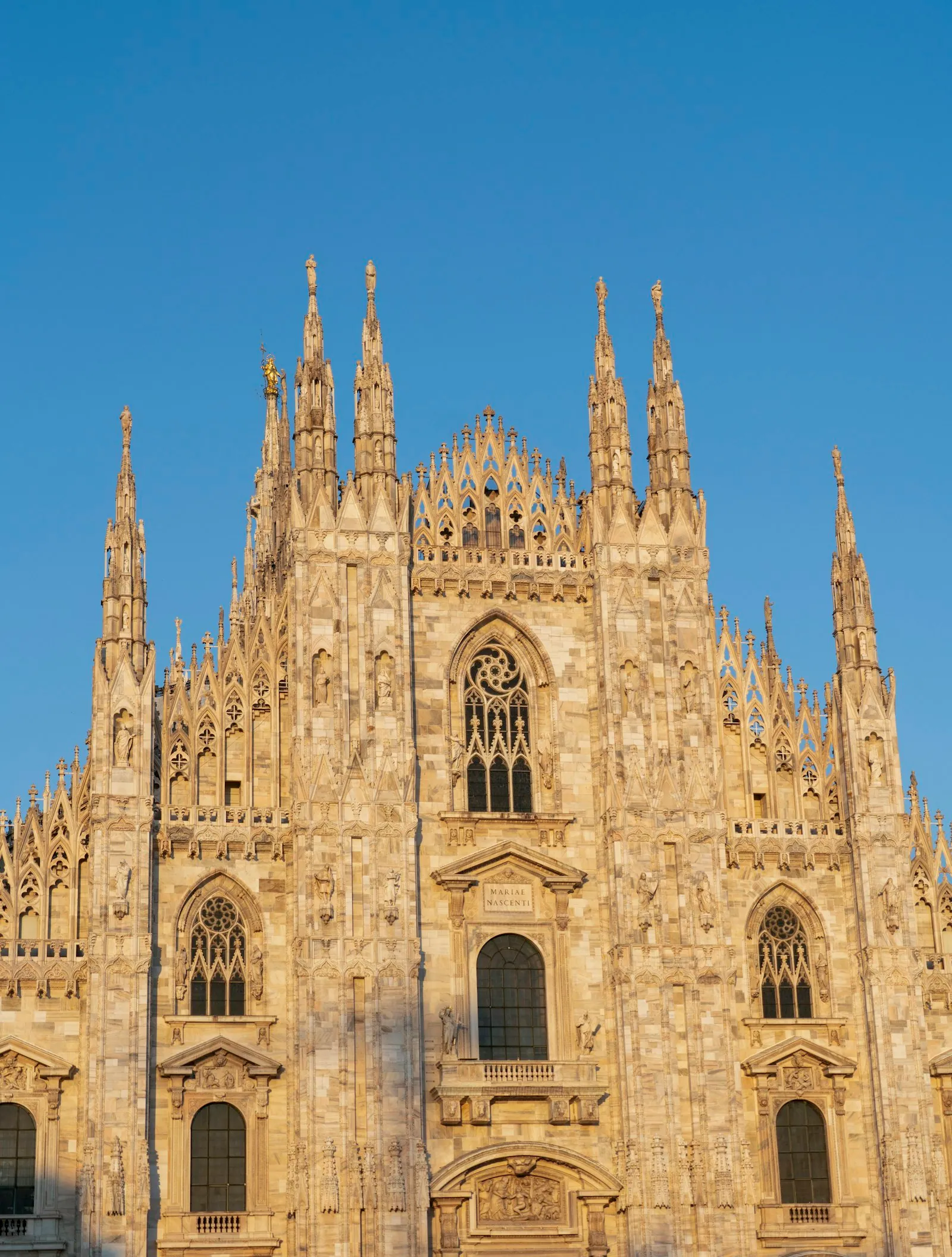
Walk to the Duomo first. The Cattedrale di Santa Maria Nascente — Milan Cathedral — is the great architectural anchor of the city: started in 1386, finished in stages until 1965 (yes, the final spires are 20th century), the largest Gothic cathedral in Italy and the third-largest in the world. The exterior is a forest of 135 spires and 3,400 statues; the white-pink Candoglia marble facade is one of the great civic theatricals in Europe. The interior is vast — 158 metres long, 92 metres wide — with the third-largest stained glass windows in the world.
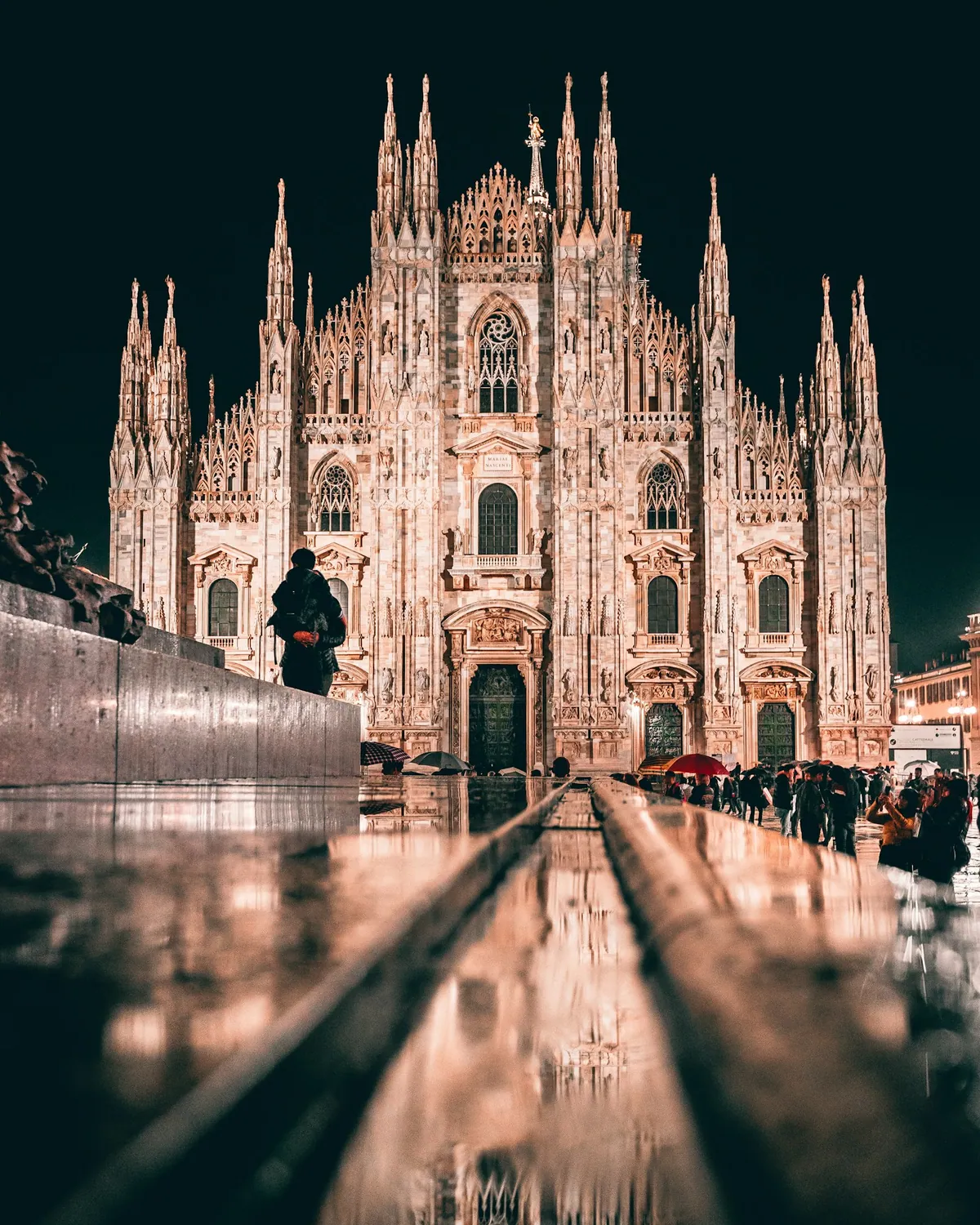
Buy a Duomo combined ticket online (about €25, includes the cathedral, the rooftop terraces, the museum, and the small archaeological area underneath the cathedral). The rooftop terraces are the experience — you take a small elevator or climb stairs to the cathedral roof and walk among the spires and the statues, with the central Madonnina (a 4-metre gilded statue of the Virgin at the apex of the cathedral) as the highest point. The view across central Milan from the roof is spectacular. Allow three hours for the full Duomo visit.
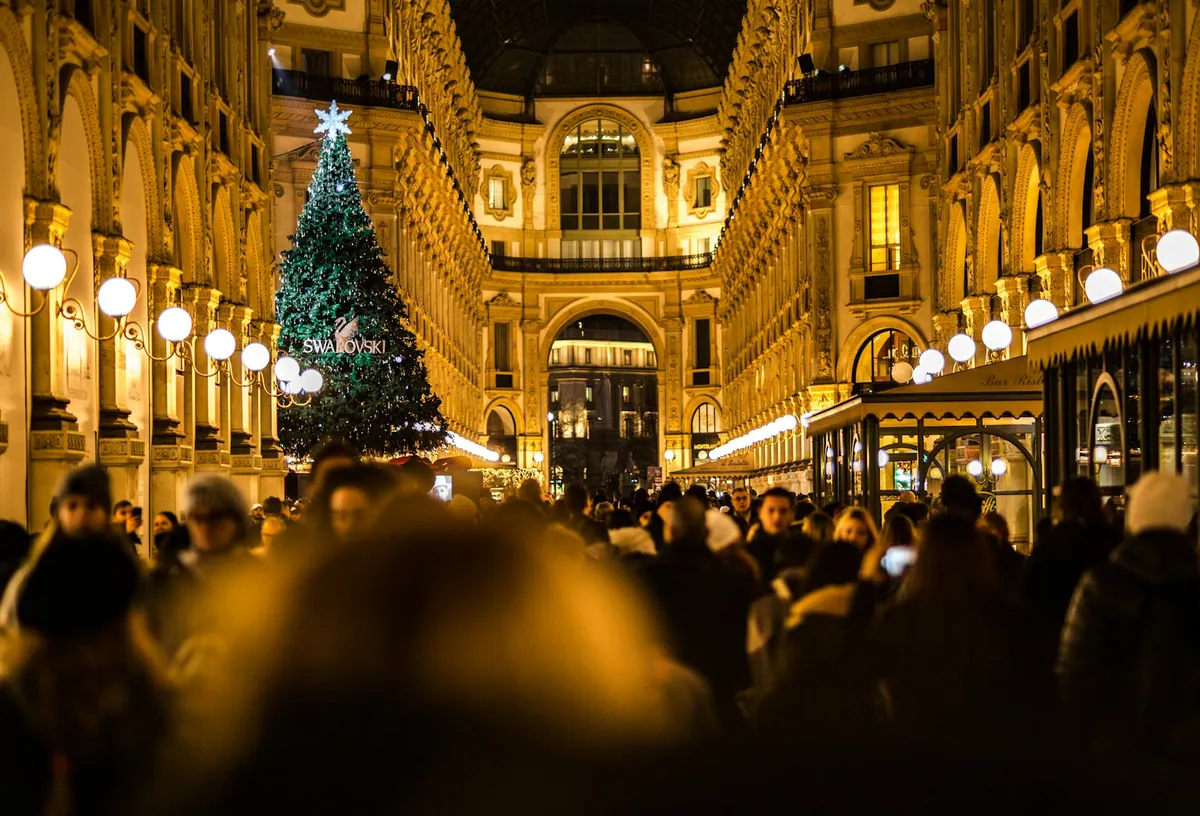
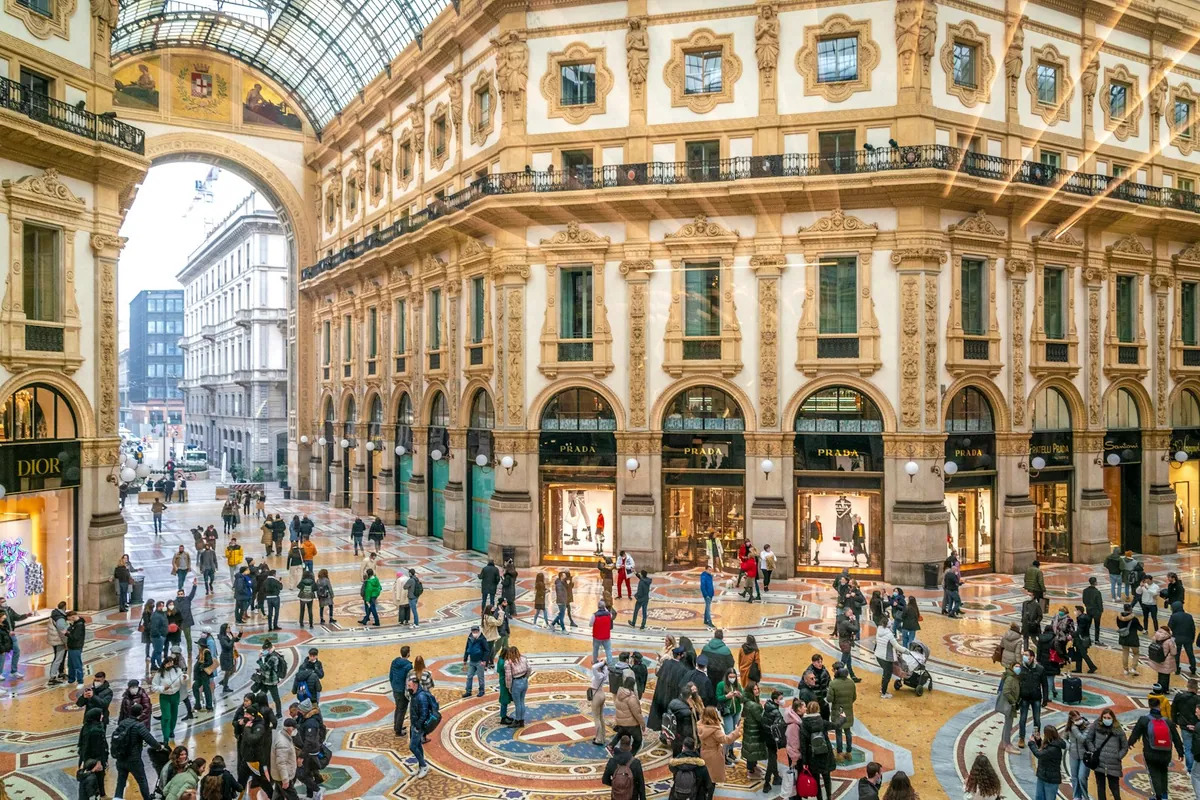
After the cathedral, walk into the Galleria Vittorio Emanuele II — the great glass-roofed shopping arcade just off Piazza del Duomo, opened in 1877, the oldest active shopping arcade in the world, named for the first king of unified Italy. The two crossing arms of the arcade are full of luxury boutiques (Prada, Louis Vuitton, the original Gucci) and historic cafes (Camparino, the original Campari bar; Bar Zucca; Ristorante Cracco). The famous bull mosaic in the central octagon — the Galleria’s ornate floor mosaic of the city of Turin’s coat of arms with a bull on it — has a small hollow under one of the bull’s testicles, and the local tradition is to spin three times on your heel in the hollow for good luck. You will see tourists doing this. Join in.
Walk through the Galleria to Piazza della Scala on the other side, with the famous Teatro alla Scala (La Scala, the most prestigious opera house in the world). If you have a chance to see an opera here in season (December to July), book months ahead. Otherwise, the small La Scala Museum is open during the day.
Walk west to the Castello Sforzesco — the great medieval castle built by the Visconti family in the 14th century and rebuilt by the Sforzas in the 15th. The castle now houses several small museums (the most important is the Museum of Ancient Art, with Michelangelo’s unfinished Rondanini Pietà — the last sculpture he worked on). The Sempione Park behind the castle is the great central green space of Milan, with the Arch of Peace at the far end.
For dinner, eat at one of the trattorias near the Brera or the Navigli. Trattoria Milanese, Trattoria del Pescatore, Latteria di San Marco are all reliable.
Day two: the Last Supper and the Brera
Day two is for art. Leonardo da Vinci’s Last Supper (Il Cenacolo) is in the refectory of the convent of Santa Maria delle Grazie, in central Milan. Painted between 1495 and 1498, it is one of the most famous paintings in the world, and (because of the experimental and unstable medium Leonardo used) one of the most fragile — only 25 visitors are admitted at a time, for 15 minutes each, in a climate-controlled chamber. Tickets must be booked months in advance and sell out essentially immediately when they are released. Book online via the official Cenacolo Vinciano website. Cost about €15. Allow ninety minutes including the time to find the entrance and the small adjacent church of Santa Maria delle Grazie (a beautiful Renaissance building in its own right).
Even with limited preparation time, you can sometimes find tickets through small-group tour operators (€60–80 per person, including the booking fee and a guide). Worth the premium if the official tickets are sold out.
After the Last Supper, walk to the Brera — Milan’s historic art and design quarter, with cobbled streets, small boutiques, and the great Pinacoteca di Brera. The Pinacoteca is one of the great Italian art museums — Raphael’s Marriage of the Virgin (the Sposalizio), Mantegna’s Lamentation of the Dead Christ (with its extraordinary foreshortened perspective), Caravaggio’s Supper at Emmaus, and Piero della Francesca’s Brera Madonna are the headlines. Allow three hours.
Have lunch in Brera. Reliable: Latteria San Marco, Trattoria Torre di Pisa, Bar Brera. The neighbourhood after dark has one of the best aperitivo scenes in the city.
In the afternoon, walk through the Quadrilatero della Moda — Milan’s “Fashion Quadrilateral,” the four streets between Via Montenapoleone, Via della Spiga, Via Sant’Andrea, and Via Manzoni that hold essentially every major Italian and international luxury brand. Window-shop. Have a coffee at Cova (the historic 1817 cafe on Via Monte Napoleone).
Day three: the Navigli and a slow last day
Day three, the Navigli — Milan’s small canal quarter in the south of the city. The Navigli were a network of canals that connected Milan to the surrounding lakes and rivers, used since the medieval period for moving construction materials and goods. Most of the canals were filled in during the 20th century, but the two main ones — the Naviglio Grande and the Naviglio Pavese — survive as small open canals lined with bars, restaurants, antique shops, and the famous Sunday flea market.
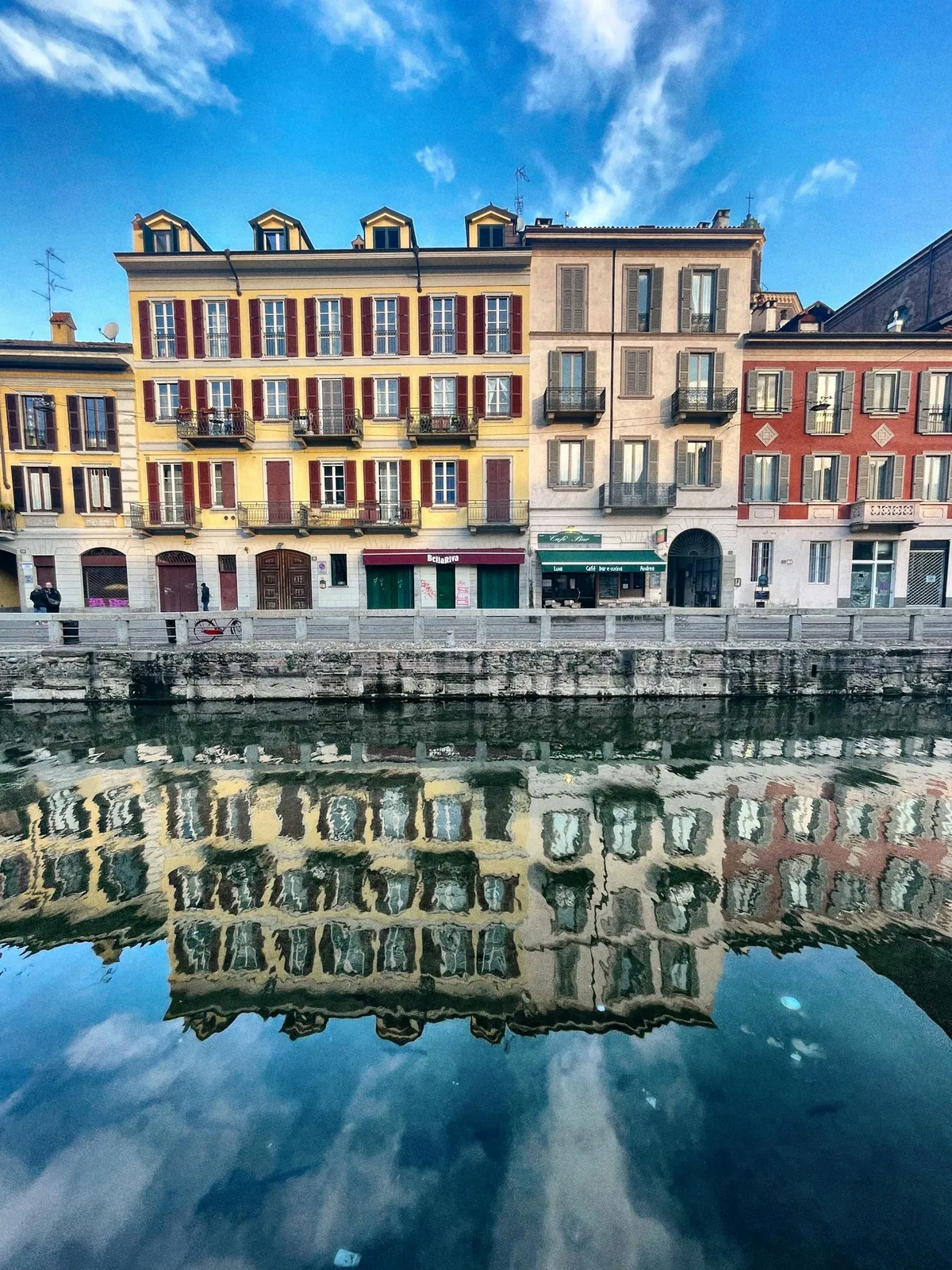
Walk along the Naviglio Grande in the late afternoon. Cross the small footbridges. Stop at one of the bars for an aperitivo (the Milanese aperitivo tradition is the world’s most generous: pay €10–15 for a drink and you get a buffet of small snacks that easily counts as an early dinner — the Navigli is one of the city’s great aperitivo neighbourhoods).
In the evening, eat at one of the Navigli restaurants — Trattoria Madonnina, Osteria del Binari, or the small bistros along the canal side. Or move to one of the destination restaurants in the surrounding Tortona or Porta Genova neighbourhoods.
Spend a slow late evening walking along the canal as the lights come on and the reflections in the water double everything.
How nice are Milanese?
Brisk and warm. Milanese have a reputation among other Italians for being slightly cold and business-focused — and there’s a small grain of truth, but it’s mostly a regional stereotype that doesn’t hold up after a day in the city. The Milanese hospitality is professional, polite, and genuinely warm in the smaller bars and trattorias. My three days included: a Brera trattoria owner refuse the change from a small note because “you ordered well, you said please”; a Galleria boutique staff member spend twenty minutes helping me choose a small gift without any pressure to buy; and a taxi driver back to the airport take a small detour through the Porta Romana neighbourhood to show me “the part of Milan you don’t see otherwise.” The Milanese welcome is real and slightly hidden under the brisk surface.
If you go
• Book the Last Supper tickets months in advance. The single hardest ticket in Italy. • Buy a Duomo combined ticket online — covers the cathedral, the rooftop, the museum. • Walk the Quadrilatero della Moda even if you don’t shop. The boutiques are the architecture. • Do an aperitivo evening on the Navigli or in Brera. The Milanese tradition. • Eat the Milanese food. Risotto alla Milanese (with saffron), cotoletta alla Milanese (the breaded veal cutlet), ossobuco (slow-braised veal shank). Less famous than Roman or Tuscan food, just as good in the right places.
Milan is the bit of Italy that feels most like the rest of urban Europe. Three days here will give you the Duomo, the Last Supper, the Galleria, and the Navigli. You leave with a small affection for a city that is rarely the first reason people come to Italy but is often the reason they come back.