Naples and Pompeii in Three Days: The Bay, the Volcano and the Buried City
Three days at the foot of Vesuvius — the chaotic city of Naples, the buried Roman city of Pompeii, and the pizza that was invented here.
📍 Naples, Italy
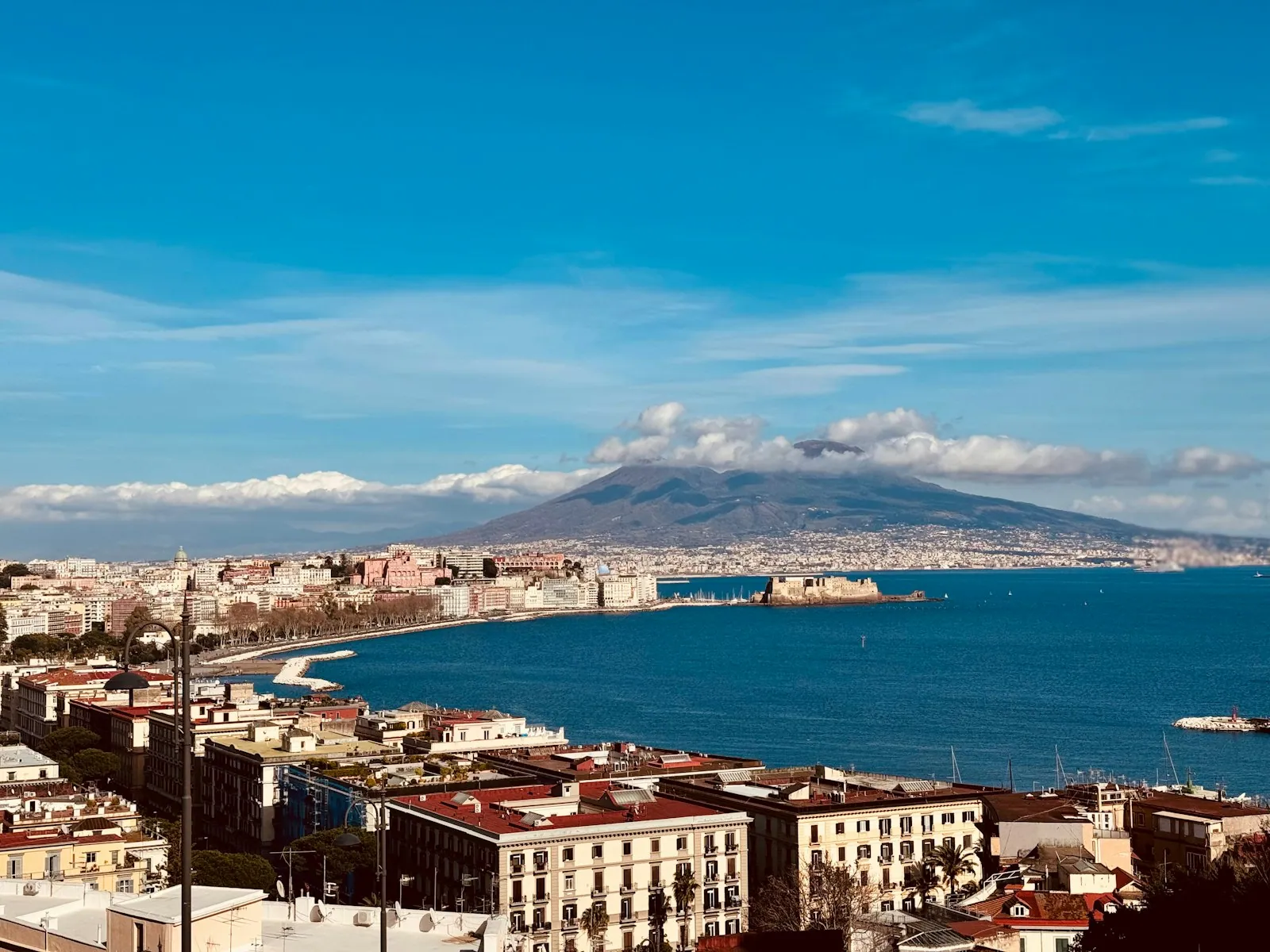
Naples is the chaotic, beautiful, slightly intimidating great city of southern Italy, sitting in a curving bay at the foot of an active volcano (Mount Vesuvius, 1,281 metres, last erupted in 1944, considered overdue) and a stone’s throw from the most famous archaeological site in Europe (Pompeii, the Roman city buried by a Vesuvius eruption in 79 AD and dug out essentially intact in the 18th century). The city itself has been a continuous urban centre for about 2,800 years — Greeks founded it (the name comes from the Greek Neapolis, “new city”), Romans expanded it, the Bourbons made it the capital of the Kingdom of the Two Sicilies until Italian unification in 1861. The result is one of the most layered cities in Italy: Greek and Roman ruins under medieval streets, Spanish-era palazzos, Bourbon palaces, working-class quarters, and a food culture (Naples is the birthplace of pizza, of mozzarella di bufala, of sfogliatelle, and of espresso) that is one of the great quiet glories of Italy.
Three days lets you do Naples and Pompeii. Add days for Capri, Procida, or the Amalfi Coast.
The setup
Fly into Naples Capodichino (15 minutes from the centre) or take the Frecciarossa from Rome (1 hour 10 minutes). Stay in or near the historic centre — Spaccanapoli, the Decumano, or near Piazza Bellini. Mid-range hotels run €100–200 a night.
The city is walkable in the centre. Use the metro for the further reaches. The Circumvesuviana (the small commuter train running south from Naples to Sorrento) is how you reach Pompeii.
Day one: Spaccanapoli and the historic centre
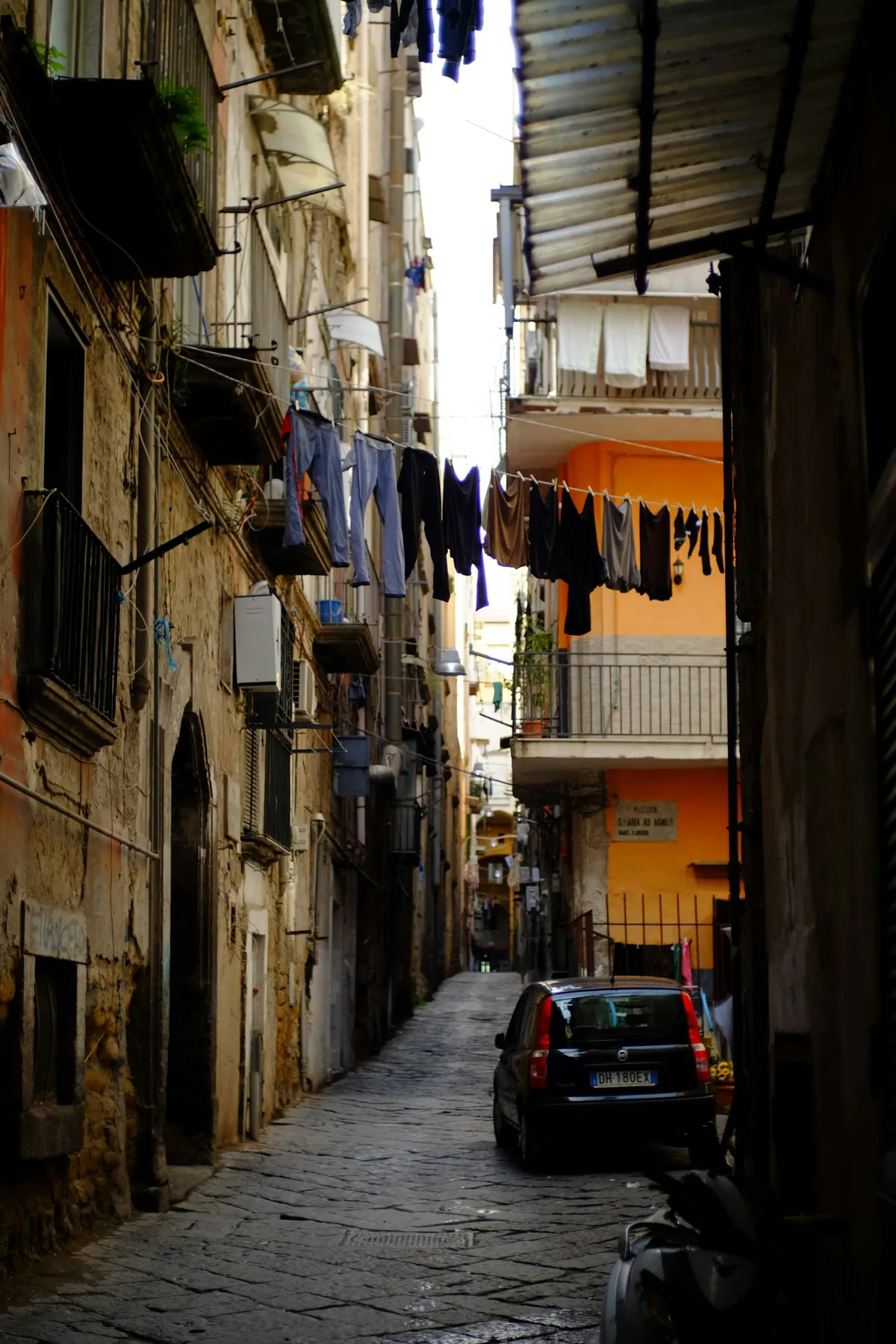
Walk into Spaccanapoli — the long straight street that runs through the heart of the historic centre, named for the way it visibly “splits” Naples in two when seen from above. The street follows the route of one of the original Greek decumani (east-west streets) of ancient Neapolis. Today it is one of the most chaotic and atmospheric pedestrian streets in Italy: shops selling religious icons next to mobile phone repair stalls, churches every 100 metres, fishmongers, mozzarella counters, espresso bars where the queue spills onto the cobblestones, the occasional vespa weaving through the crowd at speed.
Start at Piazza del Gesù Nuovo (the small square at the western end of Spaccanapoli, with the dramatic spiked-stone facade of the Gesù Nuovo church) and walk east. Stop at the Cappella Sansevero (a small private 18th-century chapel with the extraordinary Veiled Christ sculpture by Giuseppe Sanmartino, a marble figure of Christ under a transparent veil that is one of the most technically impressive marble sculptures in the world — book ahead, the chapel is small and tickets sell out). Stop at the Duomo (Naples Cathedral, with the Cappella di San Gennaro housing the relic of the city’s patron saint, whose blood is said to liquefy in the cathedral three times a year). Stop at the small bistros for a coffee or a sfogliatella (the Neapolitan ricotta-and-citrus pastry).
For lunch, eat pizza. Naples is the birthplace of the dish (the modern Margherita was invented in 1889 in Naples for a visit by Queen Margherita of Savoy), and the Neapolitan pizza is a UNESCO-listed cultural heritage. The two sacred originals: Da Michele (founded 1870, makes only Margherita and Marinara — no other toppings — long queues but the queue moves fast) and Sorbillo (the Tribunali branch is the original family bakery, slightly more contemporary). Both will fill you for €5–8 and are absolutely the right way to experience the dish.
In the afternoon, visit the Museo Archeologico Nazionale di Napoli — the National Archaeological Museum, one of the most important archaeological collections in the world, holding the bulk of the artefacts excavated from Pompeii and Herculaneum. The Pompeii frescoes (intact wall paintings rescued from the buried villas), the Farnese marble collection (including the colossal Hercules, Bull, and Atlas statues from the Baths of Caracalla in Rome), and the Secret Cabinet (a small room of erotic art recovered from Pompeii) are the headlines. Allow three hours.
Day two: Pompeii
Take the Circumvesuviana train from Naples Garibaldi station to Pompei Scavi-Villa dei Misteri. The journey takes about 35 minutes; trains run every 30 minutes. Cost about €3 each way.
Pompeii is the great Roman city buried by the eruption of Vesuvius on August 24th, 79 AD (the date is now disputed; some scholars suggest October — the disagreement is interesting but doesn’t change the experience). The eruption killed about 2,000 of the 20,000 residents and buried the entire city in ash and pumice up to 6 metres deep, preserving it almost intact for nearly 1,700 years until systematic excavation began in 1748.
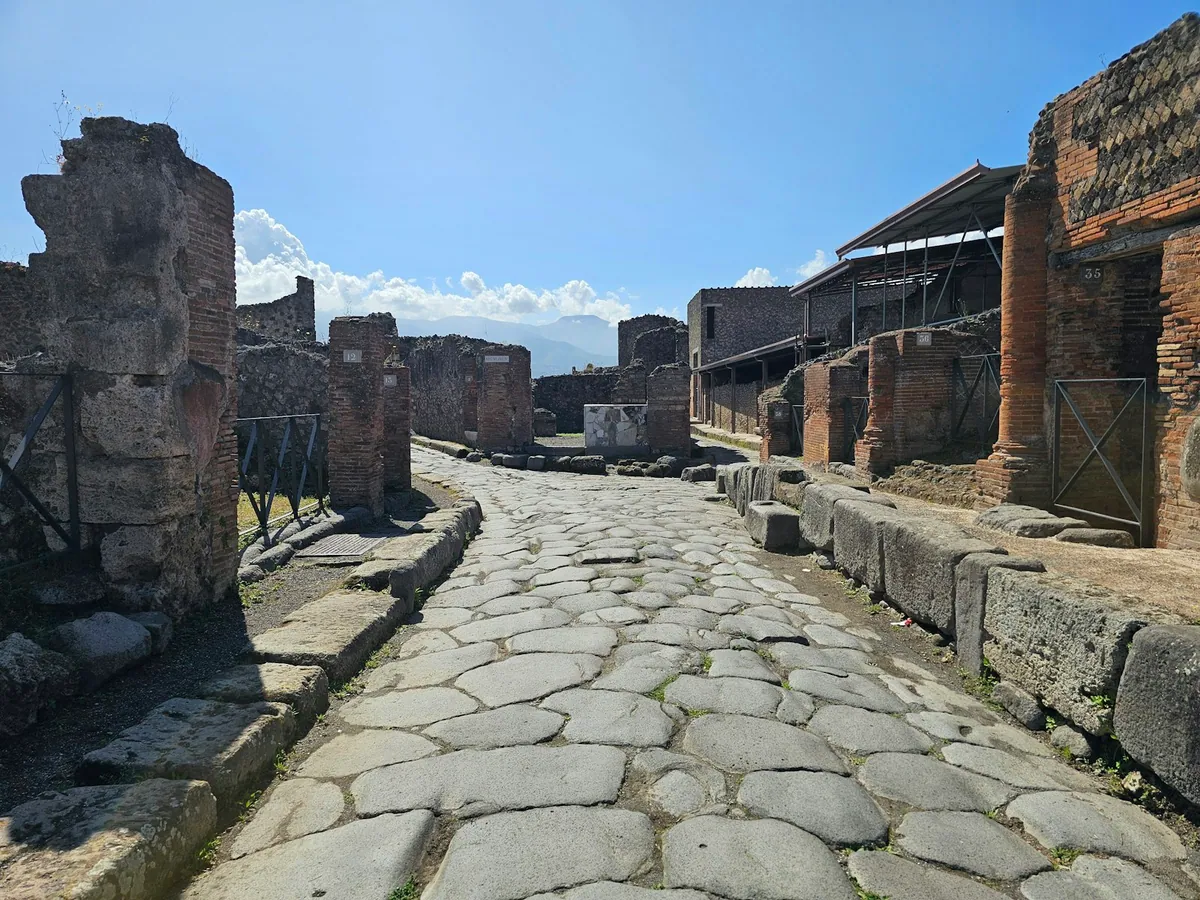
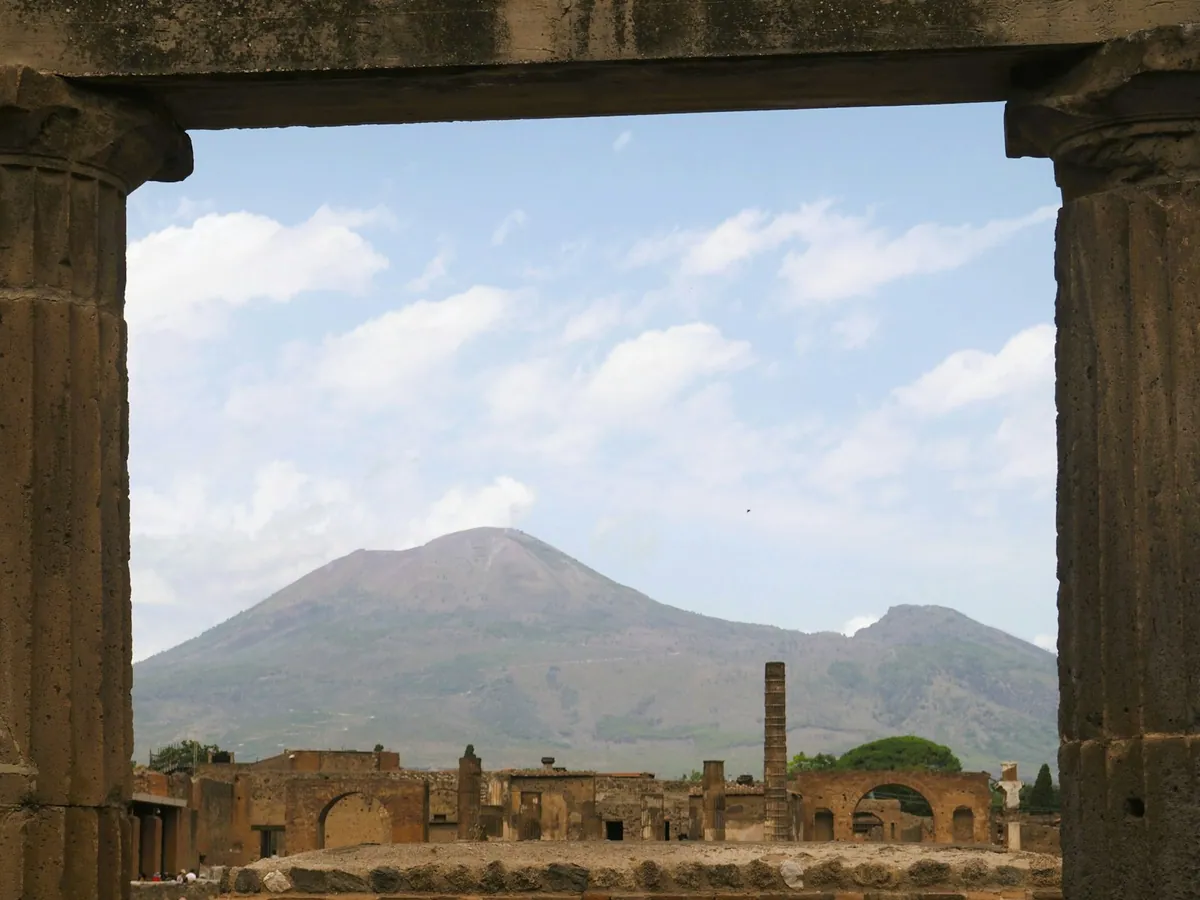
The site is enormous — 66 hectares, with the original city walls still mostly visible, plus the Forum, two theatres, an amphitheatre, dozens of temples, public baths, the brothel (the Lupanare, with its small painted erotic frescoes still visible), and hundreds of private houses preserved in extraordinary detail. The most spectacular: the Villa of the Mysteries (with its famous Dionysiac fresco cycle, intact across an entire room), the House of the Faun (the largest private residence in the city, with the original mosaic of the Battle of Issus reproduced from the original now in the National Museum in Naples), the House of the Vettii (recently re-opened after a long restoration, with extraordinary frescoes), and the plaster casts of the victims (made by pouring plaster into the voids left in the ash where bodies had decomposed — eerie, moving, and the most affecting single thing in the site).
You need a guide (or an excellent audio guide) for Pompeii — the site is so large and the signage is so patchy that without one, you’ll wander past the most important things without knowing it. Several private guides offer half-day or full-day tours from Naples (around €40–80 plus the entry fee). Book online ahead. Allow at least four hours, ideally six. Wear proper shoes (the Roman streets are uneven and large), bring water and a hat (almost no shade), and consider booking the early morning slot for cooler temperatures and smaller crowds.
If you have any energy left, climb Mount Vesuvius in the afternoon. A bus from the Pompeii train station runs to a high parking lot at 1,000 metres on the volcano’s flank; from there, a 30-minute walk takes you to the rim of the active crater at 1,281 metres. The crater is a fenced-off pit with sulphurous fumaroles still venting; the view from the rim back across the Bay of Naples is the iconic panorama.
Train back to Naples in the evening. Eat one final pizza dinner.
Day three: a slow morning, the Royal Palace, Castel dell’Ovo
Day three, slow morning. Coffee at one of the cafes on Via Toledo (the long pedestrian shopping street that runs north-south through the centre).
In the late morning, walk to Piazza del Plebiscito — the great central square at the southern end of Via Toledo, with the Royal Palace of Naples on the eastern side and the church of San Francesco di Paola (modelled on the Pantheon in Rome) on the western. The Royal Palace is open for visits; the State Apartments are richly decorated and the Court Theatre (Teatro di Corte) is beautifully preserved. Allow two hours.
Walk down to the Castel dell’Ovo — the medieval seafront castle on a small island just off the main waterfront, connected to the city by a short causeway. The castle itself is open for visits (free entry, sweeping views of the bay from the upper terraces). The small fishing harbour (Borgo Marinari) at the foot of the castle has a row of seafront restaurants for a long lunch — Bersagliera, Zi Teresa, or any of the smaller bistros on the small streets behind.
In the afternoon, walk along the Lungomare — the long seafront promenade that runs from Castel dell’Ovo east through the Mergellina neighbourhood. The view back at the city, with Vesuvius in the distance and the Gulf of Naples in front of you, is the postcard.
End with one final espresso at Gambrinus (the historic 1860 cafe on Piazza del Plebiscito, where Oscar Wilde and Hemingway both used to drink).
How nice are Neapolitans?
Loud-warm and slightly chaotic. Neapolitans are famously the most expressive of Italians — they speak loudly, gesture constantly, complain dramatically about everything, and are some of the most generous and funny hosts you’ll meet anywhere. My three days included: a small Spaccanapoli pizza counter give me an extra slice for free because I’d “waited politely”; an Archaeological Museum guard quietly walk me to a small bronze I’d missed in the Pompeii section; and a taxi driver pull over twice on the way back to the airport to point out small pieces of street art I’d barely noticed. The Neapolitan welcome is loud, real, and one of the best things about Italy.
If you go
• Stay near the historic centre. Walking distance to the food, the museums, and the chaos. • Watch your bag in busy areas. Pickpockets are a real (and somewhat fading) Naples problem. • Eat at least one pizza at Da Michele or Sorbillo. The queue is the experience. • Allow a full day for Pompeii. Don’t try to combine with Vesuvius unless you’re very fit. • Book the Cappella Sansevero ahead — the Veiled Christ tickets sell out.
Naples is the chaotic, generous, beautiful capital of southern Italy. Three days here will give you the city, Pompeii, the volcano, and a serious case of pizza affection. Many people leave wanting to go back for the Amalfi Coast and Capri.