Rome in Five Days: The Colosseum, the Trevi, the Vatican and a Long Lunch
Five days in the city that has been a capital for two and a half thousand years — the great ancient sites, the Vatican, and the trattorias in Trastevere.
📍 Rome, Italy
Rome is the city that has been a capital, more or less continuously, for two and a half thousand years — first of the Roman Republic, then the Roman Empire, then the Western Christian Church, then the Italian state — and the layers of all of those capitals are stacked on top of each other in the centre of the modern city. You stand at a single corner near the Pantheon and you can see, without moving your feet, a 2,000-year-old Roman temple converted to a 7th-century church, a 17th-century Baroque fountain in the small square in front of it, a Fascist-era street sign, and a small contemporary cocktail bar tucked into the ground floor of a 16th-century palazzo. Rome is not a city you can rush. Five days will give you the headlines and a sense of the rhythm. Plan a return for everything else.
The setup
Fly into Rome Fiumicino (32 minutes by Leonardo Express train to Termini, the main central station) or Ciampino. Stay in the historic centre — within a 15-minute walk of the Pantheon. Mid-range hotels run €120–250 a night; the area around Piazza Navona, Campo de’ Fiori, and Trastevere is ideal.
Walk where you can. The historic centre is small and dense; the metro covers the further reaches but is limited (Romans don’t love the metro because the city sits on too many archaeological sites for the engineers to dig anywhere ambitious). Buses are useful but slow.
Day one: the historic centre — Pantheon, Piazza Navona, Trevi
Settle in. Walk into the Centro Storico — the historic centre, the small dense web of streets between the Tiber and the Quirinal Hill, full of churches, fountains, ancient ruins, and small piazzas.
Start at the Pantheon. The Pantheon is the best-preserved building from ancient Rome — built around 126 AD by Hadrian, with a vast 43-metre concrete dome that was the largest in the world for over 1,300 years and is still one of the great pieces of architectural engineering on Earth. The famous oculus — a 9-metre circular opening at the top of the dome — is the only natural light source. Free to enter. Allow 30 minutes.
Walk five minutes north to Piazza Navona — a beautiful Baroque oval square built on the footprint of the 1st-century Stadium of Domitian, with three Bernini fountains (the central Fountain of the Four Rivers is the famous one) and the church of Sant’Agnese in Agone on the western side. Have a coffee at one of the cafes around the perimeter (touristy, but the view is the experience).
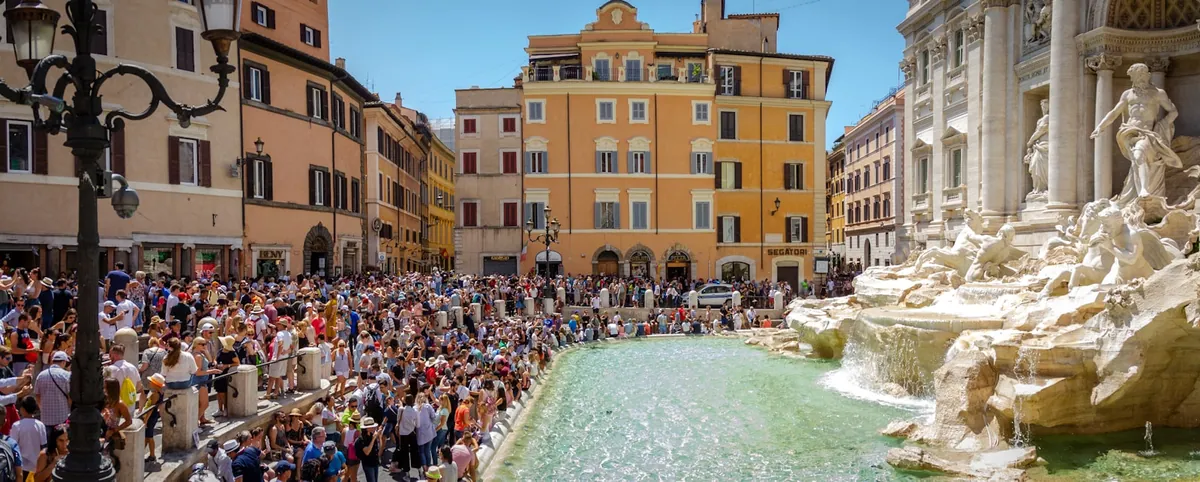
Walk to the Trevi Fountain. The fountain is the great Baroque set piece of the city — 26 metres tall, finished in 1762, depicting Neptune flanked by tritons and seahorses. The crowds are real (the small square in front of it is packed from late morning until midnight in season). Visit at 7 a.m. for an almost-empty experience, throw a coin over your left shoulder with your right hand (the tradition), make a wish, and walk on.
For lunch, eat at one of the small trattorias in the Centro Storico. Reliable: Armando al Pantheon, Cul de Sac (the famous wine bar with a long menu), or any of the small bistros on the side streets near Piazza Farnese. Order cacio e pepe (the Roman simple pasta with sheep’s cheese and black pepper), carbonara, or amatriciana — the four Roman pasta classics.
In the afternoon, walk along the Tiber to Castel Sant’Angelo (the cylindrical fortress built originally as Hadrian’s mausoleum, used as a papal fortress through the medieval period, with a small museum and a panoramic terrace). End the day with sunset on the Ponte Sant’Angelo looking across at St Peter’s.
Day two: the Vatican
The Vatican is the world’s smallest sovereign state and the centre of the Roman Catholic Church, and the Vatican Museums are one of the largest art collections in the world — 70,000 works in galleries that take you on a single linear route through the Egyptian, Etruscan, Greco-Roman, Renaissance, modern, and ethnographic collections, ending with the Sistine Chapel. The Sistine Chapel is the headline. The Raphael Rooms are arguably better. The map gallery (Galleria delle Carte Geografiche, a long corridor lined with 16th-century painted maps of the Italian peninsula and the lands of the Papal States) is one of the most extraordinary single rooms in any museum on Earth.
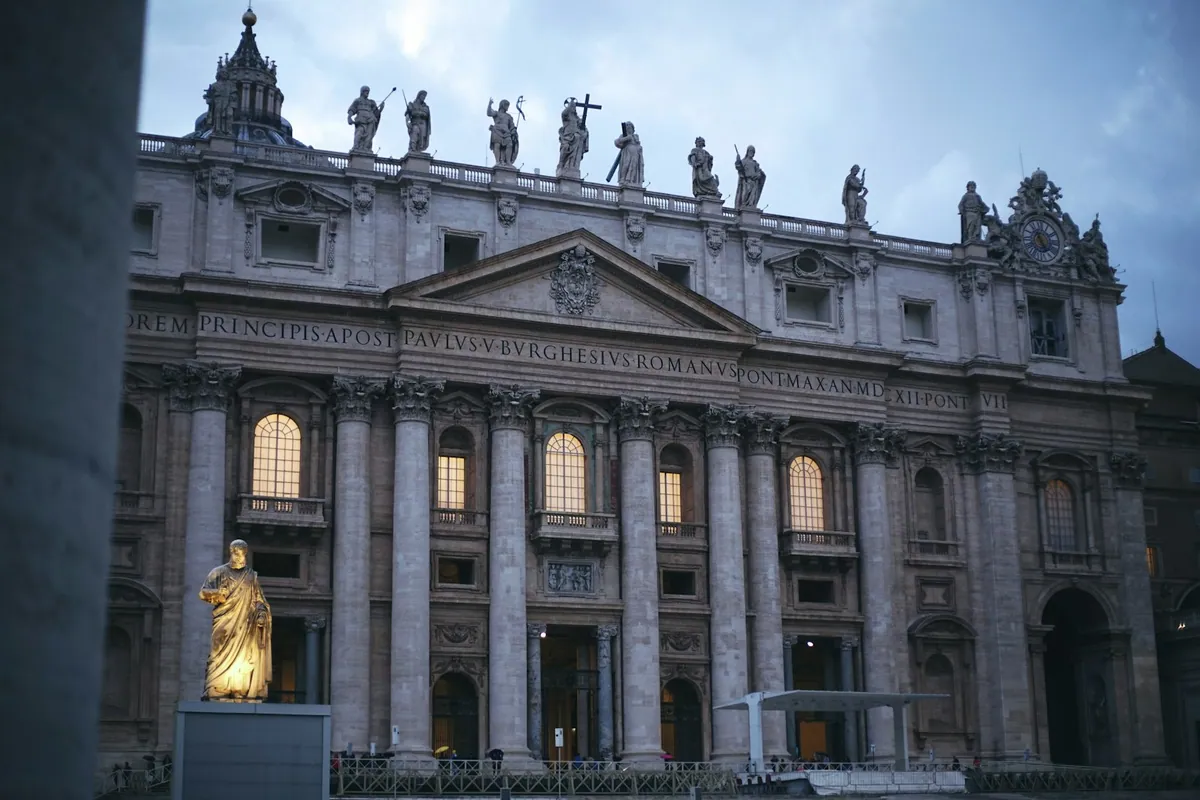
Buy a timed-entry ticket online weeks ahead (about €25 for general entry, more for the early-access tour). The early-access tour (which gets you in at 7:30 a.m. before the general admission opens at 9) is genuinely worth the premium — you get the Sistine Chapel almost empty for the first hour. Allow four hours minimum. Bring water; the museum is huge and the queues for water bottles inside are long.
After the museums, walk through to St Peter’s Basilica. Free to enter. The interior is overwhelming — the largest church in the world, with Michelangelo’s Pietà in the first chapel on the right and Bernini’s baldacchino over the high altar. Climb the dome (extra fee) for one of the great panoramic views of Rome. Allow ninety minutes for the basilica plus the dome climb.
For dinner, eat in Borgo Pio (the small medieval streets between the Vatican and the river — Romans say it’s touristy and they’re right, but the standard is honest) or take a taxi back to the Centro Storico for a more serious dinner.
Day three: the Colosseum and the Roman Forum
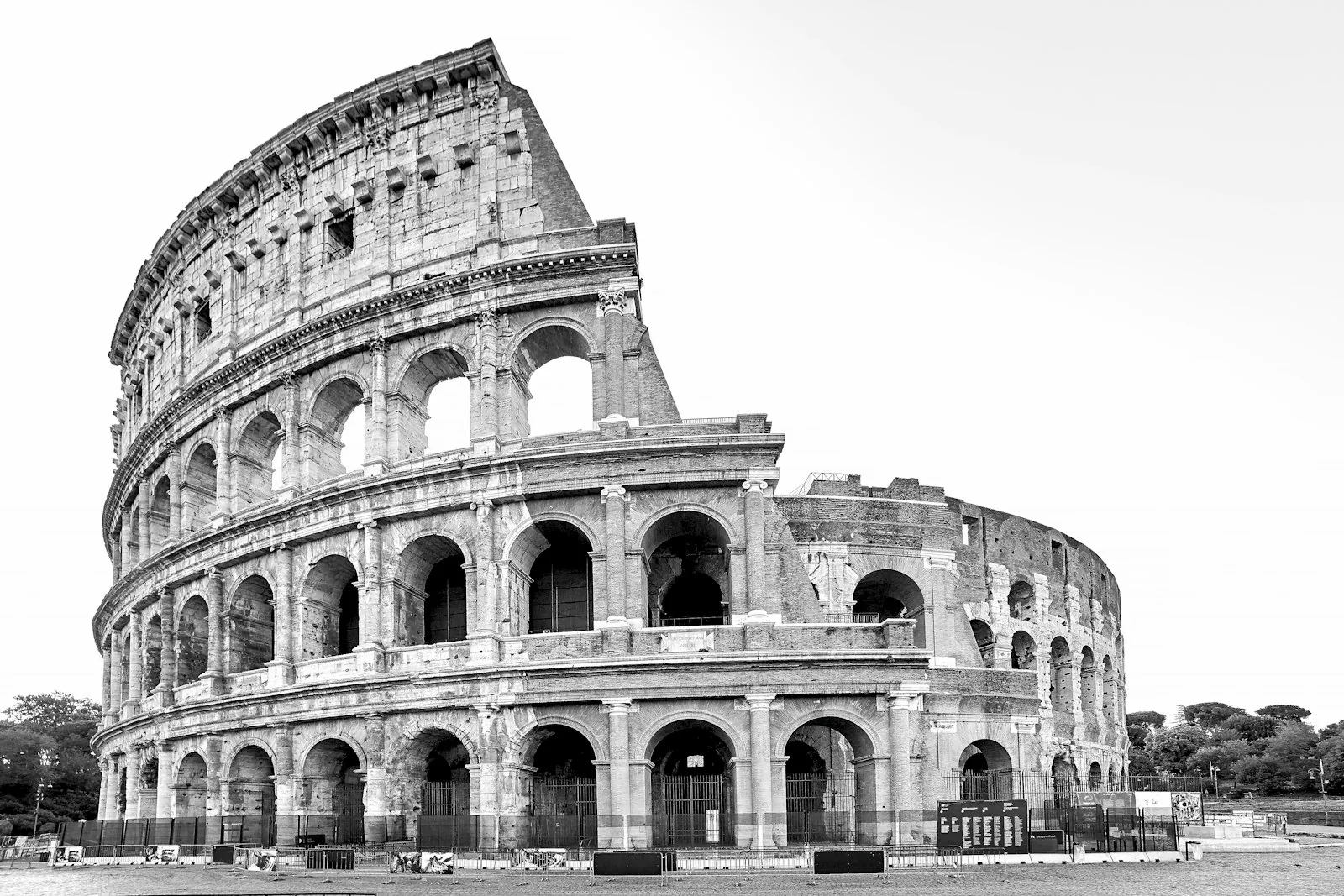
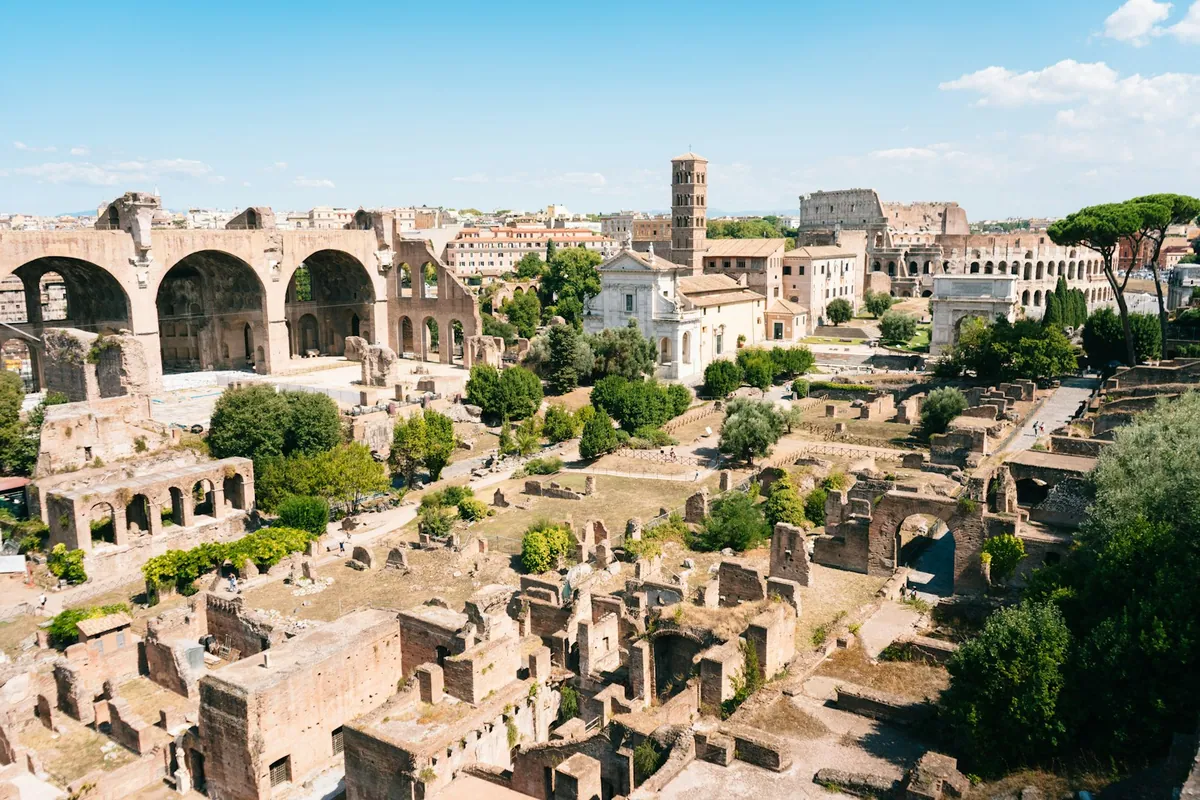
Day three is the great ancient Rome day. The Colosseum is the iconic 1st-century amphitheatre — built in eight years by 80,000 slaves under the emperors Vespasian and Titus, with a capacity of 50,000 spectators for the gladiator games and other public spectacles that ran here until the 6th century. The exterior is the photograph; the interior is the experience — the labyrinth of hypogeum tunnels under the arena floor (where gladiators and animals were held), the rebuilt section of the original wooden floor, the upper tiers with views back across the Forum.
Buy a Colosseum + Forum + Palatine Hill combined ticket online (about €18, valid for 24 hours). For better access, book a guided tour with arena-floor and underground access (€80 and up; worth it on your first visit).
After the Colosseum, walk across the road into the Roman Forum — the political and ceremonial heart of ancient Rome, with the ruins of the Senate House, the temples, the basilicas, the triumphal arches, and the Vestal Virgins’ House. The signage is excellent; the audio guide is good; allow three hours minimum. End the visit on the Palatine Hill (the legendary site of Rome’s founding, then the imperial palace district, now a beautiful elevated archaeological park with the best views back across the Forum).
For lunch, eat at one of the small trattorias near the Forum (the area near Monti — the small bohemian neighbourhood directly above the Forum — has the best food). Reliable: La Carbonara di Monti, La Taverna dei Fori Imperiali, or any of the smaller bistros on Via dei Serpenti.
In the afternoon, walk through Monti — small steep streets, independent boutiques, vintage shops, the small medieval church of Santa Maria ai Monti, and the perfect Piazza Madonna dei Monti for an afternoon coffee or aperitivo.
Day four: Trastevere and a slow Sunday
Trastevere is the small medieval neighbourhood across the Tiber from the Centro Storico, on the south-west bank — narrow cobbled streets, ivy-covered houses, the basilica of Santa Maria in Trastevere (with extraordinary 12th-century gold mosaics), and what is, by general agreement among Romans, the densest concentration of good restaurants in the city.
Walk over the Ponte Sisto in the morning. Spend a slow day. Walk to the Janiculum Hill (the highest point in central Rome, with sweeping views of the entire city from the terrace at the top — a 20-minute climb from Trastevere). Visit the Tempietto by Bramante (a tiny Renaissance gem in the courtyard of San Pietro in Montorio).
Eat lunch in Trastevere. Reliable: Da Enzo al 29 (the queue is real and the queue is worth it), Trattoria da Gigi, Il Sorpasso (more contemporary, near the Vatican).
In the afternoon, head to the Villa Borghese — the great central park of Rome, with the Galleria Borghese (a small but extraordinary museum holding many of Bernini’s greatest sculptures, including Apollo and Daphne and the Rape of Proserpina, plus paintings by Caravaggio, Raphael, Titian). Book the Galleria Borghese weeks ahead — entries are timed and limited.
Day five: a slow last day
Last day, sleep in. Have one final breakfast at one of the cafes on Campo de’ Fiori (where the morning market sets up daily — fresh fruit, fish, flowers, small antipasti stalls). Walk one final loop of the Centro Storico for the small things you missed. Eat a final lunch at a trattoria. Have a coffee at Sant’Eustachio (one of Rome’s legendary coffee bars).
End the trip with one more walk along the Tiber. Or one more sunset from the Janiculum. Or one more long aperitivo on Piazza Navona. Rome doesn’t announce its endings.
How nice are Romans?
Loud-warm. Romans are famously direct, slightly impatient, and once you’ve broken the ice they are some of the most generous and funniest hosts in Europe. Within five days I had: a cafe owner near the Pantheon refuse the change from a small note because “you ordered well, you said please”; a small trattoria in Trastevere send out a complimentary tiramisu after the chef noticed I had eaten everything on the menu; and a Vatican guard quietly point me to a small Caravaggio I’d walked past three times. The Roman friendliness is real and slightly chaotic. Lean into it.
If you go
• Stay central — within walking distance of the Pantheon. • Book Vatican, Colosseum, and Galleria Borghese tickets online weeks in advance. • Eat the four Roman pastas (cacio e pepe, carbonara, amatriciana, gricia) at proper trattorias. • Drink the cheap house wine. The Roman ‘vino sfuso’ at €5 a half-litre is fine and pairs perfectly with the food. • Walk early. The historic centre is at its most beautiful before 9 a.m. — the light is gold, the crowds are absent, and the cobblestones are still wet from the morning street-cleaning.
Rome is the city that doesn’t need to convince you. Five days here will give you the great headlines and a sense of the rhythm. The Roman trattoria evenings will rewire your sense of what dinner is supposed to be. Plan your return.