Sardinia in Five Days: Costa Smeralda, Cala Luna and the Wild Coast
Five days on the Italian island that nobody really talks about — the turquoise Costa Smeralda, the empty inland mountains, and the beaches that look like the Caribbean.
📍 Sardinia, Italy
Sardinia is the great underrated Italian island, the second-largest in the Mediterranean (after Sicily), sitting roughly between mainland Italy and the African coast. Italians know it as their summer beach destination — the water is the clearest in the Mediterranean, by general consensus, with shades of turquoise and aquamarine that you would not believe were real if you saw them in a postcard. The Costa Smeralda on the north-east coast is the famous part: the millionaire’s beach strip, developed in the 1960s by the Aga Khan, with white-sand beaches, granite headlands, and the kind of yacht harbour that makes Capri look modest. The rest of the island — the Golfo di Orosei on the east coast with its dramatic limestone cliffs and hidden coves; the inland Barbagia mountains with their stone villages and traditional shepherds; the wild south-west coast around Iglesias with its abandoned mining heritage — gets almost no international tourism. Five days lets you see one or two of these. You will need a fortnight to do the island properly.
The setup
Fly into Olbia (north-east, closest to Costa Smeralda) or Cagliari (south, closest to the rest of the island). Hire a car at the airport — Sardinia is large and dispersed, and the public transport is essentially non-existent outside the cities. A small SUV is useful for some of the rougher beach access tracks but a normal hatchback works for most things.
For a first trip, base in two places: three nights on the Costa Smeralda or near Olbia, and two nights further south near Cala Gonone for the Golfo di Orosei.
Day one and two: the Costa Smeralda
The Costa Smeralda — the “emerald coast” — is a 20-kilometre stretch of granite headlands and turquoise bays on the north-east coast of Sardinia, between Porto Cervo in the north and Capriccioli in the south. The development is exclusive, expensive, and beautifully maintained. Even the small public beaches — and almost all the beaches in Italy are public — are fronted by tasteful low-rise resort architecture in pale sandstone, with clipped Mediterranean gardens and flag-marked entry points.
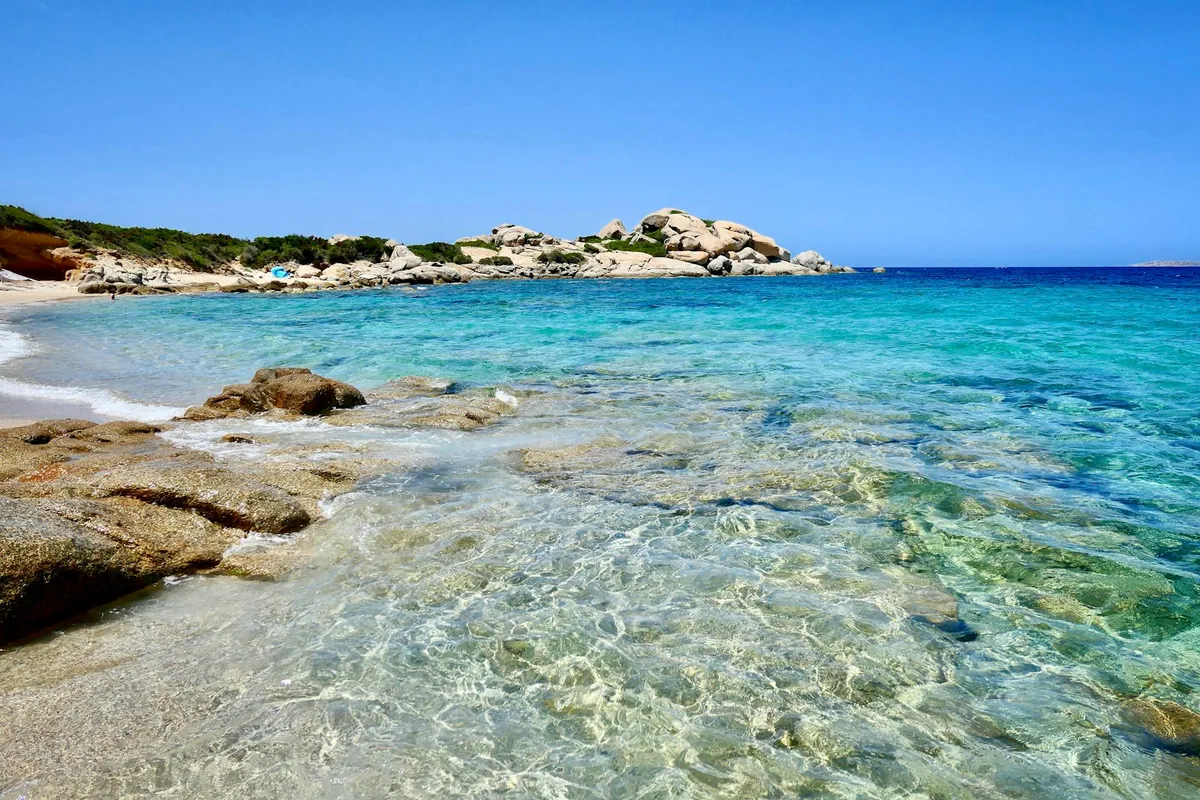
Spend day one at one of the great Costa Smeralda beaches. The shortlist: Spiaggia del Principe (the “Prince’s beach,” named for the Aga Khan, a perfect curve of white sand surrounded by pink granite headlands); Spiaggia di Capriccioli (a series of three small connected bays at the southern end); Spiaggia La Celvia (a horseshoe of bright sand with an offshore islet); Spiaggia Romazzino (white-sand and shallow water, in front of one of the original 1960s Aga Khan resorts).
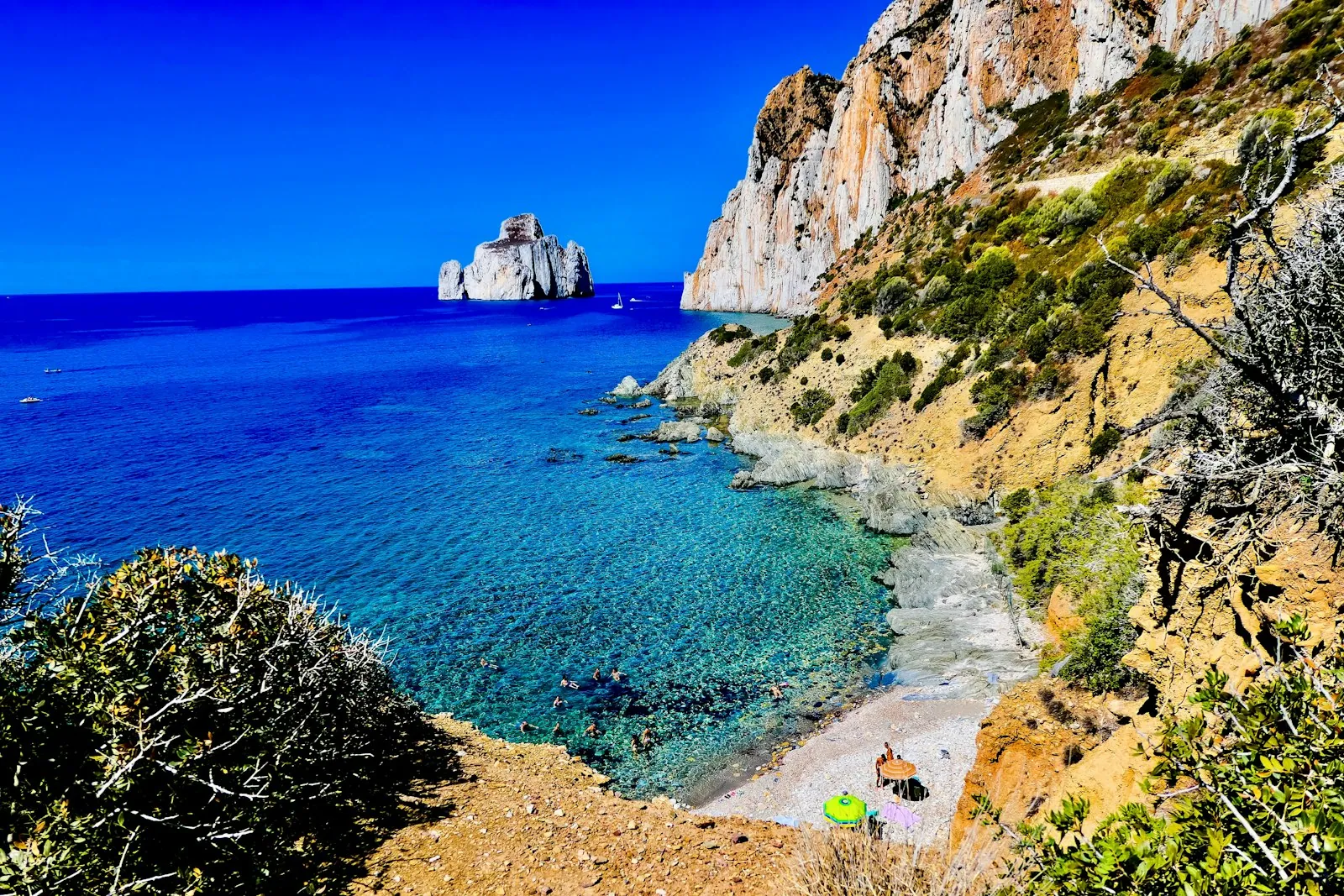
The colour of the water is the experience. The combination of fine white sand and shallow protected bays creates the impossibly bright turquoise you see in the photographs. Bring a snorkel — the water is clear enough that you can see straight to the bottom in 5 metres of depth.
For lunch and dinner, you have two budgets. The expensive option: any of the destination beachfront restaurants on the Costa Smeralda strip — Phi Beach Club, Beachclub Romazzino, Cervo Hotel for the harbour scene at Porto Cervo. The cheaper and arguably better option: drive 20 minutes inland to one of the small village trattorias around San Pantaleo or Arzachena, where the food is excellent and the prices are normal. Reliable: Il Fuoco Sacro (San Pantaleo), Lu Stazzu (Arzachena).
Day two, take a boat trip out to the La Maddalena Archipelago — the small national park of seven main islands and dozens of smaller islets just off the north-east coast. Several operators in Cannigione, Palau, or Baja Sardinia run day trips: a captained sailing boat or a smaller speedboat takes a small group out into the archipelago, anchors at three or four of the most beautiful coves (Spiaggia Rosa on Budelli, with its famous pink sand; Cala Coticcio on Caprera, often called “Tahiti” by Sardinians; the Spiaggia del Cavaliere on Budelli), and includes a long lunch on board. Cost: €80–150 per person for a full day. This is the day you will most remember.
Day three: drive south to Cala Gonone
Drive south down the eastern flank of the island. About 3 hours from Olbia to Cala Gonone, through small inland villages and the long Supramonte mountain range that runs down the centre-east of the island.
Stop on the way at Orgosolo — a small mountain village famous for its murals (over 200 large painted murals on the walls of houses, mostly political and historical, painted since the 1970s, addressing Sardinian autonomy, world politics, and local history). Walk the village, take an hour or two, have lunch at one of the small village trattorias.
Continue to Cala Gonone — a small coastal town at the southern end of the Golfo di Orosei. The town itself is pleasant, modest, and entirely focused on access to the gulf’s remarkable beaches.
Day four: the Golfo di Orosei
The Golfo di Orosei is the great natural anchor of east-coast Sardinia — a 40-kilometre stretch of limestone cliffs (200–300 metres high) plunging directly into the sea, broken at intervals by small white-sand bays accessible only by boat or by long inland hiking trails. The most famous beaches: Cala Luna (a wide white-sand crescent backed by a freshwater lagoon and the entry to a vast sea cave called the Bue Marino), Cala Goloritzé (a small narrow beach at the foot of a 148-metre limestone needle, accessible only by an hour-and-a-half hike from above), Cala Mariolu (a small white-pebble beach with extraordinarily clear water), Cala Sisine (a longer beach in a wider bay).
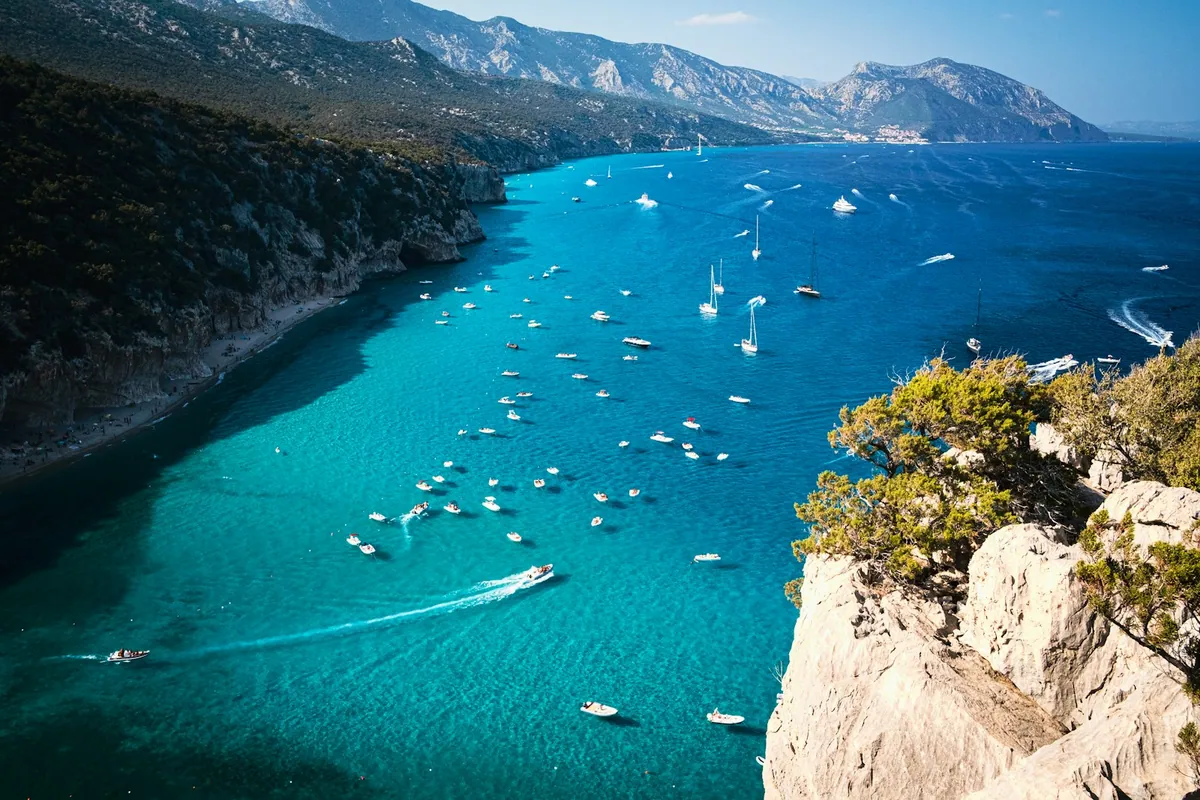
The standard visit is a half-day or full-day boat trip from Cala Gonone. Several operators run shared-boat day trips that visit three or four of the beaches in a single day, with swimming time at each. Cost: €60–100 per person for a full day. The boats anchor in the bay at each beach; you swim in or take the small inflatable shuttle to the sand.
Cala Luna is the iconic photograph — and once you’re there, the village of small wooden buildings on the back beach, the freshwater lagoon, the cliffs above, and the absurdly clear water make it the day’s highlight.
If you’re fit and want a longer day, hike to Cala Goloritzé. The trail leaves from the parking lot at Su Porteddu (about 40 minutes drive from Cala Gonone, up onto the limestone plateau), and descends about 1.5 hours through pine forest and limestone karst to the small beach. The walk back up is the harder direction. Bring water and food. The beach itself is small, white-pebbled, and astonishingly beautiful.
Day five: a slow last day or the inland mountains
Day five, depending on energy, either a slow last beach day at one of the small local Cala Gonone beaches (Cala Fuili is reached by a 20-minute walk from town), or a drive into the Barbagia mountains for a glimpse of the inland Sardinia.
The Barbagia is the great inland mountain region of central Sardinia, with small stone villages, a long pastoral tradition (the local cheese, pecorino sardo, is one of the great cheeses of Italy), and a fierce local identity that traces back to pre-Roman times. Towns like Mamoiada (famous for its mascari di Mamoiada, the traditional Sardinian carnival masks) and Nuoro (the regional capital, with the small but excellent MAN museum of contemporary Sardinian art) are worth a half-day visit each.
End the trip with one final dinner of fresh fish at Cala Gonone, or with an inland feast of pecorino, pane carasau (the wafer-thin Sardinian flatbread), porcetto (suckling pig roasted on a spit), and a glass of Cannonau (the Sardinian red, related to Grenache).
How nice are Sardinians?
Island-warm with a particular pride. Sardinians have a strong cultural identity that is more island than Italian, and the local language (Sardinian, a separate Romance language closer to Latin than to Italian) is still spoken in the inland villages. The hospitality is generous and patient; once you’ve been at a place for a meal, you’re treated as a regular. My five days included: a Costa Smeralda restaurant owner refuse to let me pay for my second glass of wine because I’d ordered “the right pasta”; an Orgosolo cafe owner walk me through the village pointing out the murals he thought were the most important; and a Cala Gonone B&B host bring out a small bottle of homemade myrtle liqueur on the terrace as a goodbye gift. The Sardinian welcome is real and unforced.
If you go
• Hire a car. Public transport on Sardinia is essentially non-existent. • Visit between May and June, or September. July and August are crowded and expensive on the Costa Smeralda. • Book Costa Smeralda accommodation months ahead in season; cheaper alternatives are easily found just inland. • Take at least one boat day in the Golfo di Orosei. The cliffs and the coves are the experience. • Eat the local cuisine. Pecorino sardo, pane carasau, malloreddus pasta, porcetto, and the Cannonau red wine.
Sardinia is the bit of Italy that even Italians underrate. Five days here will give you the Costa Smeralda, the Golfo di Orosei, and a taste of the inland Barbagia. You leave already thinking about a fortnight next year.