Tibet Overland — From Kathmandu to Lhasa on the Friendship Highway
Crossing the Himalaya by 4WD: the high passes, Everest base camp, the monasteries, and the permit puzzle that every traveller has to solve.
📍 Lhasa, Tibet (Xizang), China
Crossing the Himalaya by road is one of the great overland journeys, and on the Tibetan side the route everyone ends up taking has a name: the Friendship Highway. It runs roughly 800 kilometres from the Nepal border at Zhangmu (now closed at that crossing — current entry is via Gyirong) over a string of 5,000-metre passes, past Everest base camp, through the old caravan towns of Tingri, Shigatse and Gyantse, and finally drops into the wide Lhasa valley. It takes most groups four to seven days. It rearranges your sense of altitude. It puts you face-to-face with mountains that nothing in the rest of the world prepares you for.
This is the practical guide. The permits, the route, the altitude, and what to read before you go.
The permit problem
You cannot travel independently in Tibet. Foreigners require, at minimum, a Chinese tourist visa AND a Tibet Travel Permit (TTP), and depending on where you go, additional permits — Alien's Travel Permit for Tingri and Everest, Military Permit for the western Tibet route to Mount Kailash. The permits can only be arranged through a registered Tibetan travel agency. You must be on a guided tour, in a vehicle, with a licensed Tibetan guide, for the entire duration.
This sounds like a constraint and it is, but it has a couple of practical implications:
- The agency handles all permits. You provide passport scans, Chinese visa scan, and a small advance, and they courier the papers to the border or to your hotel. - "Group" tours from Kathmandu can be as small as two people. Several Kathmandu-based agencies pool individual travellers into shared 4WDs and shared guides; the per-person cost is much lower than booking a private tour. - Costs vary with season but a 7-day Friendship Highway trip with permit, transport, guide, accommodation and Everest detour usually lands in the $1,200–1,800 range per person at current rates. Expect prices to drift; check at least two agencies.
The single most useful resource for keeping up with Tibet permit rules is the Lonely Planet Thorn Tree Tibet branch — travellers post current border conditions there in close to real time.
The route
The classic Kathmandu → Lhasa overland goes:
Day 1: Kathmandu to Gyirong (now the standard border crossing). Long bus or jeep ride up the steep valley to the China border at Rasuwagadhi/Gyirong. Cross the border, change vehicles into a Chinese-side 4WD and Tibetan guide, drive up the gorge to Gyirong town. Sleep at around 2,800 m to start adjusting.
Day 2: Gyirong to Tingri. A long climb through high pasture country, two passes above 5,000 m, dropping into the wide Tingri plain at about 4,300 m. The first views of the Himalaya from the north — Shisha Pangma to your west, Cho Oyu and Everest hidden behind ridgelines to your south.
Day 3: Tingri to Rongbuk Monastery / Everest base camp. Detour south off the highway to Rongbuk, the highest monastery in the world at 5,000 m, with Everest's north face directly framed by the monastery gate. The classic Tibet photograph. Sleep at the monastery guest house or the tent camp at base camp.
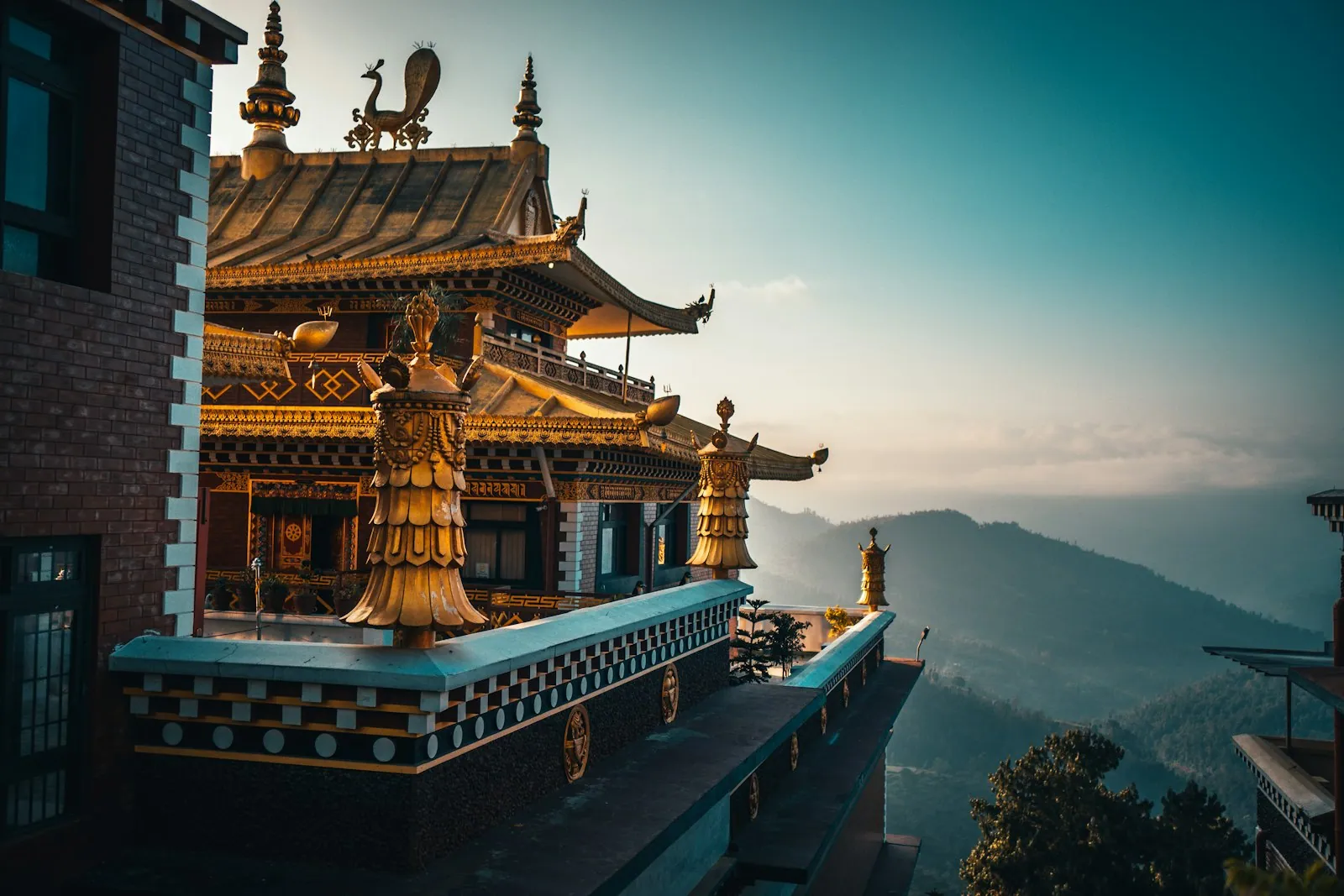
Day 4: Rongbuk to Shigatse. Back to the highway, climb over the Gyatso La (5,200 m) and drive across the high plateau to Shigatse, Tibet's second-largest city and home of Tashilhunpo Monastery — seat of the Panchen Lama, vast, golden-roofed, full of pilgrims. Half a day here is the minimum.
Day 5: Shigatse to Gyantse. A short drive but a beautiful one, ending at Gyantse for the Pelkor Chode monastery and the Kumbum stupa, a nine-storey chorten you can climb with murals on every level. Many travellers count Pelkor Chode and the Kumbum among the most beautiful religious buildings in Tibet.
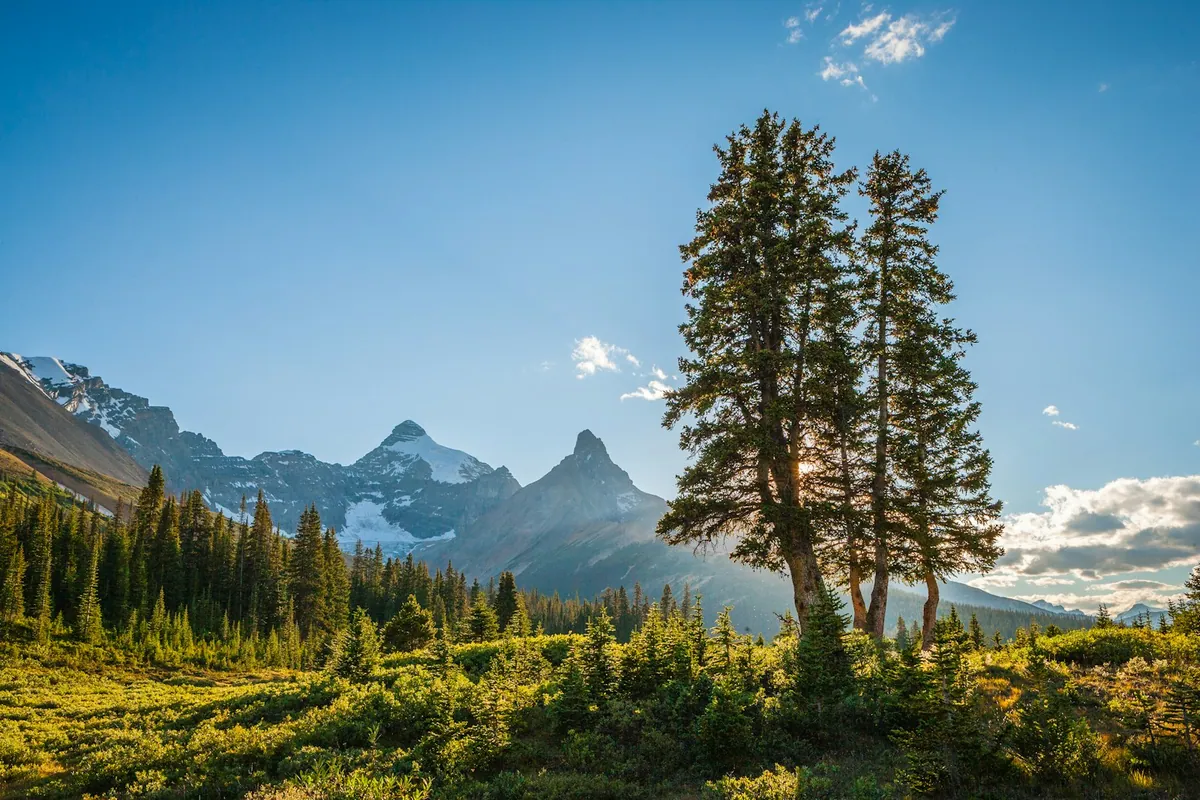
Day 6: Gyantse to Lhasa via Yamdrok-tso. Climb back over the Karo La (5,000 m) past glaciers tumbling almost to the road, then over the Khamba La and down to the impossibly turquoise Yamdrok-tso (Yamdrok Lake) — one of the four sacred lakes of Tibet. Drive on to Lhasa, arriving in the evening.
Day 7+: Lhasa. Most itineraries give you two to four days in Lhasa. The Potala Palace, the Jokhang temple, the Barkhor pilgrimage circuit, the Sera and Drepung monasteries — that's the headline list. Each deserves a half-day.
The altitude
The Friendship Highway is high. You will sleep above 4,000 m for several nights in a row. Even the "low" stops at Gyirong and Lhasa are higher than most ski resorts in the European Alps. Altitude sickness is real and it does not respect fitness, age or experience.
The standard prevention package:
- Acclimatise in Kathmandu for a few days before crossing (you start at 1,400 m there). - Talk to your doctor about Diamox (acetazolamide). Many travellers take it preventively from the start of the climb. - Drink an enormous amount of water. Three litres a day, minimum. - Avoid alcohol for the first four days at altitude. - Take it easy on the first day in Lhasa — no hard exercise, no big meals. - If you start vomiting, develop a severe headache, or get confused, descend. Altitude sickness can become serious and the only effective treatment is to lose elevation.
What to read before you go
Two books are worth packing:
- *Heinrich Harrer, Seven Years in Tibet.* Old, but still the best account of arriving in pre-1950 Lhasa. - *Sarah Lyall, In the Land of the Snow Lion***, or any of the half-dozen modern travelogue accounts of pilgrimage to Mount Kailash, if you have time for the longer western Tibet extension.
Tibet beyond the highway
Many travellers content themselves with the Friendship Highway and a few days in Lhasa. If you have more time and budget:
- Mount Kailash kora The 52-km circuit around the holiest mountain in Asia, three days at 5,000–5,600 m. A pilgrimage that pre-dates almost every other religion you have heard of. - Eastern Tibet (Kham). Less restricted than the central plateau, beautiful mountains and grasslands, very few foreign tourists. - Namtso Lake Two-day trip from Lhasa, sacred lake at 4,700 m surrounded by snow peaks.
For more on overland routes through Asia, browse our Asia stories — there's a good cluster on the Karakoram Highway, the Pamir route, and the Trans-Mongolian. And our overland travel hub collects most of what we have on long-distance road journeys.
Tibet is the trip where every photograph you've seen of the Himalaya is suddenly the view from your jeep window. Go. Take your time. Drink the water. Listen to the prayer flags. Come back changed.
Quick reference for Tibet overland
Permits needed: Chinese tourist visa, Tibet Travel Permit (TTP), and — for the Friendship Highway specifically — an Alien's Travel Permit covering Tingri, Shigatse and Gyantse. All arranged by the Tibetan travel agency you book with; you cannot get them independently.
Cost benchmark: a 7-day Kathmandu-to-Lhasa group tour with shared 4WD, guide, accommodation, permits and an Everest base camp detour typically lands at $1,200–1,800 per person at current prices. Private tours run two to three times higher.
Best months: April-May and September-October are the sweet spots — clear skies, mild temperatures, the passes are open. June-August is the rainy season on the south side of the Himalaya (clouds at Everest viewpoints), and December-February brings deep cold and partial road closures.
Altitude prep: acclimatise in Kathmandu for at least three days before crossing. Talk to your doctor about Diamox before you leave home. Drink three litres of water a day at altitude. Skip alcohol for the first four days. Carry coca lozenges if you can find them.
The route in one line: Kathmandu → Gyirong (border crossing) → Tingri → Rongbuk Monastery and Everest base camp → Shigatse → Gyantse → Yamdrok-tso → Lhasa.
Don't miss: the Potala Palace and Jokhang Temple in Lhasa, the Pelkor Chode monastery and Kumbum stupa in Gyantse, the view of Everest's north face from Rongbuk, and the impossibly turquoise Yamdrok Lake from the Khamba La pass.
Plan your trip to China
For more, see our China travel guide and country page, places to visit in China on BugBitten, tours and experiences in China.
Useful external resources: the China country profile on Wikipedia and the UNESCO World Heritage list for China.