Tuscany in Five Days: The Val d’Orcia, the Wine Country and a Slow Lunch
Five days driving through Tuscany — the rolling hills with cypress trees, the medieval hilltop villages, and the long slow lunches at a vineyard.
📍 Tuscany, Italy
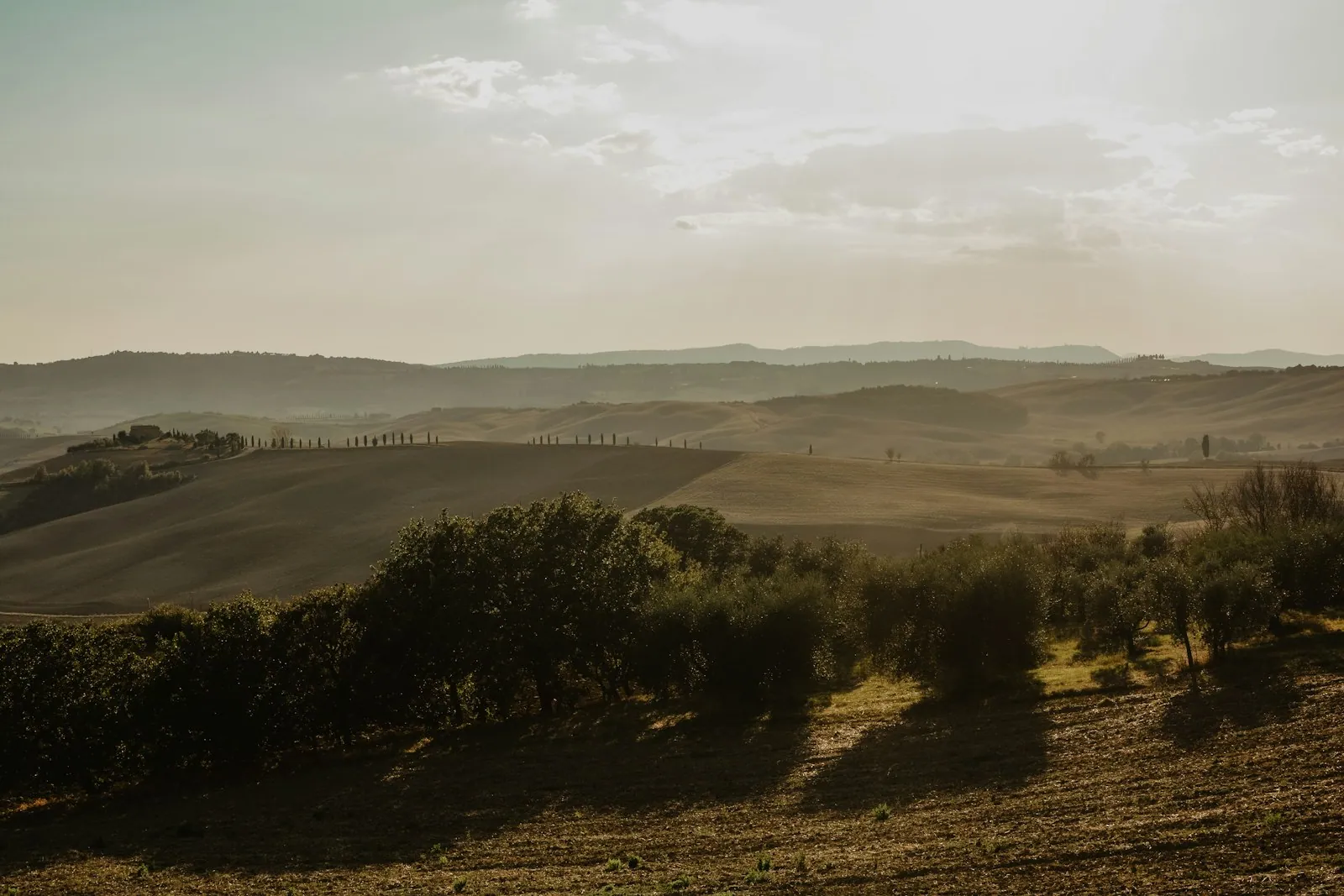
Tuscany is the broad central Italian region between Florence and Rome that has, in its central southern third — an area called the Val d’Orcia — produced the single most photographed landscape in Western Europe. Rolling pale-gold hills, lone cypress trees standing on ridges, narrow gravel roads winding between vineyards and olive groves, medieval hilltop villages of pale stone glowing in the late afternoon sun. The image has been on every Italian tourism poster for 60 years and somehow, when you actually drive into the Val d’Orcia for the first time, the reality manages to outdo the photographs. The light is different here — softer, slightly hazy, gold rather than yellow — and the landscape arrangement of rolling hills, isolated trees, and tiny villages on the high points feels like it was composed by a particularly talented landscape painter. The Val d’Orcia is, in fact, a UNESCO World Heritage site explicitly recognised for its “cultural landscape” — the deliberate human shaping of the hills over a thousand years to produce something both productive and beautiful.
Five days is the right length to do Tuscany properly. A weekend won’t do it.
The setup
Fly into Florence or Rome (both have direct trains to the Tuscan towns; Florence is closer). Hire a car at the airport or train station — Tuscany without a car is a different and much smaller holiday. A small Fiat or VW Polo is plenty — the roads are narrow but well-paved.
Stay in a small agriturismo (a working farm with guest accommodation, often in restored stone farmhouses) in or near the Val d’Orcia. Recommended bases: Pienza, San Quirico d’Orcia, Castiglione d’Orcia, or Bagno Vignoni. Cost: €150–400 a night for a beautifully restored farmhouse with a pool and breakfast included.
Day one and two: arrive, settle, drive the Val d’Orcia loop
Arrive in the early afternoon. Check into your agriturismo. Sit on the terrace with a glass of wine. Watch the hills change colour as the sun drops. This is the rhythm.
Day two, drive the Val d’Orcia loop. The classic route runs from Pienza in the north, south to San Quirico d’Orcia, west to Bagno Vignoni (the village built around an enormous Renaissance hot-spring pool in its main square), south to Castiglione d’Orcia, east to Monticchiello, and back to Pienza. The whole loop is about 60 kilometres and takes a full day with stops.
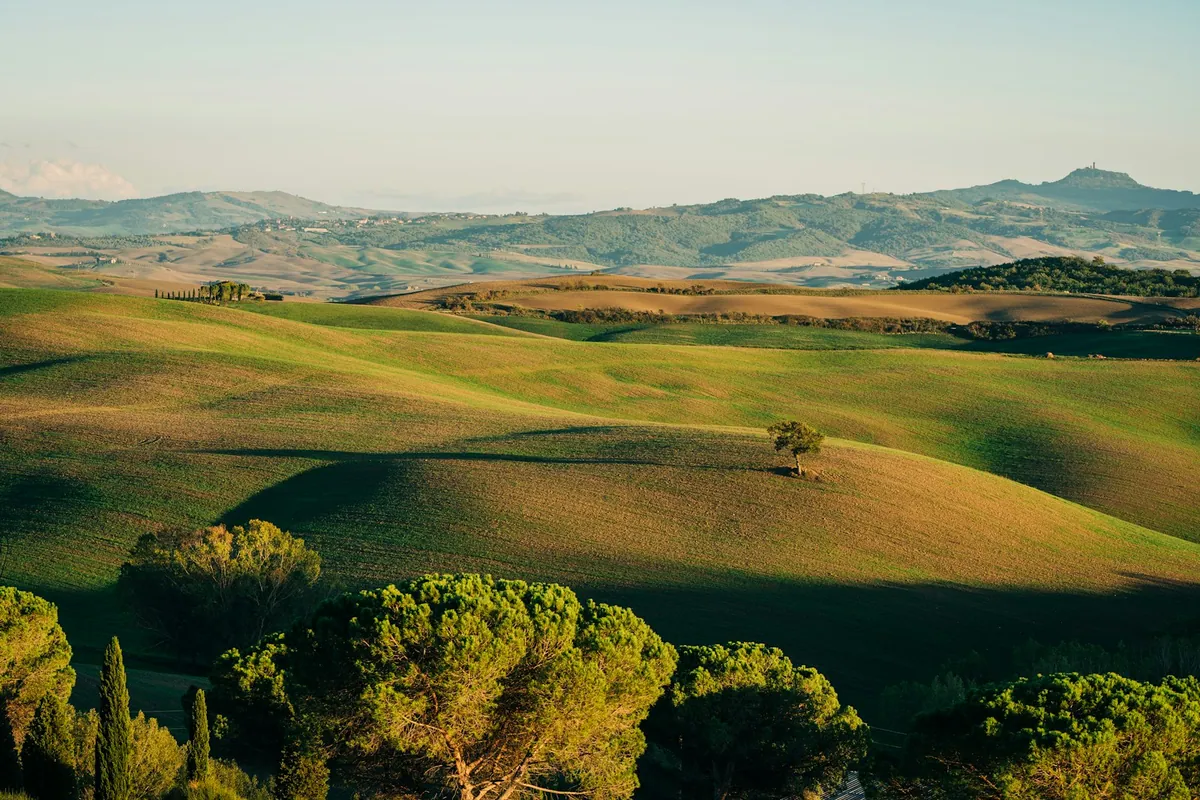
The villages are tiny. Pienza is the biggest (population about 2,000) — a small Renaissance town built almost entirely between 1459 and 1462 by Pope Pius II as the “ideal city” of the Italian Renaissance, with a beautiful cathedral, a small papal palace, and the most famous pecorino cheese in Italy (Pienza pecorino is sold everywhere — the aged version with herbs is extraordinary). San Quirico d’Orcia has a beautiful Romanesque collegiate church and the elegant Horti Leonini gardens. Bagno Vignoni has the famous Renaissance hot-spring pool — you can’t swim in the main square pool, but the smaller Bagno Vignoni Hotel has a series of thermal pools accessible to the public.
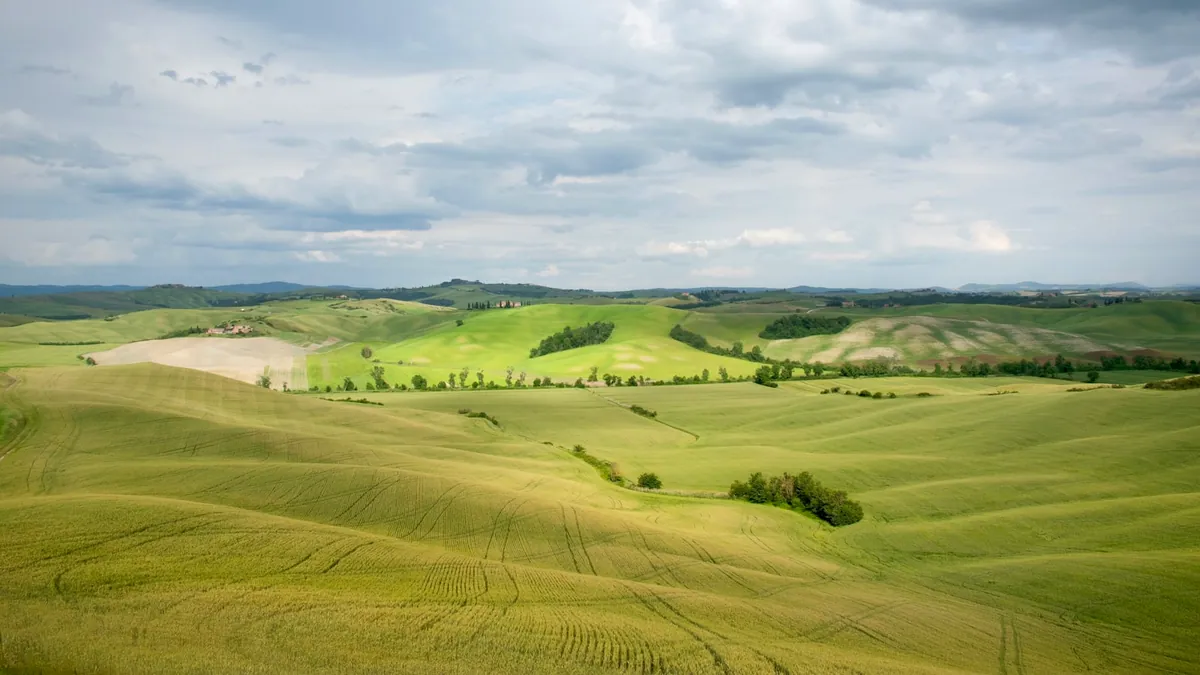
Between the villages, the views are the experience. The famous photographs — the lone cypress tree on a ridge, the cypress avenue leading up to a farmhouse on a hilltop, the rolling layered hills with the morning mist in the valleys — are mostly all in the area between Pienza and San Quirico, on either side of the SP146 and SP53 roads. Stop at any layby. Take the photographs. Move on.
For lunch, eat at one of the village trattorias. La Bandita Townhouse Caffè in Pienza, La Posta del Cacciatore in San Quirico, Osteria del Borgo in Monticchiello — all reliable. Order the local pici (the hand-rolled fat Tuscan spaghetti) with garlic and breadcrumbs (aglione) or wild boar ragù (cinghiale).
Day three: Montalcino and the Brunello wineries
Day three, drive west to Montalcino — the small medieval hilltop town that has become the most famous wine town in southern Tuscany. The Brunello di Montalcino DOCG is one of the most prestigious red wines in Italy, made from 100% Sangiovese grapes grown on the slopes around the town, aged for at least five years before release. Visit the small Fortezza (the 14th-century fortress at the top of the town, with a wine bar inside that pours flights of Brunellos from across the appellation), walk the small streets, browse the wine shops.
In the afternoon, visit one or two wineries. The Brunello producers are scattered across the hills around Montalcino. Some welcome walk-ins; most prefer appointments. Reliable visits: Banfi (one of the largest, with a beautiful castle and a comprehensive winery tour); Argiano (smaller, prestigious, beautiful estate); Casanova di Neri (modern, excellent); Poggio Antico (small family producer with a lovely cellar door). Cost: €15–40 for a tour and a tasting of three or four wines.
For lunch, eat at the winery if they offer food, or back in Montalcino at one of the bistros. The local rabbit, pasta with wild boar, and the bistecca grilled over wood are the specialities.
Day four: Montepulciano
Day four, drive north-east to Montepulciano — another beautiful hilltop wine town, this one famous for the Vino Nobile di Montepulciano DOCG, also a Sangiovese-based red but with a slightly different style than Brunello (smoother, fruitier, more accessible young). The town itself is one of the most architecturally striking in Tuscany — a long ridge of Renaissance palazzi climbing the hill, with the great Piazza Grande at the top crowned by the Duomo and the Palazzo Comunale.
Walk the Corso (the long climbing main street). Stop at one of the historic wine cellars cut directly into the soft tufa rock under the main palaces — Cantina Contucci, Cantina del Redi, Cantine Crociani — for a flight of Vino Nobile and the chance to walk through cellars 500 years old.
Have lunch at one of the trattorias — Osteria Acquacheta (the famous bistecca place — book ahead, the steak is enormous and shared) or Trattoria di Cagnano. Drink the local wines.
Spend the afternoon in the surrounding countryside. Drive the small roads east of Montepulciano towards Lake Trasimeno. Stop at any of the small wine estates for a tasting.
Day five: Siena (or a slow last day)
If you have any energy on day five, drive an hour north to Siena — the great Gothic city of central Tuscany, with the most beautiful medieval square in Italy (the shell-shaped Piazza del Campo), one of the most extraordinary cathedrals in Italy (the striped marble Duomo, with the Piccolomini Library inside containing some of the best-preserved 15th-century frescoes anywhere), and the twice-yearly Palio horse race on the Campo (held July and August). A full-day trip with a long lunch in the city.
If you’d rather stay in the Val d’Orcia, spend day five slowly — a final morning walk through the vineyards, a long lunch at an agriturismo, an afternoon at the thermal pools at one of the spa hotels (Bagno Vignoni, Bagni San Filippo, or the famous free outdoor cascades at Saturnia further south).
End the trip with one more sunset on your terrace, with one more glass of Brunello.
How nice are Tuscans?
Slow-warm. The Tuscan rural temperament is patient, opinionated about food and wine, and once you’ve been at the agriturismo for a day you’re effectively part of the family. Within five days I had: an agriturismo owner in Pienza bring out a small bottle of his grandmother’s vin santo on my second night “because you ate well, you said please”; a winery owner in Montalcino spend an extra hour with my small group after his other appointment cancelled; and a Pienza pecorino shop owner give me three different cheeses to taste at his counter for free, “because you’re going to buy something, take your time.” The Tuscan welcome is real and unhurried.
If you go
• Hire a car. The Tuscan villages are dispersed and the views are best from the small roads. • Stay in an agriturismo if you can. The breakfast on the terrace is half the experience. • Visit between April and June, or September to October. The light is best in the shoulder seasons; July and August are very hot and crowded. • Eat the local food. Pici with cinghiale, ribollita, panzanella, bistecca, pecorino, and the Brunello and Vino Nobile wines. • Don’t rush. Two villages a day and a long lunch is the right pace.
Tuscany is the bit of Italy that earned every cliché. Five days here will give you the Val d’Orcia, the wineries, and the long slow lunches that the region is built around. You leave smelling faintly of wine and very content. Most travellers come back.