Ubud, Bali: Cultural Heart, Rice Fields and a Sacred Monkey Forest
Five days in the highland town that turns first-time visitors into return visitors.
📍 Ubud, Bali, Indonesia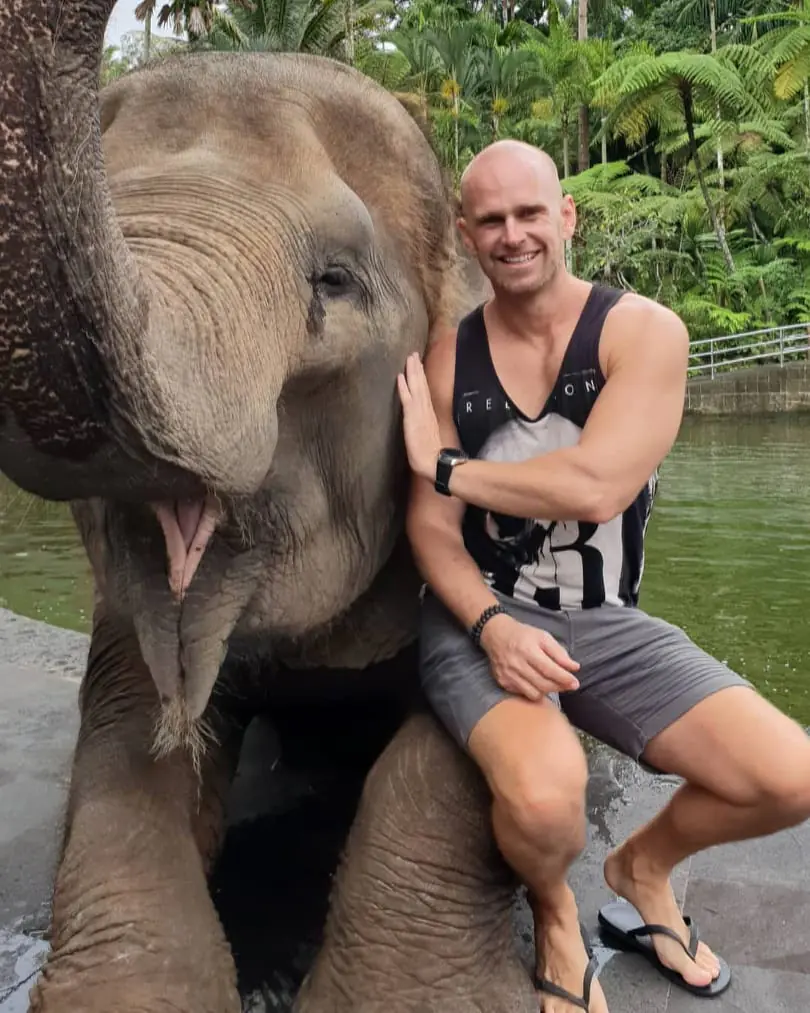
Ubud is the cultural capital of Bali, fifty kilometres inland from the south-coast beaches, and arriving here from Denpasar airport is a small culture shock in the best possible way. You leave behind the scooter-clogged main roads of Kuta and within an hour you’re winding up through palm groves and rice terraces, and the air gets a few degrees cooler, and the smell shifts from frangipani to wet earth and incense. By the time the taxi drops you at your guesthouse — which is almost certainly down a narrow lane lined with carved temple walls and a frangipani tree dropping flowers on the gravel — you’re ready to take a deep breath and forgive every long-haul travel inconvenience that came before.
Five days is the right amount of time for a first visit. You will mentally book six on day three.
The setup
Ubud town is small — you can walk across it in about forty minutes — and most of the action sits on or near the four roads that form a cross through the centre: Jalan Raya Ubud (the main east-west road), Jalan Hanoman, Jalan Monkey Forest, and Jalan Goutama. The Royal Palace, the markets, and the entrance to the Monkey Forest are all within ten minutes of each other. Out beyond the centre, you’re into rice fields very quickly — the famous Campuhan Ridge Walk starts twenty minutes from the palace.
I stayed at a small homestay on a side street off Jalan Hanoman. Cost: about $35 a night, breakfast included, served on a bamboo deck overlooking a lily pond, by a family who had run the place for two generations. This is the standard Ubud accommodation pattern. Get one if you can.
Day one: Monkey Forest, palace, market
Start with the Sacred Monkey Forest Sanctuary at the southern end of Jalan Monkey Forest. It’s ten hectares of jungle, three Hindu temples (still active), and roughly 1,200 long-tailed macaques going about their day with extreme purpose. You buy a ticket at the entrance, the staff give you the safety briefing (don’t make eye contact with the dominant males, don’t touch the monkeys, don’t feed them, don’t hold any food in your hands, don’t carry an open bag, take off your sunglasses if a monkey approaches), and you walk in.
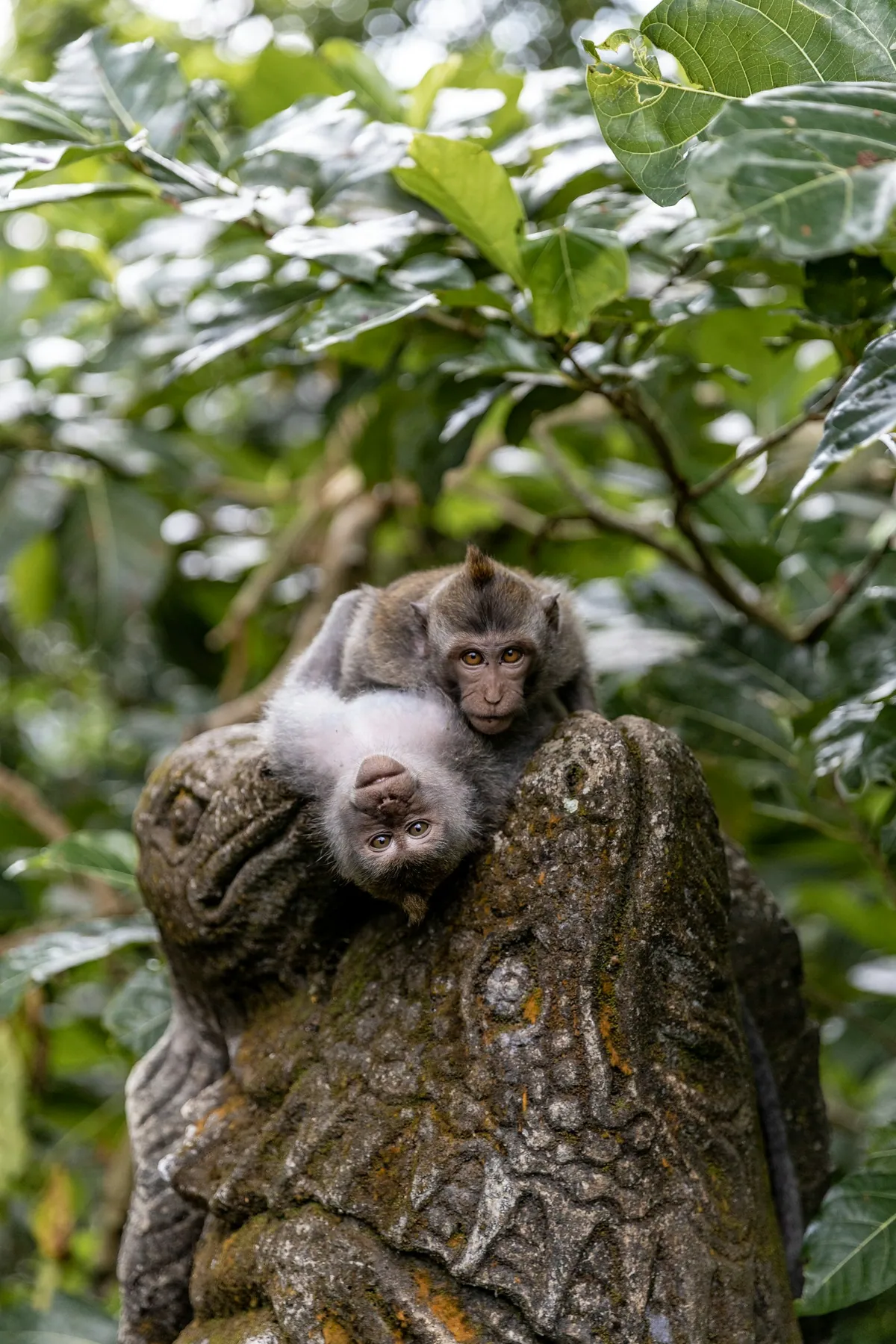
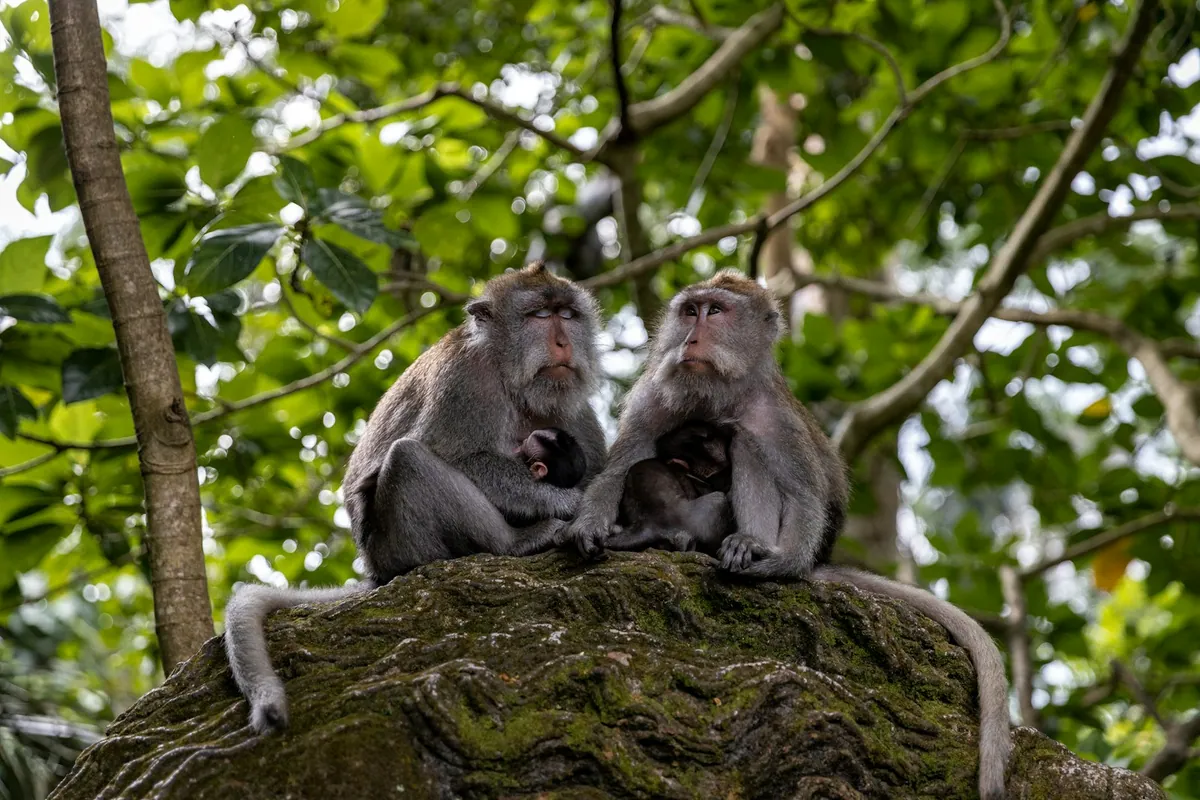
Within fifty metres you will see your first monkey. Within five minutes you will see fifty. A baby will scamper across the path in front of you. A mother will be grooming a juvenile on a moss-covered statue. A massive alpha male will eye you from a temple wall. The forest is a wonderful place — temple bridges, banyan trees with vines as thick as your arm, mossy carvings of demons that the macaques use as climbing frames. It is also a place where the wildlife treats you as scenery, and that is the right way around. Walk slowly. Be a good guest.
After the Monkey Forest, walk north through town to the Ubud Palace (Puri Saren Agung), still home to the royal family of Ubud and free to enter during the day. The architecture is the kind you came to Bali for: split gates, carved sandstone, courtyards with frangipani trees and stone offerings. In the evening, the palace hosts traditional Balinese dance performances — Legong, Barong, Kecak — for around $10 a ticket. Go. The performances are short, accessible to a non-specialist audience, and absolutely beautiful in the gamelan-and-lamplight setting.
End the day at the Ubud Art Market, a covered warren of stalls opposite the palace. Bring small notes, bargain politely (start at half the asking price, settle around two-thirds), buy something simple — a sarong, a small painting, a hand-carved wooden frog with a little stick that makes it croak.
Day two: rice terraces and a temple road trip
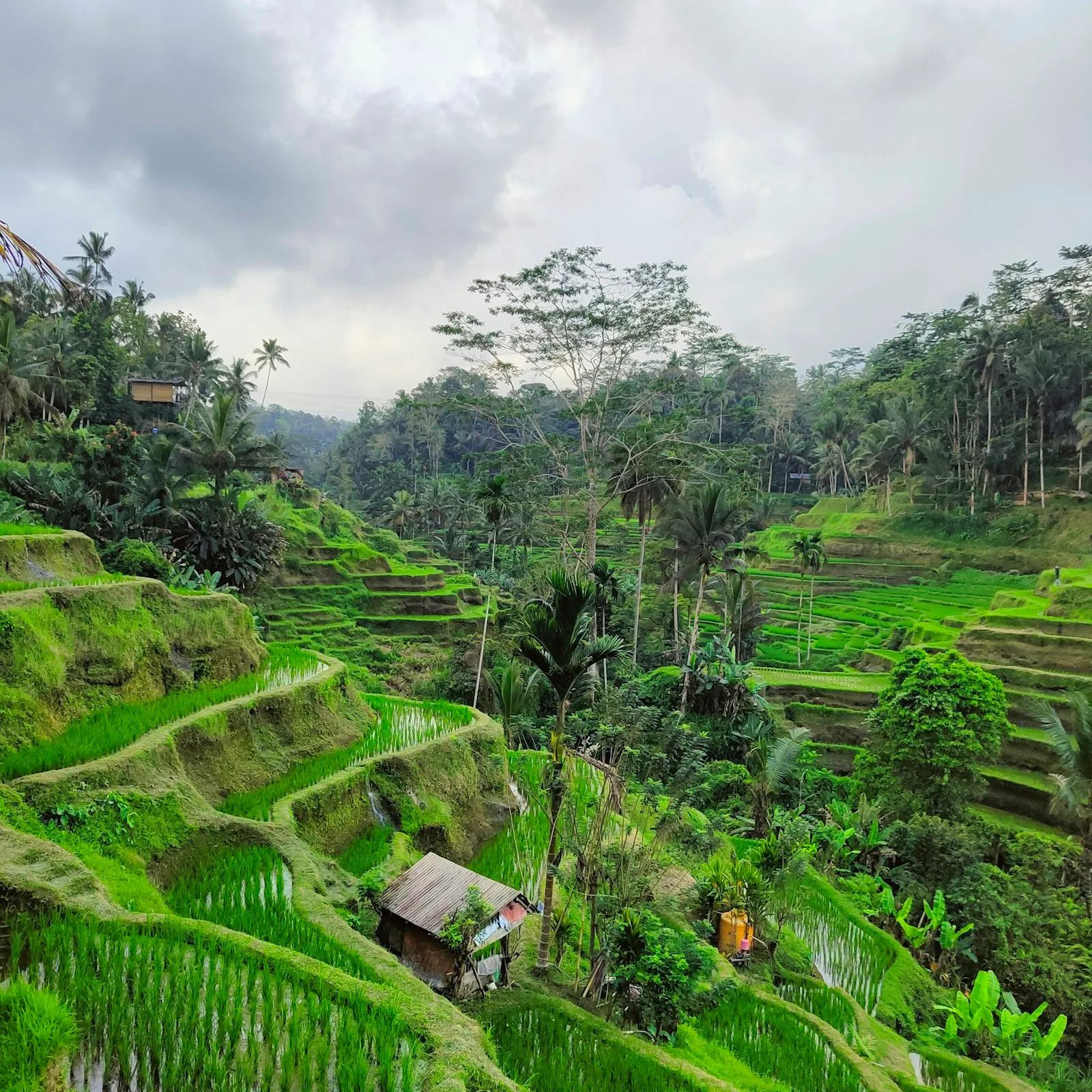
The Tegalalang rice terraces are about thirty minutes north of Ubud, and the photographs you’ve seen — layered green fields cut into the side of a valley, with palm trees and farmers in conical hats — are real. Hire a driver for the day (around $40 for eight hours), get there at 8 a.m. before the tour buses, walk the path that runs through the terraces themselves (small donations to the farmers along the way, this is fair), and make sure you do the swing if that’s your thing — there are several swing operators along the ridge that will launch you out over the valley on a rope swing for the price of a coffee at home.
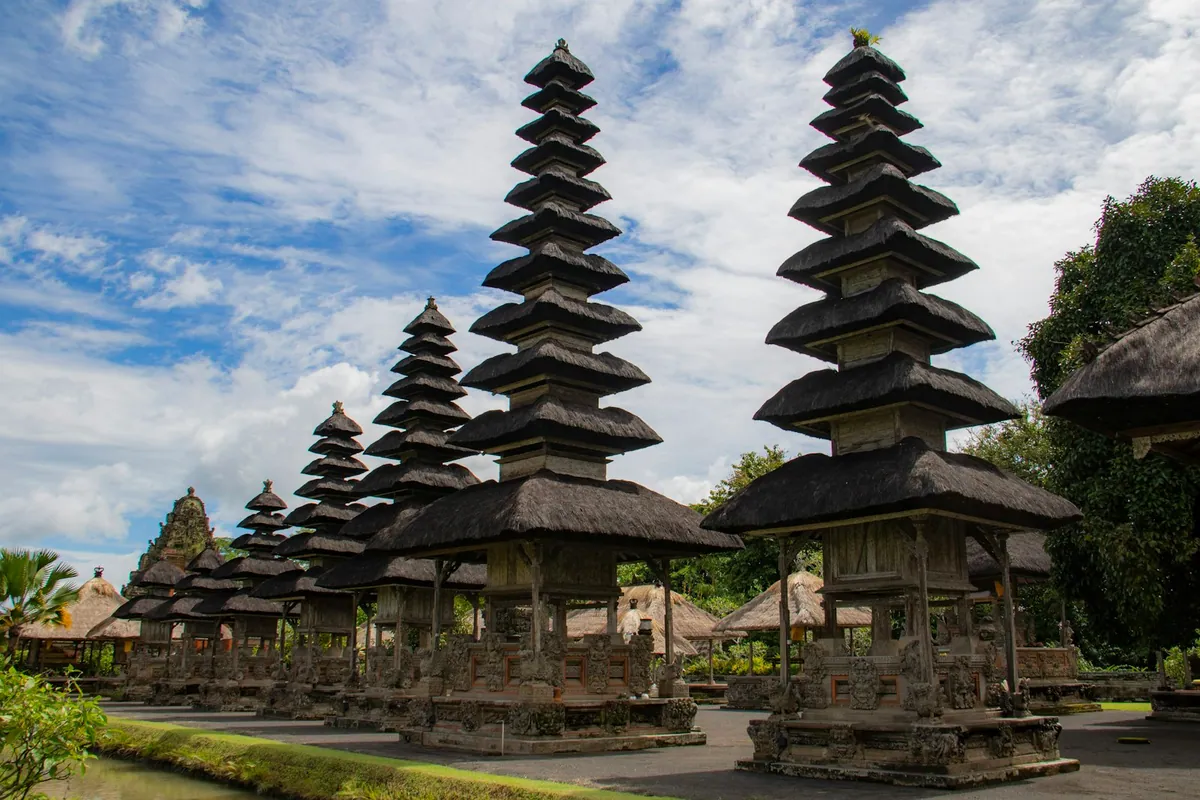
In the afternoon, ask your driver to take you on a temple loop. Tirta Empul (the holy spring temple, where you can participate in a purification ritual in the water), Gunung Kawi (a complex of 11th-century rock-cut shrines in a river valley), and Pura Taman Ayun (a beautiful royal temple set in a moated garden, on the way back). You won’t see all three in detail; pick two.
End the day with a sunset walk along the Campuhan Ridge — a paved path along a low ridge through hillside grass and palm groves, twenty minutes each way, with sweeping views west over the valley. There are a few cafes at the far end of the ridge if you want to stop for a juice.
Day three: yoga, food, and a slow day
Ubud is the unofficial wellness capital of Asia and you can get a yoga class for almost any taste. Yoga Barn is the most famous — a large multi-shala studio in the south of town, drop-in classes from $12 — but smaller studios like Radiantly Alive and The Practice are excellent and less crowded. I did an hour of vinyasa at Radiantly Alive on day three; the studio overlooks a rice field and a tropical bird flew through the open windows during savasana. I am not making this up.
Spend the rest of the day eating. Ubud’s food scene is genuinely exceptional. You can eat for two dollars at a warung on a backstreet (look for the queue of locals at lunchtime — that’s how you find them) or for fifty at one of the destination restaurants like Locavore, Mosaic or Hujan Locale. You should do both. I had nasi campur for breakfast at a tiny warung run by a woman named Wayan who fed me extra portions because I’d arrived hungry, and dinner at Locavore (chef’s tasting menu, eleven courses, $80) where the sommelier had picked all the wines from Asian producers and the fish course came under a small bamboo dome with smoke escaping when she lifted it.
Day four: a day trip — Bedugul or Sidemen
If you have a fourth day, do a longer trip. Two recommendations:
Bedugul, two hours north into the highlands, is home to Lake Bratan and the iconic Pura Ulun Danu Beratan, a temple sitting on the edge of the lake with the rooftops appearing to float on the water. The mountain air is cool, the botanic gardens are huge, and the drive up through the rice terraces is half the experience.
Or, drive east into the Sidemen Valley, in the shadow of Mt Agung. It’s the Bali of forty years ago — quiet roads, wooden homestays, no commerce, rice terraces that step down from the volcano almost to the south coast. Stop for lunch at one of the small valley restaurants. Walk a paddy track. Sit. Feel the rest of Bali fall away.
Day five: massage, market, last night
On a final morning, get a Balinese massage. Cost: $10–20 for an hour at a small spa, $40+ for the upmarket places. Either is fine. The Balinese massage technique — long, firm strokes with frangipani oil — is not subtle and is excellent for jet lag.
Then have one more lunch at a warung. Take a final walk down a side street. Pick up something for someone at home from the market. Go to the dance performance you missed on day one. End with a Bintang at a roadside cafe and watch the scooters go past in their endless polite scrum.
How nice are Balinese people?
If you have not been before, the friendliness will surprise you. Balinese culture is built around hospitality and a quiet, good-humoured patience that I’ve rarely encountered anywhere else. In five days I had: a homestay owner walk three blocks with me to show me the warung he’d recommended; a temple guide refuse a tip three times before accepting it; a market vendor add a small wooden gecko to my bag “for free, for your house”; and a taxi driver wait outside a restaurant for two hours without complaint because I’d told him I’d be back in “maybe one hour, maybe two.” Bali rewards politeness the way all of Indonesia does — small kindnesses move both directions, easily, all the time. It’s a quiet pleasure of being there.
If you go
• Five days minimum in Ubud. Don’t try to combine with beach time on day three; choose either the highlands or the coast and commit. • Hire a driver for full-day trips. Far more comfortable, and the driver doubles as a guide. • Wear a sarong at temples. Most loan one at the entrance for free or for a small deposit. • Bring small notes for tips, donations, and market shopping. • Drink only bottled or filtered water. The taps are not safe.
Ubud is the bit of Bali that the people who love Bali love most. Go for the temples, stay for the rice fields, return for the people. You will. Everyone does.