Verona in Three Days: The Arena, Juliet’s Balcony and the Piazza delle Erbe
Three days in the Veneto city Shakespeare set Romeo and Juliet in — Roman amphitheatre, medieval squares, summer opera, and the Adige river.
📍 Verona, Italy
Verona is the small, beautifully preserved Veneto city that the rest of the world knows mostly for two things: Shakespeare set Romeo and Juliet here (and the city has cheerfully run with this), and the great Roman Arena in the centre still hosts summer opera performances on a scale you can’t see anywhere else in the world (ticket prices are reasonable, the production values are extraordinary, and the audience of 14,000 people sitting in a 2,000-year-old amphitheatre under the night sky is one of the great cultural experiences in Italy). Beyond these two, Verona is also one of the loveliest medieval cities in the Veneto: the Piazza delle Erbe (the medieval market square, in continuous use since Roman times) is one of the most atmospheric small squares in Italy, the Adige river loops dramatically around the historic centre with three beautiful medieval bridges crossing it, and the Veneto food and wine scene (the local Amarone della Valpolicella, Soave, and Bardolino are all produced in the surrounding hills) is one of the strongest in Italy.
Three days is the right length.
The setup
Fly into Verona Villafranca (15 minutes from the centre) or take the Frecciarossa from Milan (1 hour 10 minutes), Venice (1 hour 10 minutes), or Florence (1 hour 30 minutes). Stay in or near the historic centre — within walking distance of the Arena. Mid-range hotels run €100–200 a night.
The historic centre is small and walkable. No car, no metro, just walk.
Day one: the Arena, Piazza Bra, Piazza delle Erbe
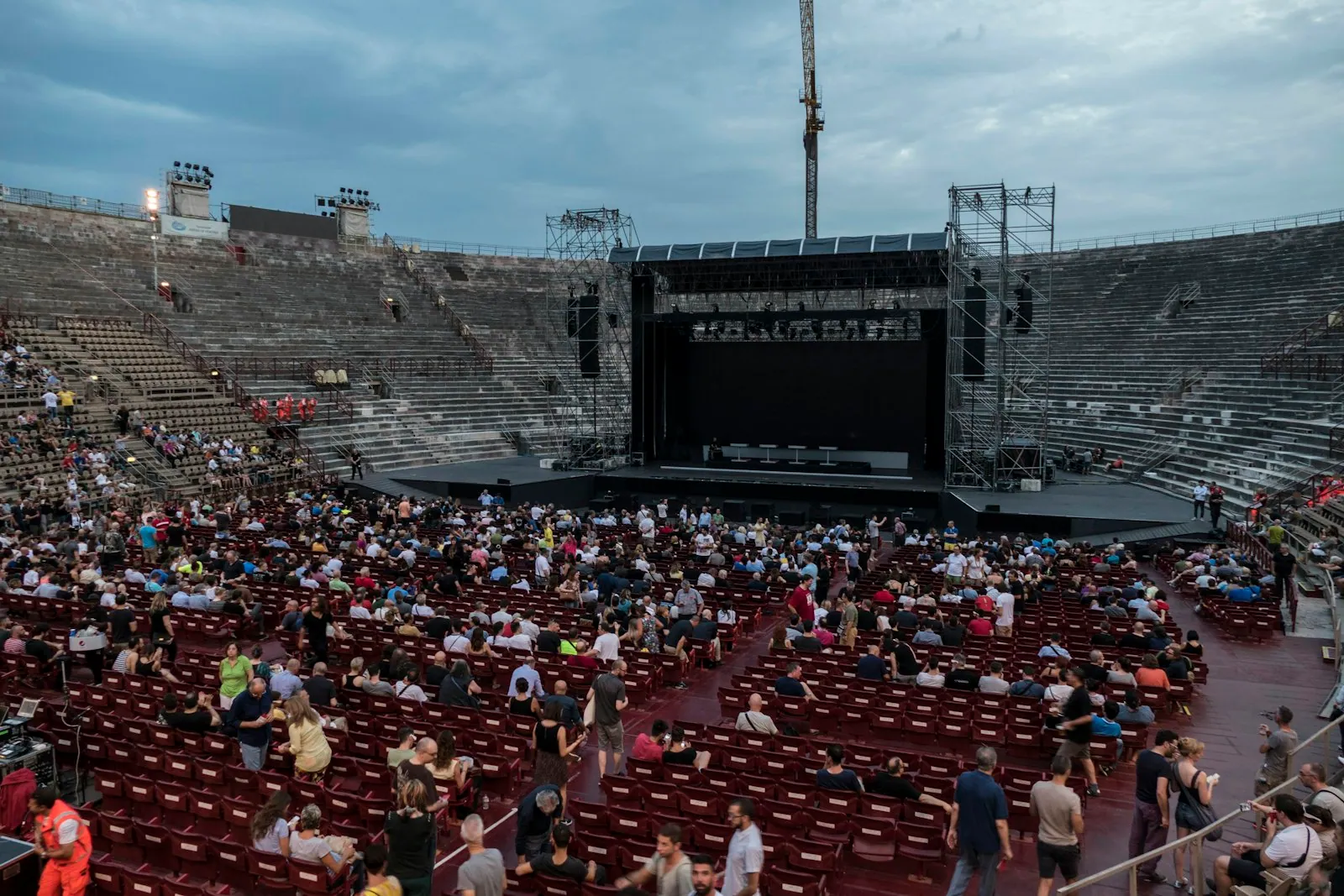
Walk to Piazza Bra first — the largest square in Verona, with the great Roman Arena on the eastern side. The Arena is a 1st-century AD Roman amphitheatre, 138 metres long, 109 metres wide, originally with a capacity of 30,000 spectators (now reduced to 14,000 for the modern opera season). It is one of the best-preserved Roman amphitheatres in the world — the original outer ring of marble was largely lost in a 12th-century earthquake, but the inner structure and seating tiers survive almost intact.
Visit the Arena during the day (about €12 entry) — walk through the corridors, climb the tiers, sit in the upper seats and look down at the elliptical floor. Allow ninety minutes. If you’re visiting between June and early September, book tickets for one of the great Arena opera performances — the season runs Aida, La Traviata, Carmen, Madama Butterfly and other classics, with tickets from about €30 (unreserved stone steps) to €250+ (numbered chairs near the stage). The opera at the Arena is the experience of a lifetime: 14,000 people sitting in candlelit (the upper tiers traditionally light small candles at the start of each act) Roman amphitheatre on a warm August night, watching a full opera production with 100-person orchestra and chorus, with the night sky overhead. Book months ahead.
After the Arena, walk north into Piazza delle Erbe — the medieval market square at the heart of the historic centre. The square has been a market square since Roman times (it sits on the original Roman Forum), and a small daily produce-and-souvenir market still sets up under permanent canopies in the centre. The buildings around the square are a beautiful mix of medieval Veronese stone, Renaissance frescoed facades, and the small but elegant Torre dei Lamberti (the medieval bell tower at the southern corner) that you can climb for the rooftop view of the city.
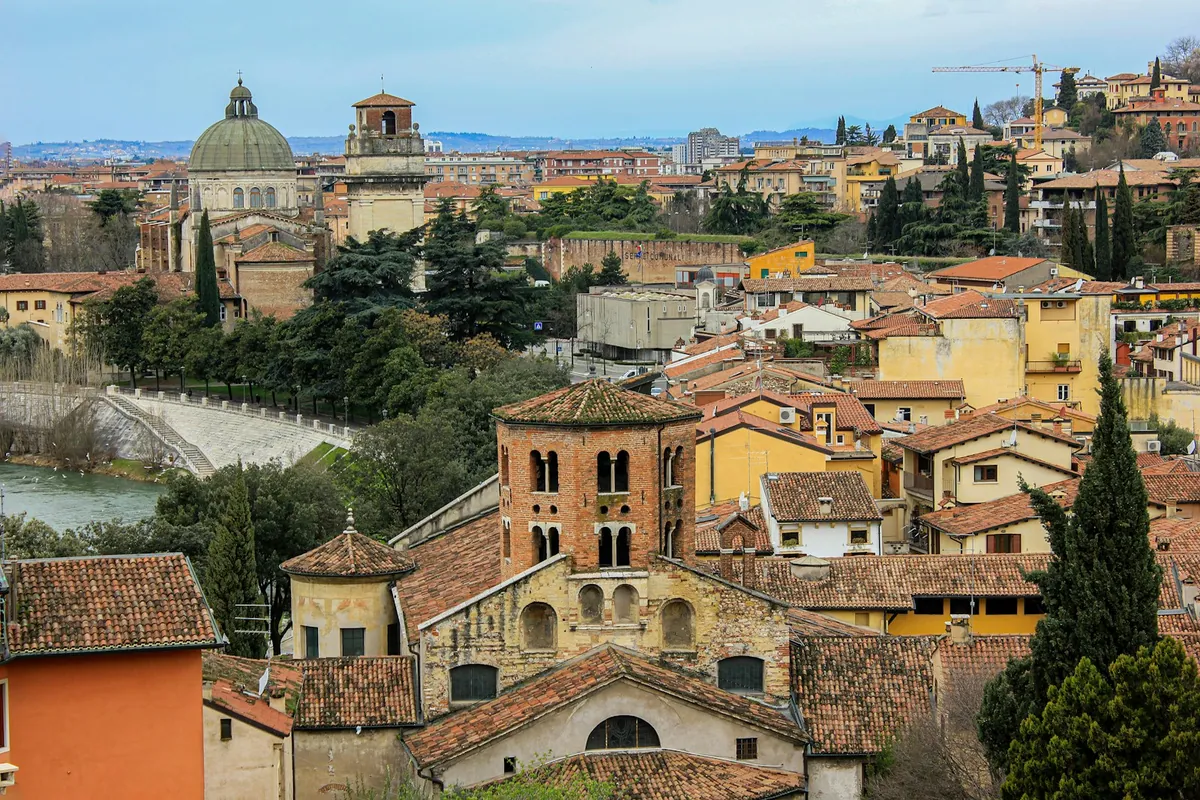
Have lunch at one of the small restaurants on the small streets just off the square. Reliable: Trattoria al Pompiere, Osteria Casa Vino, La Taverna di Via Stella. Order risotto all’Amarone (the local risotto cooked in Amarone wine), bigoli with sardines, or the famous Veronese horse-meat dish (pastissada de caval — slow-cooked horse stew, an acquired taste, not for everyone).
Day one afternoon: Juliet’s balcony and the Castelvecchio
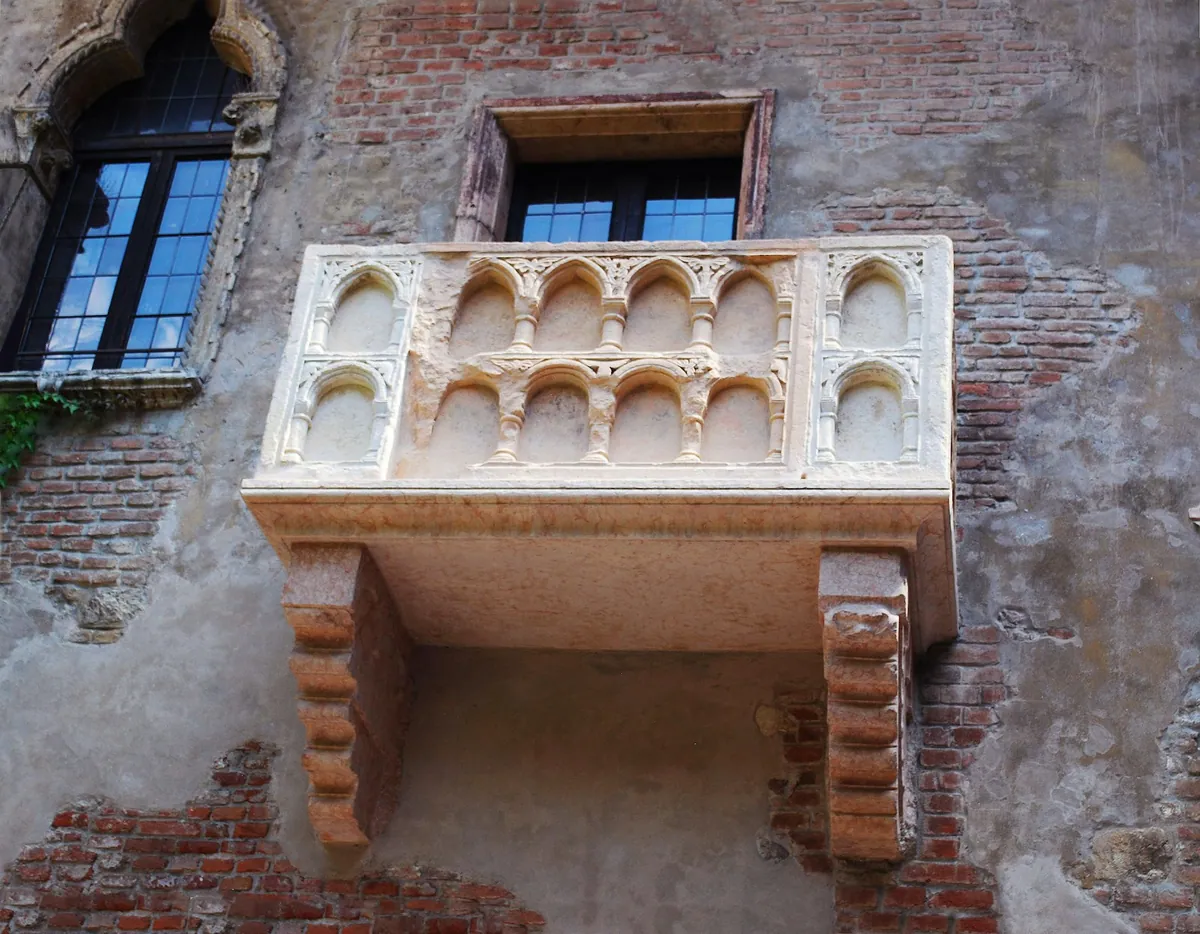
Walk a few minutes south to Casa di Giulietta — “Juliet’s House,” a small medieval house with the famously photographed balcony in a small inner courtyard. The house has no actual historical connection to Shakespeare’s Juliet (she’s a fictional character; the historical Capulet and Montague families that Shakespeare adapted from a 1554 Italian novella may or may not have existed); the balcony was added to the building in the 20th century to capitalise on the Shakespeare association. None of which has stopped Verona from cheerfully running with the connection — the house is now one of the most-visited tourist sites in the city, the courtyard walls are covered in love-letter graffiti and small love-padlocks, and there is a small bronze statue of Juliet in the courtyard whose right breast has been polished smooth by the touch of thousands of visitors who believe (no one is sure why) that it brings romantic luck. Visit if you want, mostly for the Instagram photograph; allow 20 minutes.
A few blocks west, the Castelvecchio is the great medieval castle of Verona — built in 1354 by the Della Scala family, the lords of Verona, restored in the 1960s by the architect Carlo Scarpa in one of the most respected pieces of museum architecture in 20th-century Italy. The castle now houses the Museo di Castelvecchio, with an excellent collection of Veronese and Veneto Renaissance painting and sculpture, plus the architectural experience of Scarpa’s restoration itself. Allow two hours.
The Ponte Scaligero — the medieval fortified bridge attached to the castle, crossing the Adige — is one of the most beautiful bridges in the Veneto. Walk across it for the panoramic view back at the castle and the river.
Day two: across the Adige and a slow afternoon
Day two, walk the Adige loops. The Adige river loops sharply around the historic centre, and crossing one of the smaller bridges (Ponte Pietra is the most beautiful — a Roman-built bridge, partially destroyed in WWII and rebuilt with the original stones recovered from the river) takes you to the small Veronetta neighbourhood on the far side, with the Roman Theatre (Teatro Romano, a 1st-century BC theatre still used for summer performances), the small archaeological museum above it, and the Castel San Pietro on the hillside above (with the best panoramic view of central Verona, reached by a steep climb or a short funicular ride).
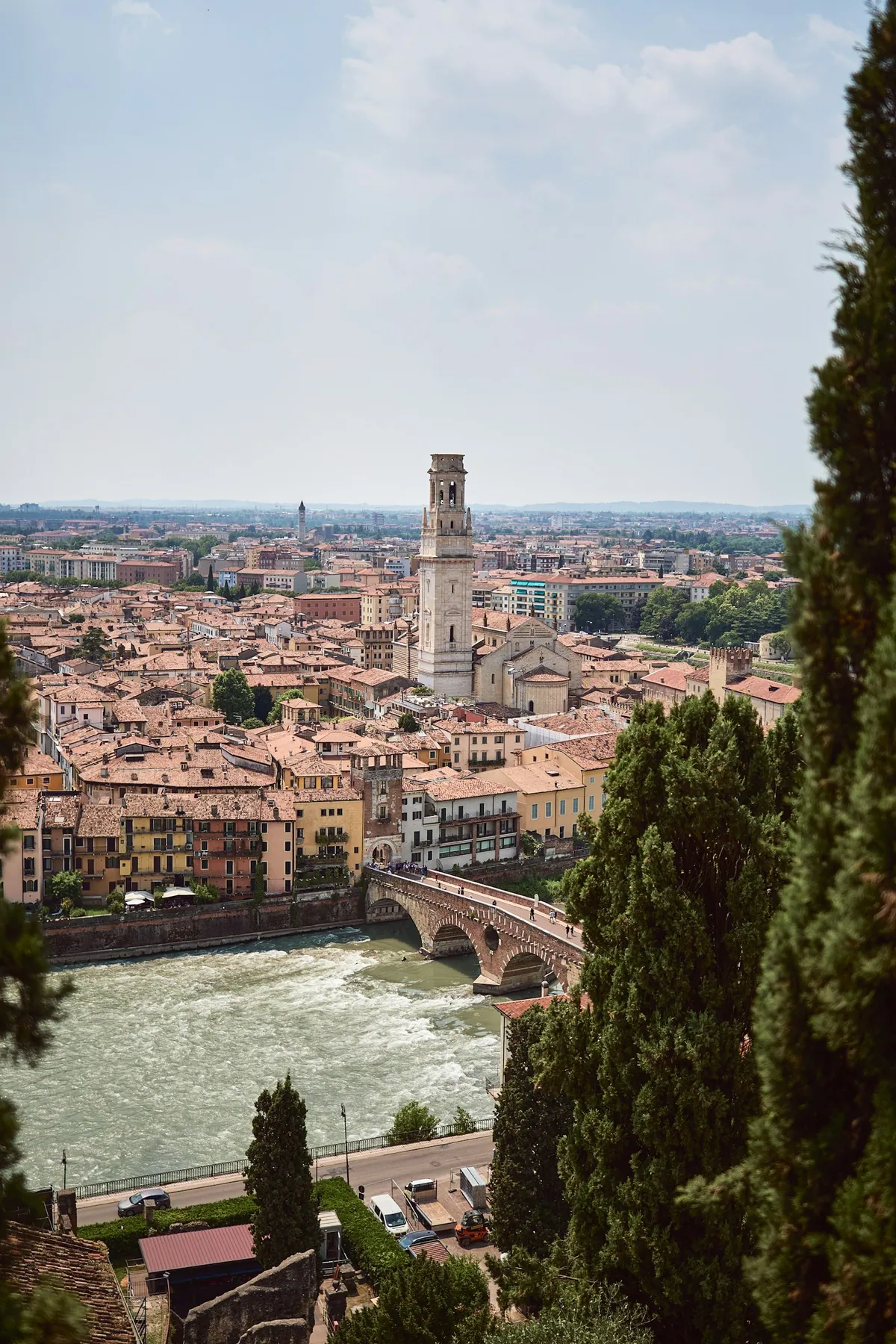
Climb up to Castel San Pietro for the late-afternoon view. The light from the western sky catches the rooftops of the historic centre, the Adige reflects everything, and you see the Arena and the Duomo and the river all in one sweep. Stay for sunset.
For dinner, eat at one of the small bistros in Veronetta or back across the river. La Bottega del Vino is the historic Veneto wine bar (since 1890, with a list of over 4,000 wines and excellent simple Veneto food). Trattoria Al Calmiere is a more relaxed traditional spot.
Day three: a Valpolicella wine day
Day three, escape the city for the Valpolicella wine country. The Valpolicella appellation runs in the hills just north of Verona, and the area produces several of Italy’s most prestigious red wines: Valpolicella Classico (the everyday wine), Valpolicella Ripasso (a richer style made by re-fermenting young Valpolicella over the dried grape skins of Amarone), and the great Amarone della Valpolicella DOCG (made from semi-dried grapes, aged for at least two years, intense, expensive, one of the great Italian reds).
Hire a car, take a taxi, or join a small-group wine tour (several Verona-based operators run half-day or full-day tours for €80–150 per person). Three or four wineries in a day. Recommended visits: Allegrini (one of the prestigious large producers, with a beautiful estate near Fumane), Tommasi (large, accessible, with a beautiful tasting room), Quintarelli (the legendary small producer, Amarone reference; visits by appointment only, weeks ahead), or any of the smaller family producers around Negrar and San Pietro in Cariano.
Have lunch at the winery if they offer food, or at one of the small village trattorias in Valpolicella. Drive back to Verona in the late afternoon. Eat one final dinner in the historic centre. Catch the morning train.
How nice are Veronesi?
Veneto-warm. The Veronesi are the polished, slightly elegant version of the Veneto temperament — the Verona welcome is professional, friendly, and slightly more reserved than the loud Neapolitan version. My three days included: an Arena ticket office staff member walk me to the right entrance gate when I had the wrong ticket category; a wine bar owner near Piazza delle Erbe pour me three small extra tastes to teach me the difference between three Valpolicella styles; and a small trattoria in Veronetta refuse to charge me for an extra glass of Amarone “because you finished the meal, take it.” The Verona welcome is real and slightly more refined than the southern Italian version.
If you go
• Book Arena opera tickets months ahead if you’re visiting June–September. The single best cultural experience you can have in Italy. • Climb to Castel San Pietro at sunset. Best photograph of the trip. • Visit a Valpolicella winery. Even one is worth the day. • Eat the local Veneto food. Risotto with Amarone, bigoli, the local salami. • Walk the small streets between Piazza delle Erbe and the river. Verona rewards aimless wandering.
Verona is the small Veneto city that earns the time. Three days here will give you the Arena, the medieval centre, the river, and a Valpolicella day. The opera at the Arena, if you can time the trip for it, will stay with you for years.