Verona and Bologna by Train — A Northern Italy Itinerary
Two of the most underrated cities in northern Italy: the Roman arena and Romeo-and-Juliet streets of Verona, the porticoes and food halls of Bologna.
📍 Verona and Bologna, Italy
Northern Italy is so dominated by Venice, Milan and Florence that the cities in between get less attention than they deserve. Verona and Bologna are both within 90 minutes of the Venetian or Florentine main lines, both small enough to walk in a day, both genuinely beautiful, and both — unlike their more famous neighbours — not yet swallowed by mass tourism. They make a perfect pairing: six days, two trains, two cities, the wine hills outside Verona, the food hills outside Bologna, and a stop on Lake Garda or in the Valpolicella to break the city pace.
This is the practical itinerary.
How to do it by train
Italy's high-speed rail (Frecciarossa, Italo) connects Verona Porta Nuova and Bologna Centrale in about 50 minutes. Both cities sit on the main north-south line. Tickets booked a few days ahead through Trenitalia or Italo are around €30–40 second class. Once you arrive in either city, the historic centre is walkable from the station — Verona is 15 minutes' walk from Porta Nuova to Piazza Bra, Bologna is 10 minutes from Centrale to Piazza Maggiore.
The standard six-day itinerary:
- Days 1–3: Verona (and a Lake Garda or Valpolicella day-trip). - Day 4: Train to Bologna. - Days 4–6: Bologna (and a Modena or Parma food day-trip).
If you have more time, extend the trip with a few days in Venice (90 minutes east of Verona) or Florence (40 minutes south of Bologna).
Verona
Verona is a small Roman city that has been continuously inhabited for over two thousand years. The first thing you see is the Arena di Verona in Piazza Bra — a Roman amphitheatre from the first century AD, almost completely intact, used today as the world's largest open-air opera venue. The interior is best experienced full of fifteen thousand opera-goers on a summer evening, but a daytime visit costs €12 and gives you the run of the structure.
The historic centre wraps around the loop of the Adige river. The headlines:
- Piazza delle Erbe — the medieval market square on the site of the Roman forum, frescoed buildings, the Madonna fountain, the daily market. - Casa di Giulietta — the supposed Juliet's House, with its famous balcony. The connection to Shakespeare's play is invented (the house belonged to a different family, and Shakespeare never visited Verona) but the courtyard, the bronze statue and the wall full of love letters are now a tourist ritual that is silly and lovely in equal measure. - Castelvecchio — the fourteenth-century Scaligero castle on the river bank, now an excellent museum. The fortified bridge is one of the most photographed structures in northern Italy. - The Duomo and Sant'Anastasia — two beautiful Romanesque-Gothic churches with major Mantegna and Pisanello frescoes. - Castel San Pietro — the hilltop fortress on the north bank, climbed by a long staircase or a small funicular, for the panoramic view over the medieval rooftops at dusk.
Allow two full days for Verona. Eat at:
- Trattoria al Pompiere — old-school Veronese, salumi platters and bollito. - Locanda 4 Cuochi — modern Italian, near the Arena, fixed-price tasting menu. - Osteria del Bugiardo — wine bar near Piazza delle Erbe, no reservations, cicchetti and Valpolicella.
Day-trip from Verona: the Valpolicella or Lake Garda
For day three, two excellent options:
The Valpolicella is the wine region directly north of Verona — rolling hills of vineyards and cypress, the home of Amarone, Ripasso and Valpolicella Classico. Drive (or take a winery tour) to villages like Sant'Ambrogio di Valpolicella, Negrar and San Pietro in Cariano. Allitiz Negrar, Tommasi, Allegrini, Dal Forno Romano — the names roll on. Visit two estates, lunch in a hilltop trattoria, return to Verona for dinner.
Lake Garda is twenty minutes by train or thirty by bus. The lakefront town of Sirmione has the best Roman ruins on the lake (the Grotte di Catullo) and a small thirteenth-century castle on a promontory; Bardolino, on the Verona side of the lake, is the wine end (Bardolino DOC, light reds); and Riva del Garda at the far north is the windsurfing town. A day on the lake is plenty.
Bologna
Bologna is one of the most beautiful and least-visited big cities in Italy. The historic centre is medieval brick — twenty miles of porticoed streets that once allowed students of the world's oldest university (1088) to walk between lectures in any weather. The food culture, in this region of Emilia-Romagna, is among the best in the world: tagliatelle al ragù (the actual "spaghetti bolognese", though you would never call it that here), tortellini in brodo, mortadella, parmigiano reggiano, balsamic vinegar from Modena.
Three full days in Bologna does the city justice.
Piazza Maggiore is the centre — the Basilica di San Petronio (the world's fifth-largest church and oddly unfinished on the outside), the Palazzo del Podestà, the Fontana del Nettuno, the long covered staircase up to the Sala Borsa public library where you can stand on a glass floor over Roman archaeological remains.
Le Due Torri — the two leaning medieval towers (the Asinelli, 97 metres, climbable; the Garisenda, much shorter and dramatically tilted, not climbable). 498 wooden steps to the top of the Asinelli. The view over the red-tiled roofs is the city's signature image.
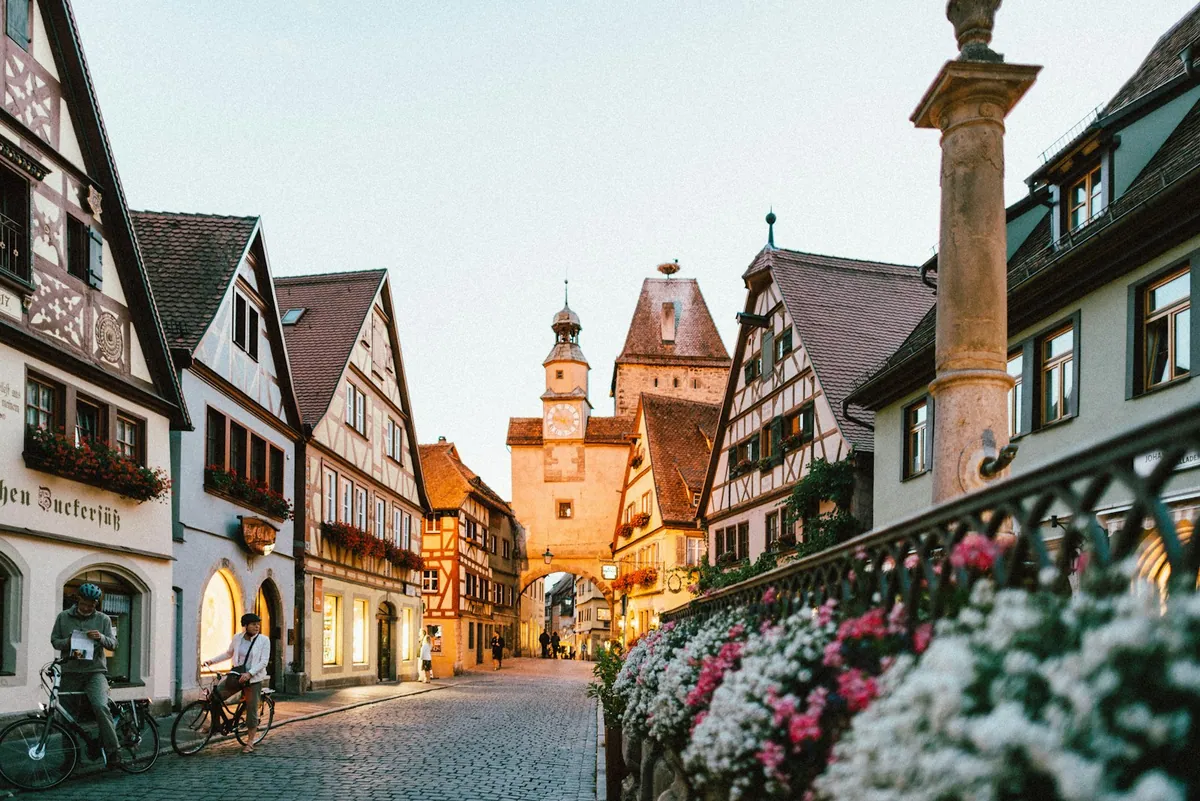
The Quadrilatero — the old market quarter directly behind Piazza Maggiore, a maze of food shops and small bars. Lunch here on a tagliere — a wooden board piled with mortadella, prosciutto, parmigiano and a glass of pignoletto.
The University Quarter — Via Zamboni and the streets around the Two Towers. The university has been operating in the same buildings since the eleventh century. The Archiginnasio (the original university building) has the medieval Anatomical Theatre, all carved wood, that you can visit.
Santo Stefano (the "Sette Chiese") — a complex of seven interconnected churches, the oldest dating from the fifth century, on a tiny piazza on the east side of the city. One of the great hidden corners of Bologna.
Day-trip from Bologna: Modena or Parma
For day six, choose:
Modena is forty minutes west by train. The cathedral (UNESCO) is one of the great Romanesque buildings of Europe. The Mercato Albinelli is a beautiful indoor food market. The acetaie (balsamic-vinegar producers) outside the city offer tastings of 12-, 25- and 100-year-old aged balsamic. Lunch at Osteria Francescana is impossible to book at short notice; lunch at Osteria del Pozzo is excellent and walk-in.
Parma is an hour west. The Duomo, the Baptistery (Antelami's frescoes), the Camera di San Paolo (Correggio's frescoes), and the Salumificio La Felinese where you can taste prosciutto di Parma and culatello of Zibello straight from the curing room. A reverent food pilgrimage.
When to visit
April–June and September–October are the sweet spots — warm but not hot, the gardens at their best, and few of the August Italian-tourist crowds. July and August are hot and crowded; many family-run restaurants in Bologna close for two weeks in August. The Verona Arena opera season runs roughly June to early September.
Where to stay
In Verona: small hotels and B&Bs around Piazza delle Erbe and Via Mazzini. The Hotel Accademia is a good mid-range option a short walk from the Arena.
In Bologna: the streets between Piazza Maggiore and Via Zamboni have excellent small hotels and family-run B&Bs. The Hotel Corona d'Oro is a beautifully restored historic building near the Two Towers.
For more on Italian travel, browse our Italy stories and our broader Europe category. The Italian Tourism Board site has the official events calendar for the Verona opera and the seasonal food festivals across Emilia-Romagna.
Verona and Bologna are the smaller, less-photographed cousins of the Italian tourist trail — but they are also the cities that travellers often go back to twice. Six days is enough for a first visit. The food alone in Bologna is worth the trip. The Verona arena alone is worth the train ticket. Together they make one of the best mid-length Italy itineraries you can put together.
Plan your trip to Italy
For more, see our Italy travel guide and country page, places to visit in Italy on BugBitten, tours and experiences in Italy.
Useful external resources: the Italy country profile on Wikipedia and the official Italy tourism board.